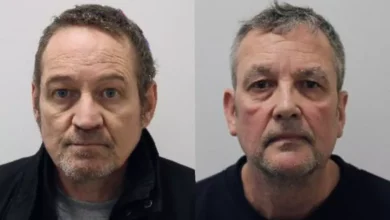
A survivor of a sexual assault that bore striking parallels to the Fordingbridge case has spoken of the progress made in society’s understanding of the impact of such crimes, even as she warned against well-meaning but damaging narratives that can leave victims without hope. The woman, who was attacked by three teenage boys more than 20 years ago in circumstances she describes as “remarkably similar” to the recent case, said it was “nice to see progress, if too slow” in how these offences are now publicly discussed. While there was no public outcry at the time of her own ordeal, the current debate around the Fordingbridge sentences reflects a growing recognition of the long-term harm caused — but she cautioned that some of the discourse risks trapping survivors in a narrative of permanent devastation.
‘A template that had been set’
The survivor, who wishes to remain anonymous, wrote that the assault — involving the same number and age of perpetrators, the same kind of incident, and the same court outcome — altered the course of her life in ways that are still unfolding. Unlike the Fordingbridge case, her attack was not filmed, because it predated social media, though word of mouth in her community led to similar name-calling. She said she has “struggled to make healthy decisions for myself, had a number of harmful coping mechanisms, and spent many years either feeling numb or creating or fabricating problems in the present because, surely, the pain I’m feeling can’t still be a result of what happened.” She added that she had “allowed people to treat me very poorly and struggled to see it, subconsciously modelling a template that had been set.”
After more than a decade of weekly therapy, in part supported by a specialist charity she credits with saving her life, she said it is “astounding to still discover new, deeply buried ways in which what happened altered the way I feel and see the world, and things I need to overcome to function. Maybe this will always be the case.” She described the original sentences handed down in both her case and the Fordingbridge matter as “woefully inadequate relative to the level of harm.”
‘Their lives are ruined’ — the risk of absolutes
However, the survivor expressed concern about comments in print and on social media that, in an effort to emphasise the severity of the crime, have described victims as having “their lives are ruined” or as being people who “will never heal”. The Fordingbridge case, in which three teenage boys aged between 13 and 15 at the time of the offences were convicted of rape and other sexual offences against two girls aged 14 and 15, has generated significant public backlash. One of the victims said the leniency of the sentences — youth rehabilitation orders ranging from 18 months to three years — “hit like a rock straight in my face.” The judge in that case, Nicholas Rowland, said he wanted to “avoid criminalising these children unnecessarily,” a decision that drew criticism from the Attorney General, Richard Hermer KC, who referred the sentences to the Court of Appeal under the Unduly Lenient Sentences (ULS) scheme. Prime Minister Keir Starmer announced the review, and the court will now decide whether the sentences should be increased.
The survivor pushed back against the idea that such language, however well-intentioned, captures the full reality of life after trauma. “To say that my life is ruined? Hardly,” she wrote. “I have many wonderful friendships, a successful career in a field I’m passionate about and I’ve travelled the world. I’m learning to be at peace with my body and mind. Much like learning to live with grief or a chronic illness, my life has expanded around the pain and with each year I learn better how to manage it and myself. The idea that it will remain something to deal with is not scary or depressing, it’s something to grieve but also part of the rich tapestry of my life, just one part of a bigger whole. The future is not an eternal tunnel of darkness.”
‘A lot of support, time and space’
The survivor offered direct advice to the girls in the Fordingbridge case and others in similar situations, saying they will need “a lot of support, time and space to feel a lot of things.” She urged them to seek out places and people that provide these, and to “give time and space to themselves too,” adding that she hoped they could know “there is hope for the lives ahead of them.” Her own experience of the criminal justice system echoes findings that survivors often report feeling disbelieved, blamed or minimised — a dynamic that can worsen mental health and deter future reporting. Charities such as Rape Crisis England & Wales, The Survivors Trust, and Survivors in Transition offer counselling, advocacy and safe spaces for survivors, while there is a growing movement to provide free, independent legal advice to help victims navigate the process.
The Fordingbridge case has also deepened a broader national conversation about violence against women and girls, with some critics, including French rape survivor Gisele Pelicot, suggesting that a male-dominated judiciary may contribute to lenient sentencing. The Sentencing Council’s guidelines for sexual offences require courts to consider factors such as culpability and harm, but for young offenders the aim is to balance accountability with rehabilitation. Judge Rowland took into account the age of the perpetrators and, in some cases, cognitive impairments or mental health conditions such as ADHD and anxiety. Nevertheless, there is growing concern about what some see as a trend towards more lenient consequences for young people who commit serious sexual offences — particularly given that in a comparable case a teenage rapist received an eight-year custodial sentence, and the prosecution in the Fordingbridge matter argued that the offences were “akin” to that case.
The survivor ended her account with a personal note that underscored how, even decades later, the aftermath of such crimes continues to echo. Her primary school teacher, she said, was her “guardian angel” in the immediate aftermath of the attack, and she never had a chance to thank her. Believing the teacher may have married and now uses a different surname, she wrote: “S, if you see this, would you reach out?”