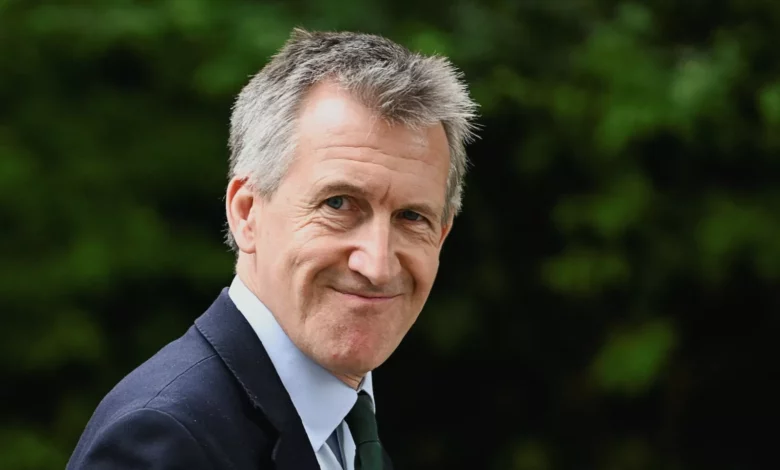
Defence spending in the UK reached £64bn in 2024-25, the highest proportion of both overall government expenditure and national income since 2011-12, official figures show. The sum represents 5.5% of total state spending and 2.2% of GDP. Yet the new Defence Secretary, Dan Jarvis, inherits a bitter dispute over whether this level of funding – and the increases pledged for the next decade – is anywhere near enough to meet the threats facing the armed forces.
The defence spending debate
John Healey, who resigned as Defence Secretary on 11 June 2026 in what was described as a shock departure, had argued that the government’s Defence Investment Plan (DIP) fell “well short of what is required”. He criticised the current strategy as “too slow” given evolving security threats, pointing out that spending is projected to reach only 2.6% of GDP next year and climb marginally to 2.68% by 2030. He had sought a settlement of £18bn for the DIP, but the Chancellor, Rachel Reeves, reportedly declined to approve more than £12bn, with Healey trying to broker a £15bn compromise.
The government has publicly committed to raising defence spending to 3.5% of GDP by 2035, aligning with a NATO target. Interim commitments include reaching 2.5% of GDP by 2027 (2.6% when security and intelligence spending is included) and an ambition to hit 3% in the next parliament. But according to the original wire story, the Treasury’s offer did not specify a timeline for reaching the 3% target and reportedly attempted to compel the Ministry of Defence to delay that milestone until the 2034/35 financial year. Healey insisted spending needed to reach 3% by 2030.
Military leaders have repeatedly warned that the sums on the table fall significantly short of what is required for a crucial overhaul of the armed forces. The last time defence spending was above 3% of GDP was in 1994; between 1992 and 1997 it fell from 3.9% to 2.6%. Real-terms defence spending dropped by 22% between 2009/10 and 2016/17 before starting to rise again. The £59bn spent in 2023-24 was the first annual total decrease since 2016-17, while between 2016-17 and 2019-20 the proportion of GDP allocated to defence hit historic lows.
Healey’s resignation, driven by months of disagreement with the Prime Minister and the Treasury, brought the row into the open. Dan Jarvis, a former army officer who served as Minister of State for Security from 2024 to 2026, was appointed to replace him on the same day. The Prime Minister, Sir Keir Starmer, has highlighted intelligence assessments suggesting potential Russian attacks on NATO countries as early as 2030, adding urgency to the debate. The UK’s defence budget was overtaken by Germany in 2024, the first time the UK has not held the second-largest defence budget in NATO.
There are wider economic trade-offs. The MOD has the largest capital budget of any government department, and the government is making a huge investment in replacing the Trident nuclear weapons system, estimated at £205bn over its lifetime. Defence spending can boost economic activity – military research and development is estimated to generate up to twice its value in additional GDP – but analysts note that R&D in health, science and education typically yields higher returns. The defence industry supports a strong UK manufacturing base and supply chain, and provides long-term skilled employment across regions, driving social mobility. However, the sector accounts for only 0.4% to 0.5% of UK gross value added (GVA), and concerns about cost escalation and labour shortages persist. The import share of defence spending also limits domestic economic gains.
Overall government spending
The government spent approximately £1.2 trillion on behalf of taxpayers in 2024-25, according to the Institute for Fiscal Studies. This represents 39.9% of national income – a significant increase from pre-pandemic levels, driven by higher outlays on health, debt interest and social protection. Some 80% of overall spending was attributed to a particular region of the UK, while 18% was categorised as benefiting the UK as a whole, a category that includes defence and the costs of managing national debt.
Other departmental outlays
By far the largest area of government expenditure is social protection – commonly referred to as welfare. In 2024-25 the government spent £386bn on benefits, pensions and social services, equivalent to 33% of total spending and 13% of GDP. Of that, the largest proportion went to pensions and old-age benefits (40%), followed by universal credit and other benefits (20%). The ageing population is a significant driver of welfare spending growth.
Health remains a major focus, with £242bn spent in 2024-25 – 21% of overall spending, 8% of GDP and £3,497 per person. Government-financed healthcare spending reached £280bn in 2025, representing 11.4% of GDP. Although real-terms increases have been necessary to tackle pressures on services and reduce waiting times, some reports indicate real-terms cuts in the Department of Health and Social Care’s day-to-day budget for three consecutive years up to 2024/25.
Education is the third-largest service area, accounting for £123bn in 2024-25 (10.5% of total spending). This represents an increase of about £30bn since 2010-11, but as a share of GDP it has fallen from 5.6% to 4% over the same period. Education spending as a proportion of total government outlay has dropped from 14% to 10.5%. About 80% of the budget is currently spent on primary and secondary schools.
Spending on policing and crime prevention has risen consistently since 2016-17, from £30bn to £52bn in 2024-25. That amounts to about 5% of total government spending and 2% of GDP – roughly the same share of GDP as in 2010-11. Police services account for half the annual total, followed by law courts (18%) and prisons (13%).
Transport spending accounts for 4% of annual outlay, while both central government services and housing, communities and local government each represent 2%.
One of the fastest-growing areas of expenditure is public sector debt interest. The government spent £125bn on debt servicing in 2025, representing 11% of total spending – a spike from 4% in 2020. When combined with health and benefits, debt interest accounts for nearly two-thirds of all annual government spending.