Europe faces an urgent need for an AI renaissance, one that mirrors the post-war economic miracle that rebuilt West Germany from the rubble of conflict. That was the central argument at the HTGF Family Day in Berlin, where High-Tech Gründerfonds – Germany’s most active early-stage investor – adopted the theme “Wirtschaftswunder 2.0” to frame the continent’s current inflection point. The original Wirtschaftswunder was driven by manufacturing and exports; the 2026 version, in HTGF’s vision, will be powered by energy infrastructure, quantum computing, space technology, AI industrial productivity, and biotechnology. Over 1,200 attendees gathered at STATION Berlin on 11–12 May, with more than 5,000 one-on-one meetings scheduled across the two days.
The AI imperative
The sense of urgency was unmistakable. “This is the most consequential technology shift possibly in the history of humankind,” Howard Wright, vice president of the startup ecosystem at NVIDIA, told Tech Funding News. Wright, who leads NVIDIA Inception – a global programme supporting more than 35,000 startups – and previously held senior roles at AWS, Intel, and Qualcomm, was clear that Europe cannot afford to be a bystander. His remarks echoed a wider push at the European level: the European Commission’s “AI Continent Action Plan,” published in April 2025, outlines a €200 billion strategy to build a sovereign, pan-European AI ecosystem. Its pillars include tripling AI compute capacity by 2027 through AI Factories and up to five AI Gigafactories, a Data Union Strategy for unlocking sector-specific data, the “Apply AI Strategy” launched last October to accelerate adoption, and an AI Skills Academy to address talent shortages. The EU AI Act, which entered into force in August 2024 and will be phased in by August 2027, provides regulatory clarity. Horizon Europe and Digital Europe are already investing €1 billion annually in AI, with the commission aiming to mobilise an annual total of €20 billion. The Recovery and Resilience Facility makes €134 billion available for digital initiatives. A separate “AI in Science Strategy” aims to create RAISE, a virtual institute, and double Horizon Europe’s annual AI investments to over €3 billion, including €600 million for enhanced access to computational power for researchers and startups.
Not everyone took the slogan at face value. Any real revival has to reckon with the fact that Europe is an integrated economy, not a collection of national projects, and pretending otherwise is where the “new miracle” narrative starts to break down. “When I read about the miracle, my first reaction was like, ‘That’s very German.’ It doesn’t help if we look at it from a national lens only. Instead, we must have a European strategy,” said Axel Deniz, CEO of Bosch Business Innovations, the venture builder for the Bosch Group. Deniz leads the effort to commercialise Bosch’s roughly 80,000 active patents – 20 new ones filed every day – and his warning underscored a theme that ran through the event: ambition must be matched by structures that work across borders.
Breaking down barriers
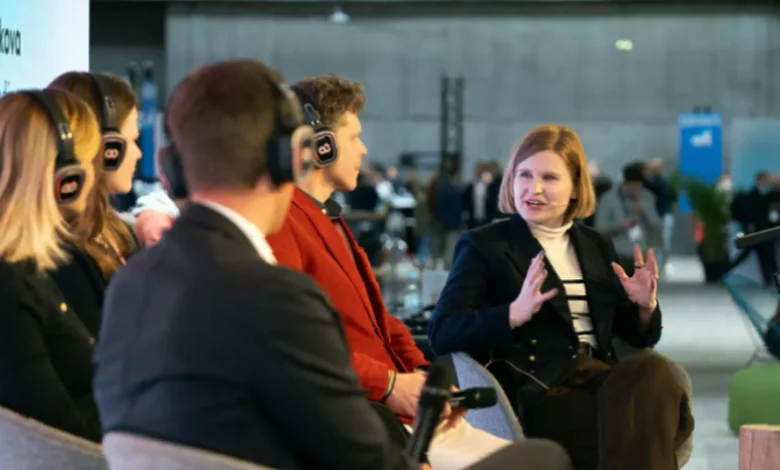
European corporates want to work with startups, but most attempts fall apart because ownership structures, incentives, and integration plans are not well thought out. A panel discussion at the HTGF Family Day, moderated by Tech Funding News, did not shy away from this uncomfortable truth: the barrier is as cultural as it is structural. Christina Hammes, managing director at Uplift Ventures – the venturing unit launched by German material handling firm Jungheinrich – was direct about what that means in practice. “Waiting for this passive miracle won’t work. We have to accept that things won’t work as they used to and must speed up to become competitive again,” she said. For Hammes, that has meant creating a dedicated unit to build, invest in, and partner with ventures, rather than expecting business-as-usual teams tied up in daily work and established structures to deliver innovation alone. Uplift Ventures focuses on AI, robotics, and sustainability, aiming to develop new business models beyond Jungheinrich’s core.
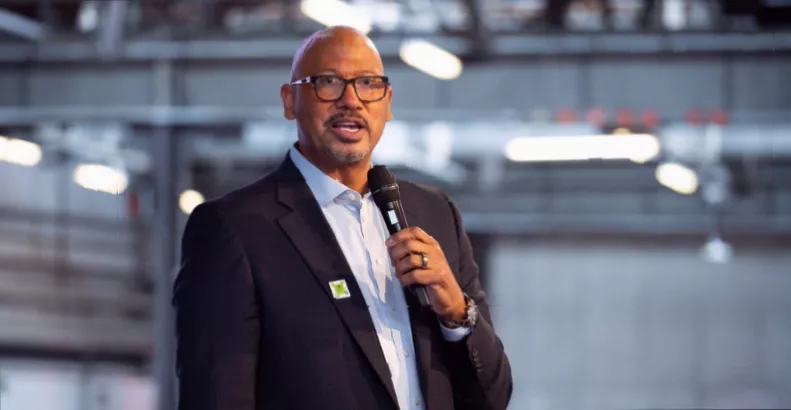
Pierre Buerkle, an operating partner at SE Ventures – a $1 billion-plus Silicon Valley venture capital firm backed by Schneider Electric – argued that the cultural dimension is underestimated. “Most of the Germans are a little bit more on the negative side. I think we should take a positive spirit there inside,” he said. But Henrike Luszick, founder and CEO of Bridgemaker, which helps large corporates build and launch new ventures from scratch, was sceptical that positivity alone moves the needle. Her point was simple: there is no shortage of ways for big companies to work with startups – they can run accelerators, take minority stakes, set up pilots, or build internal venture studios. Most corporations have tried at least one of these. The problem, she said, is that few stop to ask honestly whether it actually worked, or whether the next experiment is just the same thing with a new name on the door. Bridgemaker focuses on developing new business models for SMEs and private equity firms, and Luszick’s challenge to the room was to move beyond trial-and-error and build rigorous evaluation into collaboration.
Building a funding infrastructure
Even if collaboration improves, the capital gap remains a persistent problem. Europe creates new companies, but American investors often fund their growth. HTGF has moved to address this fragmentation by integrating the Deep Tech and Climate Fonds (DTCF) under its umbrella, effective 1 February 2026. The merger creates a unified public-private VC platform designed to support technology-driven companies across seed, early, and growth stages – from validation to industrial scaling. HTGF, established in 2005, already manages a portfolio of over 800 companies and has mobilised more than €8 billion in private capital. DTCF, set up three years ago, has a portfolio of 19 companies and plans to deploy €1 billion from the German Future Fund and ERP Special Fund. The combined platform will manage over €2 billion, targeting strategically important technologies including energy, quantum, semiconductors, industrial tech, life sciences, climate, and AI – even fusion energy. HTGF is now preparing its fifth seed fund generation, HTGF V, planned for mid-2027. Whether that will prevent future European champions from seeking funding abroad remains to be seen.
“Germany is poised to have an AI renaissance moment, and we want to be an active participant, a co‑collaborator with you as that happens. When it actually occurs, we would like to think that we were part of the team that helped Germany achieve that, humbly, as a quiet partner,” Wright concluded. Tech Funding News attended the event as part of a media partnership with HTGF and also hosted a table talk on the European media landscape among other activities. The next Wirtschaftswunder, if it comes, will not arrive as a postwar windfall. HTGF’s planning for a fifth seed fund by mid-2027 shows that the scaffolding is being built, investment by investment, in rooms like the one at STATION Berlin.