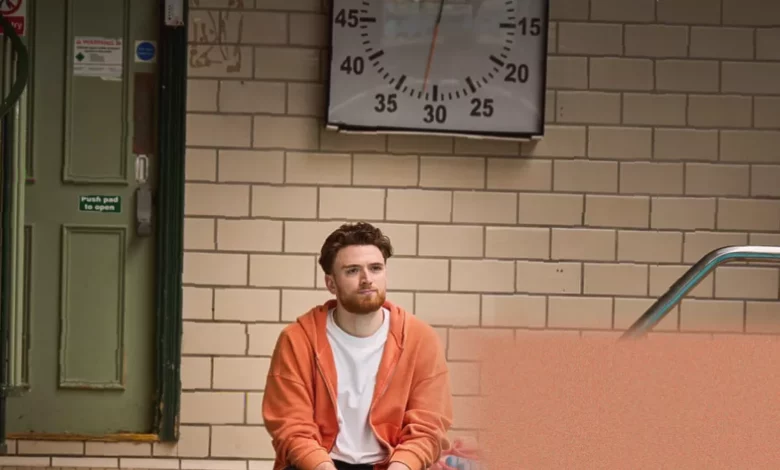
Olympic diver Matty Lee has said the recent comments from the new International Olympic Committee president Kirsty Coventry, that athletes should not be paid at the Games, left him feeling as though “I’ve already got an open wound and you’re stabbing me in it”. Speaking from a swimming pool in Leeds, the 28-year-old, who won gold alongside Tom Daley in the synchronised 10m platform at the Tokyo 2020 Olympics, said the stance was particularly painful given his own experience of financial and emotional hardship since retirement.
‘It’s like I’ve already got an open wound’
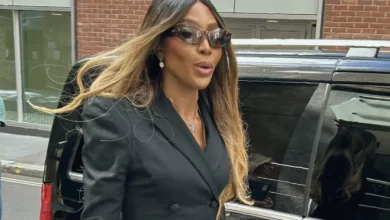
Coventry, a seven-time Olympic medallist from Zimbabwe who became the first woman and first African to lead the IOC, said in an interview that she did not “believe in paying athletes” at the Games. She later clarified on the IOC’s Athlete365 Instagram account that she had misspoken and meant to refer specifically to “prize money” for medallists rather than overall athlete compensation, arguing that prize money benefits only a small minority whereas the IOC uses its revenues to fund wider athlete pathways.
Lee, who trained for the Olympics on an initial £12,000 a year, said the comments were deeply disappointing. “Many athletes spoke up but it’s mainly retired Olympians who are talking about it. I know why. When you’re in sport, especially Olympic sport, you don’t want to upset anyone. Not many current athletes are speaking because they feel they can’t. That’s how I felt. It upsets me because it’s obvious that the system needs change.”
The IOC confirmed in its own financial report that it made $12.4bn (£9.2bn) between 2021 and 2024, with $7.7bn from commercial sources. Of that, over $8.8bn was redistributed to Olympic stakeholders including organising committees, National Olympic Committees and international federations. By the end of 2024 the IOC’s reserves had grown to $4.88bn. Coventry herself reportedly earns an annual salary of $350,000, plus a housing allowance.
‘I’ve not got a house, I’ve not got a mortgage’
Lee’s own struggles paint a stark contrast to that wealth. Eighteen months after retiring from diving, he says he wakes up every morning not feeling that happy. “I don’t have any real purpose in life and I’ve not got a wedge of money. I’ve not got a house, I’ve not got a mortgage. I’ve not got many assets.” He has spoken openly about experiencing depression, saying there have been times when he looked at his Olympic medal and wished “it had never happened”. He suffered his first panic attack a year ago this month at a busy event at Silverstone. “I was sweating, my mouth was extremely dry. I felt sick and dizzy.”
Lee considered becoming a bartender because he enjoys making drinks at home, but people around him advised against it. “I know me. If I was to do that I’d probably get stuck doing it, and be depressed for the rest of my life because I know what I’m capable of.” His podcast, The After Dive, launched in April 2026 to explore the untold experiences of athletes, but he admitted he cannot afford to produce a second season. “I’m losing money and haven’t had a stable income since I retired.” He described a recent visit to his father’s grave with his girlfriend Molly, after looking at his bank account and realising it would run out unless he started working. “I was in a real awful place but I was like: ‘This needs to stop.’”
UK Sport invests in National Governing Bodies and provides Athlete Performance Awards (APAs) – needs-based funding intended to help athletes achieve medal success, not to support them as professionals. The UK Sports Institute offers Performance Lifestyle practitioners who provide holistic support including planning for life after sport, which can continue for up to two years after an athlete leaves a funded programme. The British Elite Athletes Association also provides independent support and representation, including a lifelong alumni community. Lee, however, said the transition from elite sport “is really hard” and that the system needs change.
From Olympic glory to the twisties
Lee began diving at the age of seven, following his older brother Tom. He improved steadily, winning medals at European junior and senior championships. In 2018 he was invited to become Daley’s partner in the 10m synchronised event and moved from Leeds to London. The pair went unbeaten throughout 2021, winning the Europeans, World Cup, nationals and, ultimately, the Olympic gold in Tokyo. Lee described feeling a “flow state” on their final dive, saying “I felt like I was watching myself dive”.
The path to that gold was not without mental hurdles. Lee spoke about the “twisties” – a mental block that causes a disconnect between mind and body while airborne, leading to a loss of spatial awareness. The phenomenon, famously experienced by Simone Biles during the Tokyo Games, can be dangerous and creates a fear-based loop. “Twisting is so important in diving but it can play with your head,” Lee said. “It’s real and awful because when that doubt, or block, gets into your mind it’s a complete erasure of remembering how your body moves.” He conquered it but said it returned towards the end of his career, though only in training.
After Tokyo, life turned cruel. Lee’s father, Tim, died suddenly from an aneurysm in October 2022. Lee then suffered a series of injuries that culminated in major spinal surgery in early 2024, ending his career. Before that, he had been replaced by Noah Williams as Daley’s partner for the Paris 2024 Olympics. “I felt shunted to the side and very hard done by,” he said. He announced his retirement from diving in February 2025 at the age of 26.
Lee said that while he has been open about his feelings, he has not spoken as much recently because he is not around many people. He has since returned to Leeds to be closer to family, and he met his girlfriend Molly near the end of his diving career. “She’s actually never watched me compete, sadly,” he said. “I try to remind her what I was like in my glory days – but I fell in love with her because she’s very supportive and caring.”
Reflecting on the interview, Lee admitted he had not done many interviews since retiring and was unsure how honest to be. “In the past they’ve just been about my diving result and good things. This is the first time I’ve done an interview where things aren’t going that well. But that’s why it feels so important to be honest now.”