The United States of America is a nation of contradictions, a “thousand things” as it approaches its 250th anniversary – a truck driven into a ditch, a program that has been hacked, simultaneously horrific and magnificent, good and evil, promising and cursed. This is not a country that can be reduced to a single identity, but a sprawling, unresolved argument played out across 340 million people, a landmass that existed for billions of years before 1776 and will endure long after the American experiment ends.
Contradictions at the core
The country is the masked ICE agent who shot Renée Good as she stood up for immigrants, but it is also Good herself and the immigrants she tried to protect. It is the streets of Minneapolis with their Dakota and Ojibwe Indigenous past – and present and future. Before 1865, the US was slaveowners, but it was also the enslaved and the abolitionists. It is the Ku Klux Klan and the American Civil Liberties Union and the National Association for the Advancement of Colored People; it is right-to-life terrorists and Planned Parenthood security guards. It is Chevron and Exxon, and one of the world’s first environmental organisations, the Sierra Club, founded in San Francisco in 1892, alongside thousands of environmental, environmental justice and climate groups today.
It is a country where guns outnumber people, and the same country that produced nonviolent resistance’s most lyrical advocate, Martin Luther King Jr., who was shot on the balcony of a motel in Memphis – a man who is said to have come out to greet the jazz musician Ben Branch, whose rendition of the song Precious Lord King loved. The US gave the world jazz, blue jeans, atom bombs and the birth control pill. It is its best and its worst people and products.
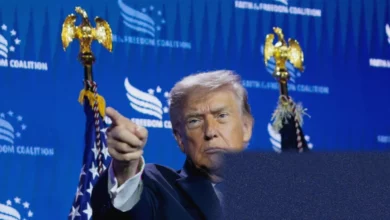
At its heart, the US has always been an experiment, an argument, a question with countless answers. It was never and will never be one thing, even if it has one federal government that its critics describe as a catastrophic crime scene. The current White House is tempting as a metaphor: one-third of the people’s house built under Franklin D. Roosevelt has been wrecked and carted away, leaving an open wound visible in aerial photographs; the rose garden built up by Jacqueline Kennedy has been paved over; the lawn recently covered with a glitzy Thunderdome gladiatorial arena in which, some say, toxic masculinity would fight itself. But the White House is not the country. The United States is the 77 million adult citizens who voted for Donald Trump, the 75 million who voted for Kamala Harris, and the nearly 90 million who did not vote – and also all the children, noncitizens, prisoners and former prisoners who are not part of that voting population.
The land itself is a study in extremes: from the maple and birch forests of the north-east to the glaciers of Alaska to the tropical rainforests of Hawaii, with a great deal of prairie, swamp and desert in between. That land was here for billions of years before 1776, and it will be here long after the US has ceased to exist. The desert tortoises have been ambling through versions of the Mojave deserts of what is now California, Nevada and Arizona for 60 million years; people have striven to create the protected lands in which they may survive a little longer. The country also holds nearly 2 million prisoners – a population larger than 12 US states, which has long prompted observers to imagine prison as a 51st state, one with virtually no representation.
The present moment: violence and resilience
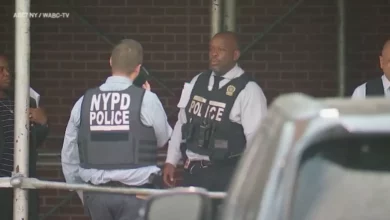
Earlier this year, these contradictions erupted into two shootings that galvanised the nation. On 7 January 2026, Renée Nicole Macklin Good, a 37-year-old US citizen, was fatally shot by an ICE agent in Minneapolis after she stopped her car to support immigrant neighbours. The federal agency has not released a full account, but eyewitnesses have disputed the official narrative. Her wife said: “We had whistles. They had guns.” Two and a half weeks later, on 24 January, Alex Jeffrey Pretti, a 37-year-old intensive care nurse, was shot and killed by US Customs and Border Protection officers while filming law enforcement and assisting a woman protester during demonstrations against a federal immigration enforcement operation. The Hennepin County Medical Examiner classified his death as a homicide. The Department of Homeland Security secretary called Pretti’s actions “domestic terrorism”, while Minnesota’s governor activated the National Guard. Pretti, his father said, wanted to “make a difference”. He held a permit to carry a firearm and had no criminal record.
But the same country that produced these deaths also produced young people who stepped into the spotlight with defiance and hope. On New Year’s Day 2026, Zohran Mamdani, aged 34, became mayor of New York City – the city’s first Muslim and first South Asian mayor, and its youngest since 1892. He defeated Andrew Cuomo, who had resigned as governor in 2021 after an investigation by the New York attorney general found he had sexually harassed 11 women, and who ran as an independent. Mamdani’s platform of universal childcare, rent freezes and public housing drew endorsements from Representative Alexandria Ocasio-Cortez and Senator Bernie Sanders.
On 8 February, the global pop star Bad Bunny, aged 32, took the Super Bowl stage for a halftime show that was a celebration – in Spanish – of his beloved Puerto Rico, of the musical traditions that converge in his songs. It was a huge, generous, joyous multilingual spectacle, insisting on an America in which anyone can dance with anyone else. Later that month, Oakland’s own Alysa Liu, the daughter of a refugee from China, won the gold medal in women’s singles figure skating at the 2026 Winter Olympics in Milan Cortina on 19 February. She had dropped out of the sport after the 2022 Olympics, refusing to be another young woman managed and controlled, and then returned on her own terms. As she skated out of the arena after a stunning performance to Donna Summer’s MacArthur Park Suite, she shouted: “That’s what I’m fucking talking about,” laughing joyously. She became the first American woman to win Olympic figure skating gold since Sarah Hughes in 2002.
These were not typical Americans, but like the estimated 8 million people who showed up for the No Kings demonstration on 28 March, they were Americans. That protest – the largest single-day demonstration in American history, take place in every congressional district and on six continents – was organised by a nonviolent movement that began in June 2025 to oppose what it calls authoritarian actions and policies of the second Trump administration, including the 2026 Iran war, democratic backsliding and immigration enforcement operations. The killings of Good and Pretti were cited as reasons to march.
Looking ahead
One thing about this wildly diverse country’s future is certain, observers note: it will become a non-white majority country in a couple of decades, and there is nothing that white nationalists can do about it. The question at hand is the US at 250 and its possible futures. Those who argue that Trump will not destroy the country, but has badly broken it, insist that what comes after must include consequences for the criminals and a massive cleanup operation. There will be no return to how things were, they say; the task is to fix what allowed this destruction to happen.
In the end, many return to Abraham Lincoln at the battlefield and burial grounds of Gettysburg: “It is for us the living, rather, to be dedicated here to the unfinished work … that this nation, under God, shall have a new birth of freedom – and that government of the people, by the people, for the people, shall not perish from the earth.” That is, in one sense, an ideal never yet realised; in another, a moral north toward which this country at its best has been pointing for those 250 years.