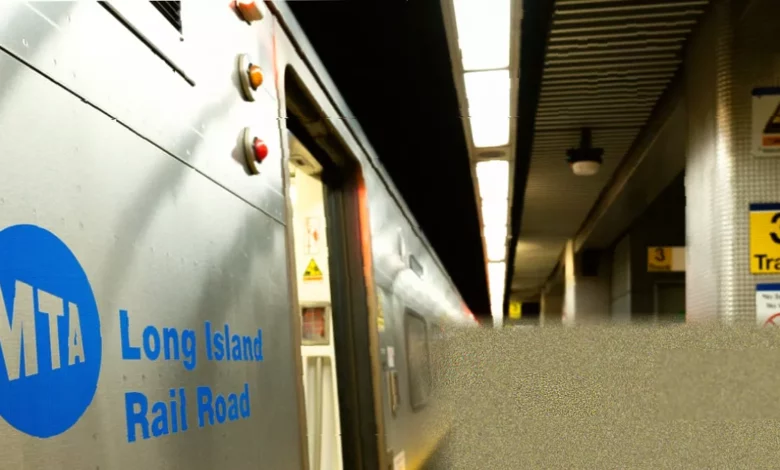
The Long Island Rail Road shutdown entered its second day on Sunday, stranding hundreds of thousands of commuters and dealing a heavy blow to the regional economy as North America’s largest commuter rail system remained paralysed by its first strike in more than three decades. Operations ground to a halt shortly after midnight on Friday when five unions representing roughly half the workforce walked out, leaving an estimated 250,000 to 300,000 daily riders scrambling for alternatives. New York Governor Kathy Hochul, who has urged people to work from home, planned a news conference for 11am on Sunday, while the Metropolitan Transportation Authority (MTA), the public body that runs the railroad, said it would not provide an update before then.
The impact was immediately visible at Manhattan’s Penn Station, the LIRR’s main hub, which lay unusually quiet on Saturday afternoon. Departure boards showed only ghost trains marked “No Passengers”, and customer service windows displayed signs explaining the shutdown. Access to platforms was blocked by bicycle-rack barricades and roll-down gates, with MTA police officers directing travellers to alternate transport. Only a few dozen people could be seen crossing the concourse, many dragging luggage from Amtrak trains, which are unaffected by the strike. The walkout has also caused major disruption for sports fans: the Yankees and Mets were playing weekend fixtures, and the Knicks’ playoff run at Madison Square Garden, located directly above Penn Station, is affected. The timing, close to Memorial Day weekend and the FIFA World Cup, is expected to worsen the economic consequences.
The work stoppage is projected to cost the metropolitan area’s economy between $61 million and $70 million a day, a figure that includes lost worker productivity, reduced retail sales and lower tourism revenue. Small businesses near train stations that rely on commuter foot traffic have expressed alarm. Should the strike continue into the working week, the MTA has said it will run limited shuttle buses on weekdays for essential workers and those unable to work from home, connecting LIRR stations to subway transfer points in Queens during peak hours. Nassau County residents can also use the NICE Bus network. Officials acknowledge these alternatives cannot handle the railroad’s normal load, and road congestion is expected to be severe; some commutes into Manhattan are already taking twice as long, and rideshare prices are surging.
The Core Dispute
At the heart of the dispute lies a fundamental disagreement over wages and healthcare premiums that has stalled months of negotiations. The five unions – the Brotherhood of Locomotive Engineers and Trainmen (BLET), the Brotherhood of Railroad Signalmen, the International Association of Machinists and Aerospace Workers, the International Brotherhood of Electrical Workers, and the Transportation Communications Union – are seeking a 5% pay rise for the final year of a four-year contract. Their members have not received a raise since 2022, and the unions argue that the increase is essential to keep pace with the rising cost of living in the New York metropolitan area, including inflation, soaring gas prices and higher rents.
The MTA has offered a 3% increase, with the possibility of rising to 4.5% if the unions accept changes to work rules. MTA Chairman and CEO Janno Lieber said the agency’s final offer “gave the union everything they said they wanted in terms of pay” and warned that the unions’ demands could force fare hikes of up to 8%. He emphasised that LIRR workers are already among the highest-paid railroad employees in the country, and that the MTA cannot agree to a deal that would destabilise its budget or shift costs to riders and taxpayers. Lieber also stated that he believes the unions always intended to strike.
Beyond wages, the MTA is pressing for changes to what it calls restrictive work rules that hinder productivity and allow employees to accumulate excessive overtime. One specific rule it has targeted permits locomotive engineers to be paid a second day’s salary for operating both a diesel and an electric train in the same shift. Another point of contention is healthcare: the MTA proposed that new LIRR employees contribute to their medical costs, a demand the unions say was introduced late in the bargaining process. Two Presidential Emergency Boards (PEBs) appointed by the Trump administration sided with the unions, finding their wage demands more reasonable than the MTA’s. The LIRR rejected the second PEB’s recommendations, clearing the legal path for the strike, which became lawful at 12.01am on Saturday. Kevin Sexton, national vice-president of the BLET, confirmed that no new negotiations have been scheduled. “We’re far apart at this point,” he said. “We are truly sorry that we are in this situation.”
Political Fallout
The strike has ignited a war of words between Governor Hochul, a Democrat, and former President Donald Trump, a Republican. Hochul blamed the Trump administration for cutting mediation short and pushing the negotiations toward a walkout. Trump responded on his Truth Social platform, denying any responsibility and saying he “never even heard about it until this morning”. In the same post, he renewed his endorsement of Nassau County Executive Bruce Blakeman, who is challenging Hochul’s re-election bid, and wrote: “No, Kathy, it’s your fault, and now looking over the facts, you should not have allowed this to happen. If you can’t solve it, let me know, and I’ll show you how to properly get things done.”
Trump’s administration had previously intervened by establishing a Presidential Emergency Board in September 2025, which temporarily averted a strike. Governor Hochul, for her part, has expressed concern about affordability for Long Islanders and said she will not risk the MTA’s stability with a deal that leads to fare hikes or higher taxes. The MTA chairman, Janno Lieber, has pointedly noted that LIRR workers are already well-compensated and that the agency cannot afford a deal that would bring fare increases. The last LIRR strike, in 1994, lasted only two days; earlier strikes in 1960 and 1987 ran for 26 and 11 days respectively. For now, the concourses of Penn Station remain silent, and the region waits to see whether the political pressure will force a return to the table.