Transport chief rules out jet fuel shortage as eurozone edges towards technical recession

The eurozone economy contracted by 0.2% in the first quarter of 2026, placing the single currency area on the brink of a technical recession, according to data published by the European statistics agency Eurostat. The decline follows a 0.2% rise in the final quarter of 2025, meaning two consecutive quarters of falling gross domestic product – the standard definition of a technical recession.
The headline figure was heavily distorted by a dramatic slump in Ireland, whose GDP fell by 12.1% during the period. Eurostat said that this was driven by a 27.1% collapse across Ireland’s multinational-dominated sectors, as a surge in demand for pharmaceutical products that had boosted output in 2025 unwound. Ireland’s modified domestic demand – a measure that strips out the volatile activities of multinationals and is considered a more reliable gauge of the domestic economy – actually rose by 0.6%. Eurostat, however, uses standard GDP for its bloc-wide calculations.
Denmark recorded the strongest quarterly growth among eurozone members, with GDP rising 1.9%, followed by Estonia and Malta, both up 1.1%. At the bottom of the league table, Lithuania contracted by 0.3%, Sweden by 0.2% and France by 0.1%. Eurostat had initially estimated last month that eurozone GDP had risen 0.1% in the first quarter, before the Irish data forced a downward revision.
Jet fuel fears persist as airlines pare routes
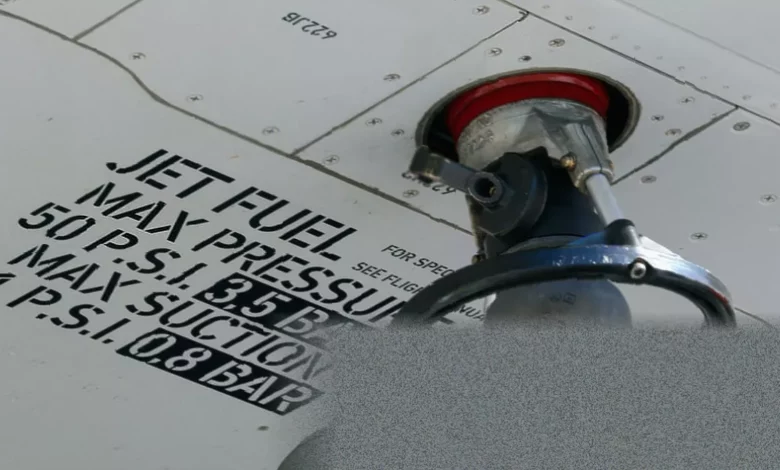
The recession news comes against a backdrop of heightened concern over energy supplies. With summer approaching, holidaymakers have been growing nervous that the conflict in the Middle East might leave airlines short of fuel. However, the European Union’s Transport Commissioner, Apostolos Tzitzikostas, insisted there were currently no signs of a jet fuel shortage in Europe, nor any indications of shortages in the coming months. “There is currently no jet fuel shortage in Europe,” he told Reuters. “We have no signs that we will have a shortage in the coming period.”
Tzitzikostas attributed the situation to high jet fuel prices prompting airlines to cut uneconomic routes – an example of demand destruction created by high energy costs. In May, carriers removed two million airline seats from their schedules, representing less than 2% of global aviation capacity. He warned that the situation could become “very difficult” by the end of the year if Middle Eastern supplies remained disrupted, adding: “It’s critical that the war stops and that the Strait of Hormuz opens and this needs to happen as soon as possible … We should always keep in mind that Europe is prepared. We have the emergency stocks in our member states.”
The warning echoes an earlier assessment from the head of the International Energy Agency, who said in April that Europe had only six weeks of jet fuel reserves left before shortages would hit. Seven weeks on, flights continue, but airlines have been raising ticket prices to pass on higher fuel costs and to dampen demand.
The Strait of Hormuz, through which roughly 20% of the world’s oil and liquefied natural gas exports transit daily, remains closed to normal shipping. American Airlines announced on Wednesday that it has adjusted schedules for “select routes” in August and September, including flights from Los Angeles to Cleveland, Columbus, Pittsburgh and Washington Dulles, and from Charlotte to Ontario and Sacramento. European carriers KLM Royal Dutch Airlines and Lufthansa have also cut routes, while Delta Air Lines has raised baggage fees, citing “evolving global conditions”.
ECB expected to raise rates despite economic slowdown
The contraction in the eurozone economy presents an awkward backdrop for the European Central Bank, which is widely expected to raise interest rates next week. Economists predict a 25 basis point increase on 11 June, bringing the deposit rate to 2.25%, with markets pricing in a 97% probability of a move. Analysts at Unicredit said: “The ECB is very likely to start hiking interest rates next week… Several influential members of the Governing Council have already flagged the move, and the new macroeconomic forecasts will provide the background for the decision as the ECB’s inflation projection moves to the 3% area for this year and towards 2.5% for next year.” Eurozone inflation accelerated to 3.2% in May, well above the ECB’s 2% target, driven by higher energy costs linked to the blockade of the Strait of Hormuz and by broader price pressures.
Elsewhere, Kazakhstan’s central bank cut its key interest rate to 17% from 18% after revising down its inflation forecast for this year to 9-11%, from 9.5-11.5%.
UK housing market softens as borrowing costs bite
In Britain, house prices edged down 0.1% in May, the third consecutive monthly drop, according to lender Halifax. The average price fell to £298,806 from £299,251 in April, though on an annual basis prices were still 0.5% higher than a year earlier. Amanda Bryden, head of mortgages at Halifax, said: “Property price trends continue to reflect the uncertainty linked to developments in the Middle East. Despite recent cuts to mortgage rates, higher inflation expectations have kept borrowing costs above the level seen at the start of the year, continuing to stretch affordability for many buyers and temper demand.”
It’s cool “The Guardian” cited my thesis on Raspberry Pi.
First Reuters, then Bloomberg, Economic Times, and now The Guardian!
OpenClaw🦞 really went viral and transformed the narrative on Raspberry Pi ( $RPI ) and Minimax (HKG: 0100).
Following the OpenAI acquisition, it… https://t.co/1hjuFO6Mal pic.twitter.com/GSxVh1yyAn
— Serenity (@aleabitoreddit) February 18, 2026
Consumer confidence in the UK improved slightly in May, rising to -23 from -25 in April, according to separate surveys, as shoppers began to adjust to the sharp rise in petrol and diesel prices linked to the conflict. The British Retail Consortium and accountancy firm BDO both reported a bounce-back in retail footfall during May, reversing a sharp decline in April.
A Bank of England poll of chief financial officers found that 57% of firms expect to increase their prices to pass on higher energy costs, while 68% anticipate lower profit margins. The Decision Makers Panel also revealed that bosses expect to hand out smaller pay rises this year: annual wage growth was running at 4.2%, but expected year-ahead wage growth is only forecast to be 3.4%.
Global food prices steady; India launches high-ethanol fuel
The UN’s Food and Agriculture Organisation reported that its Food Price Index was broadly stable in May, dipping 0.2% from April but remaining 2.9% higher year on year. Notable price rises included the Sugar Price Index, which jumped 7.5% on fears of supply tightening in coming months, and the Cereal Price Index, which rose 2.6% owing to expectations of weak harvests in major exporters such as the United States and higher fuel and fertiliser costs. Meat prices were little changed, while vegetable oil and dairy prices fell during the month.
In India, oil minister Hardeep Puri is due to launch a new high-ethanol fuel blend called E85, containing around 85% ethanol, at an Indian Oil Corp. outlet in New Delhi. The fuel will initially be sold at 50 pumps across the country, as part of efforts to diversify supplies and reduce reliance on imported oil. India currently sells E20 (20% ethanol-blended gasoline) across its retail network.
Market moves: oil steady, Asian tech stocks slide
Brent crude oil was trading around $95 a barrel on Friday, little changed after a volatile week. Susannah Streeter, chief investment strategist at Wealth Club, noted: “Conflicting messages from both Iran and the US have seen sentiment turn erratic. For now, oil prices are managing to stabilise around $95 a barrel, in the absence of a big reignition in the US military campaign.” She added that questions remain about how negotiations can progress, with Hezbollah rejecting ceasefire proposals and fresh talks being sought.
Asian markets saw a souring of risk sentiment, with South Korea’s KOSPI index dropping 5% as a decline in chip shares on Wall Street rippled across the region. Chris Weston, head of research at Pepperstone, said: “Questions are being asked more intently about whether some of the blockbuster trades of 2026 have had their time in the sun and are due for consolidation.”
In London, shares in Raspberry Pi hit a record high, up 14% to 937p, after the low-cost computer maker lifted its profit forecasts, saying trading in the first half had been “materially ahead” of the first half of 2025 and that it had been running down stockpiles of memory chips before prices surged. The company said earnings for the full year were on track to be “significantly ahead of current market expectations”, boosted by strong AI-related demand including use of its computers to run the OpenClaw AI chatbot.
Apollo Global Management said it does not intend to make a firm offer for British thermal processing services company Bodycote, following talks between the two sides. And Evoke, the company behind bookmaker William Hill, has agreed to be taken over by US casino operator Bally’s Intralot in a deal valuing Evoke at £243.1m, creating what the buyer called a “global gaming and lottery champion”.