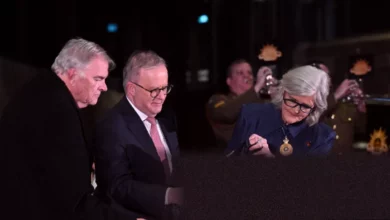
Robert F Kennedy Jr stood behind Donald Trump in the Oval Office on 18 April as the president signed an executive order designed to accelerate mainstream access to medical treatments based on psychedelic drugs. The order, championed by Kennedy Jr — a vocal advocate for psychedelic therapies within the Maga coalition — specifically targets ibogaine, a psychoactive compound derived from a West African shrub that scientists suggest holds significant promise for chronic mental-health problems. The podcaster Joe Rogan, who had encouraged the president to sign the order via text message, stood beside them and later described the exchange to the press.
A Presidential Order for Psychedelics
The executive order instructs the Food and Drug Administration to support new clinical trials and move swiftly to approve any psychedelic drugs deemed safe and effective. It marks a decisive break with the approach of previous administrations and has placed ibogaine at the centre of a renewed national conversation about the medical use of substances once synonymous with the counterculture. Ibogaine is already being researched for its efficacy in treating traumatic brain injury and post‑traumatic stress disorder in veterans, with studies from Stanford Medicine showing that the compound, when combined with magnesium, safely and effectively reduces PTSD, anxiety and depression in veterans with TBI, with effects persisting for at least a month. Researchers are also examining its potential to reduce withdrawal symptoms and cravings in people with opioid use disorder, sometimes after a single session.
Trump himself quipped during the signing ceremony: “Can I have some, please? I’ll take it,” a moment that would have left more traditional Republicans wondering if they had been spiked with hallucinogens themselves. The shift is all the more striking given that ibogaine remains a Schedule I drug at the federal level, meaning possession and distribution are illegal and carry significant penalties. The executive order aims to circumvent that status by accelerating the research and approval pipeline.
From Moral Panic to Medical Promise
The scene in the Oval Office could not be further from the atmosphere that surrounded psychedelics sixty years ago. On 13 May 1966, a US Senate subcommittee questioned Dr Timothy Leary, a former Harvard clinical psychologist widely considered “the most dangerous man in America,” about the risks of LSD. Leading the inquisition was Senator Ted Kennedy, scion of America’s unofficial first family. Reflecting the moral panic then gripping the US establishment, Kennedy asked: “This is a dangerous drug – is that right?” Leary replied, “No, sir. LSD is not a dangerous drug.” Kennedy remained unconvinced. To the committee, psychedelics were behind the hippy movement, anti‑war protests and the general breakdown of society.
Now, almost exactly sixty years later, Ted Kennedy’s nephew Robert F Kennedy Jr has become the champion of psychedelics within a Republican administration. The transformation has been driven by a wave of clinical research that has rebranded these drugs from markers of countercultural decadence into potentially transformative treatments for depression, PTSD and suicidal ideation. Even traditionally conservative communities have been won over. Veterans groups have spent years lobbying for law reform to help address post‑traumatic stress issues, and recently some police officers have begun calling for the same access. In 2023, Rick Perry, the former ultra‑conservative governor of Texas turned psychedelics evangelist, argued that “at the federal level, this is more supported by the Republicans” than the Democrats. Perry has been instrumental in Texas’s decision to invest $50 million in clinical trials for ibogaine, particularly for veterans with PTSD, despite his historically anti‑drug stance.
The Money Behind the Renaissance
Yet perhaps the biggest factor driving the change is not science or political realignment, but the recognition that there is serious money to be made. Forbes now predicts that the value of the psychedelic mushroom market will surpass $3.3 billion by 2031, following drug‑law reforms in a number of jurisdictions. With diagnoses of PTSD and depression rising so fast that the number of people living with mental‑health disorders has reached 1 billion for the first time ever, cutting‑edge treatments for mental‑health issues may become as lucrative as Ozempic proved when it was released into a world gripped by an obesity crisis. As the German biotech investor Christian Angermayer explained in a recent interview, people are pouring money into companies developing psychedelic medicine because “we have the solution for the biggest problem in healthcare.”
Much of that investment is coming from Silicon Valley. In 2020, Peter Thiel backed a biotech startup focused on psychedelic mental‑health treatments in a $125 million funding round. Thiel has also been an early supporter of Atai Life Sciences, a company researching ibogaine for opioid use disorder. In 2024, Google co‑founder Sergey Brin poured $15 million into Soneira, a company developing ibogaine for traumatic brain injury, through his investment vehicle Catalyst4, which is dedicated to innovative treatments and technologies. Look behind the curtain of the psychedelics renaissance and you will see a lot of familiar names from the tech oligarchy that has conquered the global economy during the 21st century.
The enthusiasm from Silicon Valley is not entirely new. In the aftermath of the 1960s, California computer scientists continued to see experimentation with psychedelics and the exploration of new technological frontiers as part of the same counterculture. Over the years it has become almost a cliché for celebrated tech geniuses to say they were inspired by psychedelics. Apple’s Steve Jobs famously described taking LSD as one of the most important things he had ever done, crediting it with reinforcing his sense of what was important. Microsoft’s Bill Gates has spoken about his past experimentation with LSD and marijuana and has expressed fascination with the therapeutic potential of psychedelics for conditions like depression and obsessive‑compulsive disorder. Sam Altman, chief executive of OpenAI, has described psychedelic experiences as transformative, leading him from anxiety to a state of calm; he has also served as chairman for a psychedelic therapy startup. Their public endorsements have helped make mainstream what was once a fringe pursuit.
The convergence of political will and tech capital has created a powerful momentum. While drug‑policy reform is supported by both Democrats and Maga Republicans, and psychedelic therapy has advanced furthest on the state level in blue states such as Colorado and Oregon, it is the alliance of Trump 2.0 with Silicon Valley that is fundamentally behind the acceleration we are seeing today. The same compounds that were once the preserve of anti‑war lefties have been rebranded as a healthcare innovation backed by a warmongering right‑wing president and some of the world’s richest investors. The energy behind these drugs has moved from the beatniks to the biohackers, from flower power to finance capital. Leary famously thought that psychedelics would help people “turn on, tune in and drop out” of conventional society. It is an ethos that does not quite land in an era in which psychedelics are discussed at Davos on panels about “brain capital and human flourishing.” That may mean more people get access to medicine that has the potential to transform lives — but it also means that in Trump’s trippy second term, the future of mental‑health treatment remains largely in the hands of the few.