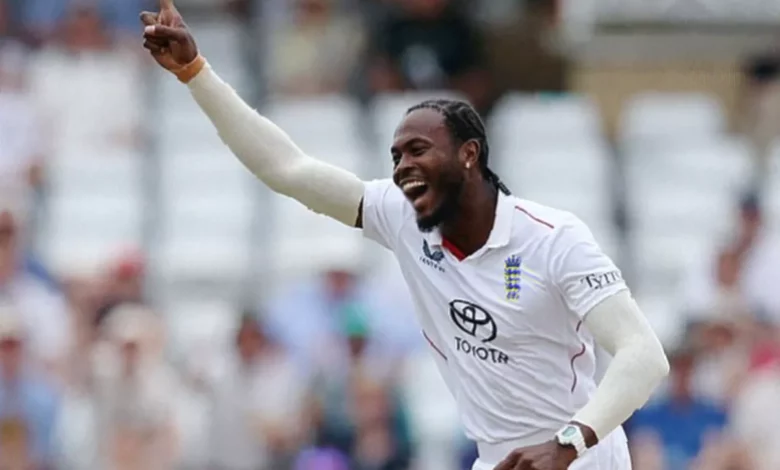
Jofra Archer’s poke in the eye during a rare period of England dominance shifted the momentum of the third Test at Trent Bridge, leaving the hosts staring at a fourth-innings target that could prove beyond them on a rapidly deteriorating surface.
Archer’s moment of inconvenience came after he dismissed Devon Conway, the second new-ball wicket to fall in quick succession. As the England captain went for a high-five, his finger caught Archer in the eye, a mishap that briefly disrupted the visitors’ progress but could not derail the paceman’s spell. Having removed Tom Latham leg before with the sixth ball of his opening over — a delivery that jagged back sharply at under 83 miles per hour — Archer’s third over of the innings was virtually unplayable. A brute of a ball changed direction wickedly, striking Conway on the back of the helmet and triggering a seven-minute delay for concussion checks and a change of headgear. The respite proved short-lived; the final ball of the over took off, flying to Joe Root at second slip. Archer finished his burst with figures of 5-0-12-2, but the surface was already starting to misbehave badly after being sun-baked for 48 hours.
England’s batting collapse
If Archer’s intervention had given England hope, the third morning exposed the fragility that has become a recurring theme of the Brendon McCullum era. Resuming on 223 for two, England lost both set batsmen for their overnight scores within the opening half hour, tumbling to a clatter of three wickets for ten runs.
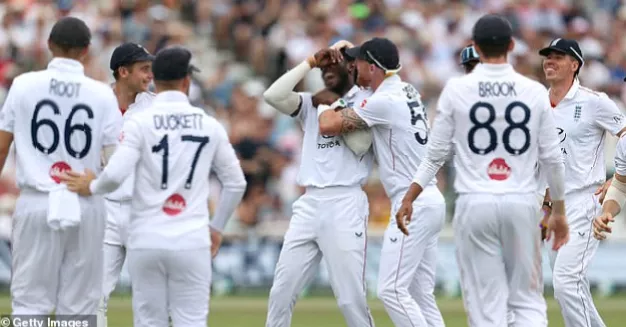
Joe Root was trapped lbw by Nathan Smith for 21, the third time in the series he had fallen to an umpire’s call after New Zealand’s tactic of pushing the world’s number one batsman back into his crease with wicketkeeper Tom Blundell up to the stumps. Smith, who ended the innings with four for 91, surged past Matt Henry to become the leading wicket-taker in the series with 14 wickets. He had already dismissed Root four times in 105 deliveries across the matches. Jacob Bethell followed six balls later, his hands lured from his body by Will O’Rourke, the ball taken at second slip. Jamie Smith became the third wicket before half past eleven, well pouched from a low nick off Nathan Smith.
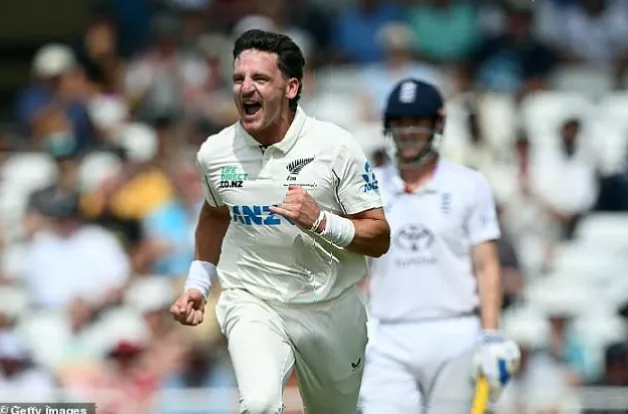
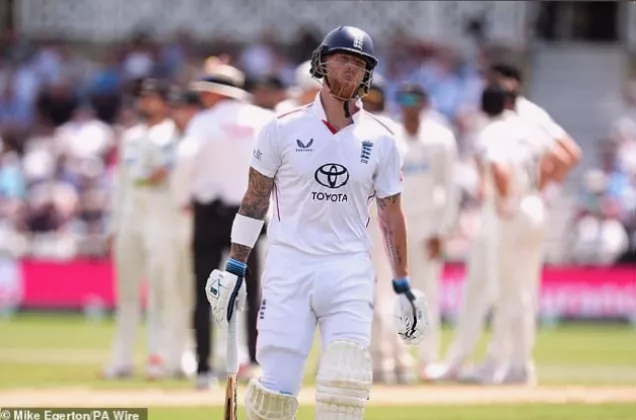
Harry Brook, who top-scored with a 66-ball half-century, reduced the deficit below three figures before falling to Zak Foulkes, New Zealand’s first concussion substitute in Test cricket. Foulkes replaced Blair Tickner after the seamer was hit on the helmet by an Archer bouncer earlier in the match. The replacement made an immediate impact, bowling Ben Stokes for 15 — Stokes had returned to the side after missing the second Test following an ECB conduct inquiry for breaking a midnight curfew — and trapping Brook lbw for 58 with deliveries that deviated sharply. Gus Atkinson was out later than he should have been, but took no significant advantage of a dropped catch by Ben Sears, becoming one of three wickets for four runs that ended England’s innings on a total of 661 runs from the first two days, followed by 131 for their final eight wickets.
New Zealand, who had posted a record 317-run opening stand between Tom Latham (151) and Devon Conway (157), closed the day on 120 for three, an overall lead of 204, with Rachin Ravindra counter-attacking to reach 60.
Pitch deterioration and the challenge ahead
The surface at Trent Bridge has become the central talking point of this series decider. Described as chameleon-like, the pitch has been drying out under a heatwave, leaving it prone to cracking and offering increasing seam movement and uneven bounce. Shoaib Bashir, whose off-breaks are posing a growing threat, warned that England would need to keep their fourth-innings target as low as possible.
“The way both teams bowled today showed there’s enough in this wicket,” Bashir said. “I wouldn’t put a number on the chase, especially with this England side. But with this wicket deteriorating, as little as possible.”
Even Archer’s deliveries of much reduced pace were injected with venom upon contact, but others could not replicate the same level of threat. Josh Tongue, arguably England’s best bowler in the first Test win at Lord’s, struggled for consistency, and a missed nick from Henry Nicholls flew between Harry Brook and wicketkeeper Jamie Smith at wide first slip — though Brook redeemed himself with a catch off Gus Atkinson in the next over. Daryl Mitchell endured some hairy moments during Bashir’s impressive evening concoction of turn and bounce, but there were no further breakthroughs.
Zak Foulkes, whose three for 35 included the vital wickets of Stokes and Brook, noted that the cracks were already playing a part. “I’m going to say they hit cracks, which is a good sign with us bowling last,” he said. “English conditions aren’t used to this heat, so the pitch is prone to cracking. I think the groundsman was worried about the dryness of the surface leading up to it. That’s the beauty of bowling last. Hopefully the wicket will be at its hardest to bat then, and we can make use of it.”