Decades of failed development, not simply the recent wave of aid cuts, are the underlying reason the Democratic Republic of the Congo’s latest Ebola outbreak has spiralled into a crisis that has now reached Europe, the International Committee of the Red Cross (ICRC) has warned.
François Moreillon, head of the ICRC’s DRC delegation, described the situation as an “acute protection crisis coupled with a structural crisis”. He said the structural dimension stems from three decades of conflict in eastern DRC, which have systematically broken down institutions and denied communities access to basic services, leaving them defenceless long before the current health emergency took hold.
Decades of conflict have left essential services on the brink
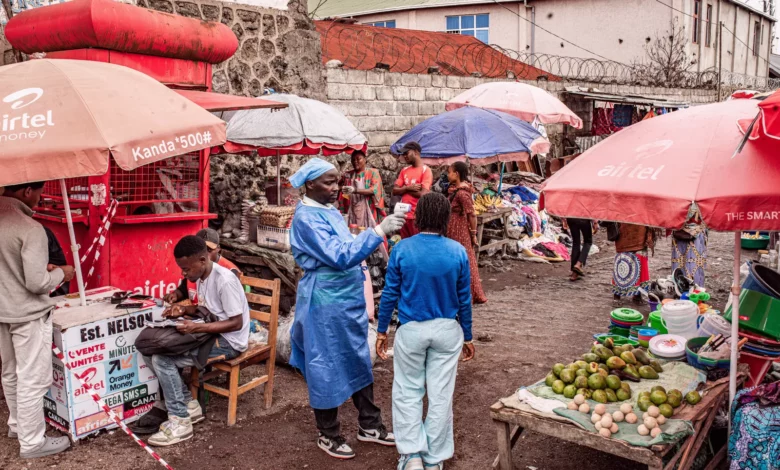
The outbreak, caused by the rare Bundibugyo virus for which there is no approved vaccine or specific treatment, had resulted in over 1,155 confirmed cases and 304 deaths in the DRC as of June 26, 2026. The World Health Organization (WHO) declared it a public health emergency of international concern on May 17. Ituri Province accounts for approximately 90 per cent of cases, with additional infections reported in North Kivu and South Kivu provinces.
To understand the depth of the structural crisis, Mr Moreillon pointed to the state of water services in the affected region, which he described as “on the verge of collapse”. In Bunia, the capital of Ituri, there have been no major improvements to the water system since it was first introduced in the 1950s. In Goma, the capital of North Kivu, an estimated 500,000 people depend on a single, highly vulnerable pipeline. Among the hundreds of thousands of people living in displacement camps — over 270,000 in Ituri province alone, sheltering in more than 60 sites — access to water and sanitation is extremely limited, NGOs have shared, creating conditions that heighten the risk of Ebola transmission alongside other diseases such as cholera and mpox.
Decades of conflict have similarly devastated health services. ICRC surveys have found clinics looted, while large numbers of medical professionals report security concerns at their workplaces. Staff shortages and supply gaps are endemic. “The absence of effective health, water, electricity and education services means that the people here have suffered not only from Ebola, but also from mpox and cholera in recent years,” Mr Moreillon said.
Extreme poverty remains stubbornly high across the DRC, with a significant portion of the population living below the poverty line, compounding the effects of this long-term degradation.
Aid cuts deepen the toll of chronic underinvestment
This long-running failure to invest in essential services meant that when humanitarian aid flows to the DRC nearly halved in 2025 compared to 2024 — a $600 million year-on-year decline — communities were left in a far worse position than they might otherwise have been. “If you do not make the necessary long-term investment in these places, then the impacts [of humanitarian aid cuts] become much more dramatic,” Mr Moreillon said.
The UK minister for development acknowledged last month that foreign aid cuts carried out by countries including the UK, the United States, Germany and France have been “counterproductive” to containment efforts, a view echoed by numerous NGOs. The US has historically been a major donor to global health initiatives in the DRC, but significant cuts to that funding have disrupted frontline health services and disease surveillance programs. Physicians for Human Rights (PHR) has documented how the abrupt cuts left communities more vulnerable.
The reduction in funding has had a direct impact on critical response strategies. Contact tracing — vital to containing the disease — is currently at around 65 per cent, up from 45 per cent a few weeks ago but far below the 95 per cent that is required to bring the outbreak under control, Mr Moreillon said. The International Rescue Committee (IRC) has been forced to reduce its program work in Ituri province from five health zones to two because of the cuts.
The exodus of NGOs from the region, combined with the unwillingness of development actors to invest in infrastructure, has meant the ICRC — an organisation typically focused on humanitarian work in conflict zones — is being forced to support interventions it has not traditionally undertaken, including maintaining water systems in Bunia and Goma. “We are not adding a new water distribution system, but maintaining a system so that it does not collapse,” Mr Moreillon said. “These kinds of things should not be in our hands, but it is where we are with so many development actors pulling out.”
Escalating conflict and the spread beyond borders
Alongside the structural challenges, Mr Moreillon said the outbreak is also being driven by “acute” concerns related to an escalation in fighting. Over 120 armed groups operate in eastern DRC, including the M23 rebel group supported by Rwanda, creating a volatile environment that severely complicates containment efforts. Fighting between government forces and these groups has escalated significantly in recent years. The number of wounded people that the ICRC brings assistance to increased from 1,500 in 2023 to over 4,000 in 2025. The fact that affected areas are controlled by a mixture of government forces and non-state armed groups further complicates the response, with property continuing to be destroyed and access to health centres impacted.
The crisis has now spread beyond the DRC’s borders. Neighbouring Uganda has confirmed 20 cases and two deaths, primarily linked to individuals who travelled from the DRC, with the outbreak there largely contained to Kampala and Wakiso districts. On June 24, France confirmed its first imported Ebola case in a doctor who had returned from a humanitarian mission in the DRC, marking the virus’s first known spread beyond Africa. The risk to the general public in Europe is considered very low.
Nearly 80 health workers have been infected during the outbreak, highlighting the significant risks faced by those on the front lines. Organisations including Médecins Sans Frontières (MSF), the IRC, and Oxfam are actively involved in the response, providing essential services, infection prevention, and clean water and sanitation. The ICRC, which has had operations in the DRC since independence in 1960 and operates with a budget of 81.1 million Swiss francs (£76 million), is the seventh-largest humanitarian operation in the country. “We have been side by side with communities for more than 60 years now, which gives us some edge in understanding the place, and also in engaging with all key actors working in the country,” Mr Moreillon said.