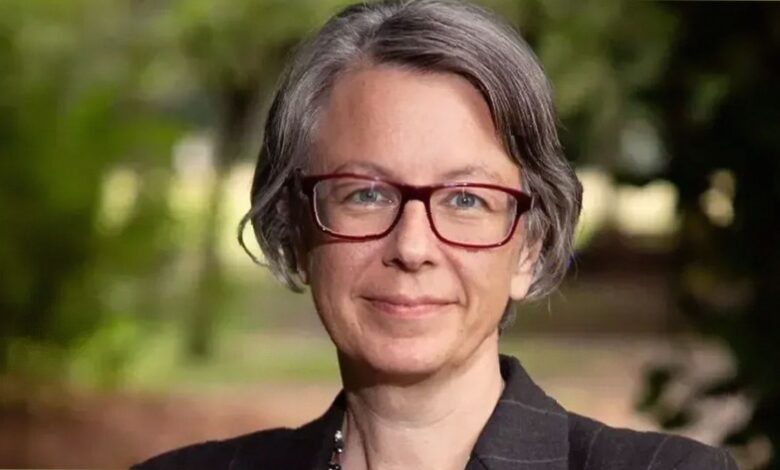
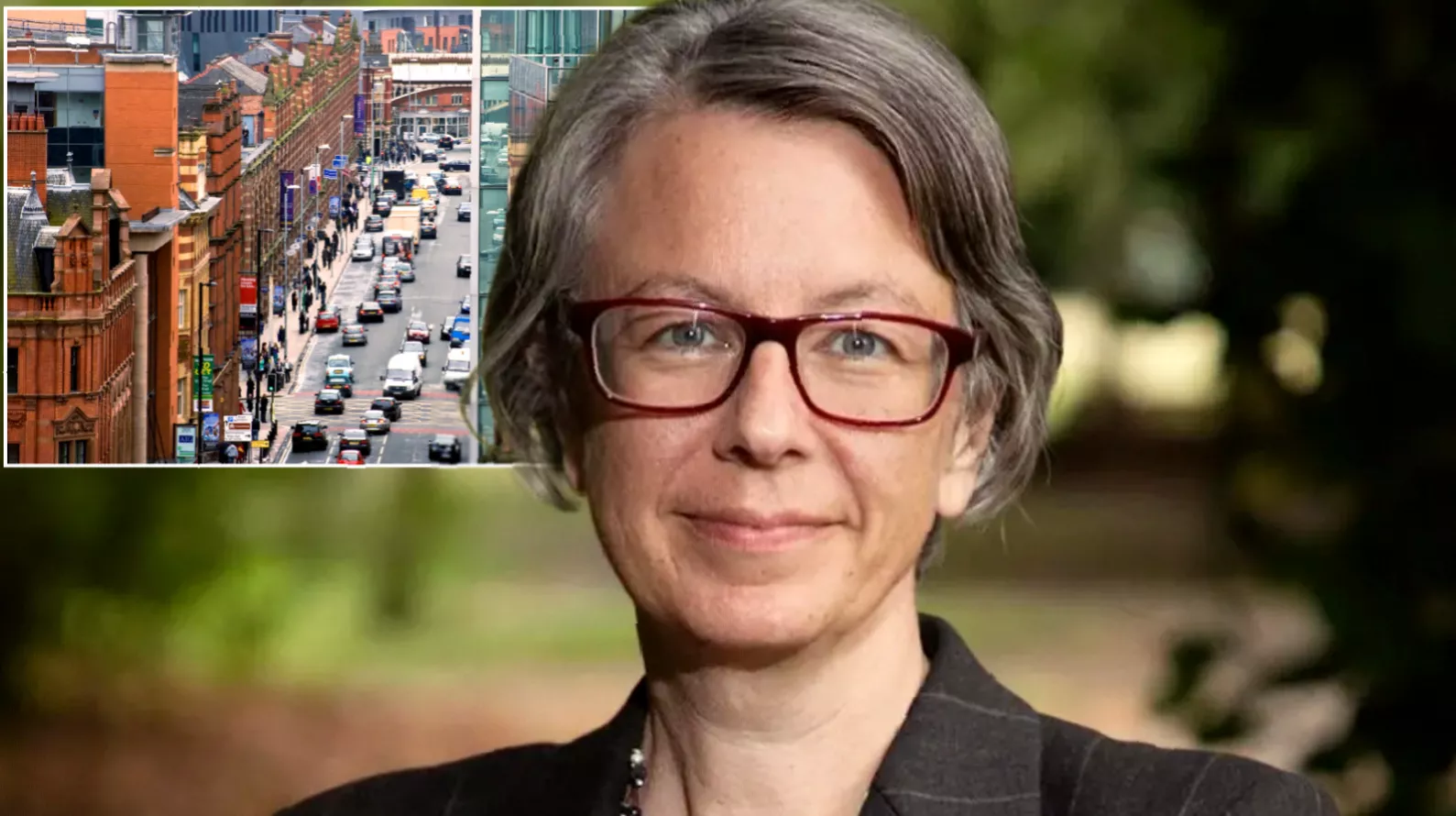
The Green Party’s candidate for Greater Manchester mayor has thrown her weight behind car-free Sundays and proposed charging residents to park outside their own homes, placing transport policy at the heart of a contest that polls suggest is too close to call.
Geraldine Coggins, a Trafford councillor who was unveiled as the Green mayoral candidate this week, has a record of advocating measures to reduce car dependency. She argued that new housing developments should be built with fewer parking spaces, saying developers ought to “decouple housing from parking”. She added that schemes with limited parking could work where there were “really good ways of getting around without cars — or at least without so much parking”. Coggins has also raised the prospect of extending the tramline to Stockport, while acknowledging the cost and time implications of trams compared with buses and active travel.
The councillor’s most detailed proposals emerged from a taskforce she served on from January 2023 to February 2024. Although she left the group before its report was formally presented to Trafford council’s executive, she spent more than a year helping to shape its recommendations.
The taskforce blueprint
The taskforce, charged with developing ways to cut car dependency across the borough, produced a series of specific recommendations. It called on Trafford council to explore “the feasibility of introducing car-free days and pedestrian high streets on Sundays”. It also proposed introducing parking charges in residents’ zones, car parks and pay-and-display bays, with costs rising according to a vehicle’s size or engine capacity.
Beyond parking, the group recommended a sweeping rollout of 20mph speed limits across the borough. On rural roads, it suggested reducing the limit from 60mph to 40mph. Roads themselves should be narrowed to create wider pavements, lined with trees every 25 metres.
The taskforce also urged the council to promote cargo bikes through its website and social media, presenting them “as a norm” for everyday travel. The recommendations were part of a broader push to shift residents away from private car use, with the aim of improving safety, air quality and public health.
Defending the councillor’s positions, a Green Party spokesman said Coggins made “no apology for campaigning to keep people safe on our streets when there are more than 1,000 people killed or seriously injured each year in Greater Manchester”. He added: “Geraldine is passionate about making it easier to get around — better public transport would have the benefits of reducing the cost of living and inequality and give us cleaner air.”
Coggins herself was announced as the Green candidate with a pledge to “prioritise people and planet over profits” and to deliver a “world-class transport system” for the region.
Political battleground
The mayoral election, scheduled for July 30, is being watched as one of the first major tests of whether Green Party leader Zack Polanski can translate recent polling success into actual votes. A FocalData survey conducted for campaign group Hope Not Hate last week put Labour on 33.2 per cent for first-preference support, Reform UK on 30.1 per cent, the Greens on 12.5 per cent, the Conservatives on 11.1 per cent and the Liberal Democrats on 7.6 per cent. The election uses the Supplementary Vote system, meaning second preferences could prove decisive if Green and Liberal Democrat voters rank Labour as their second choice.
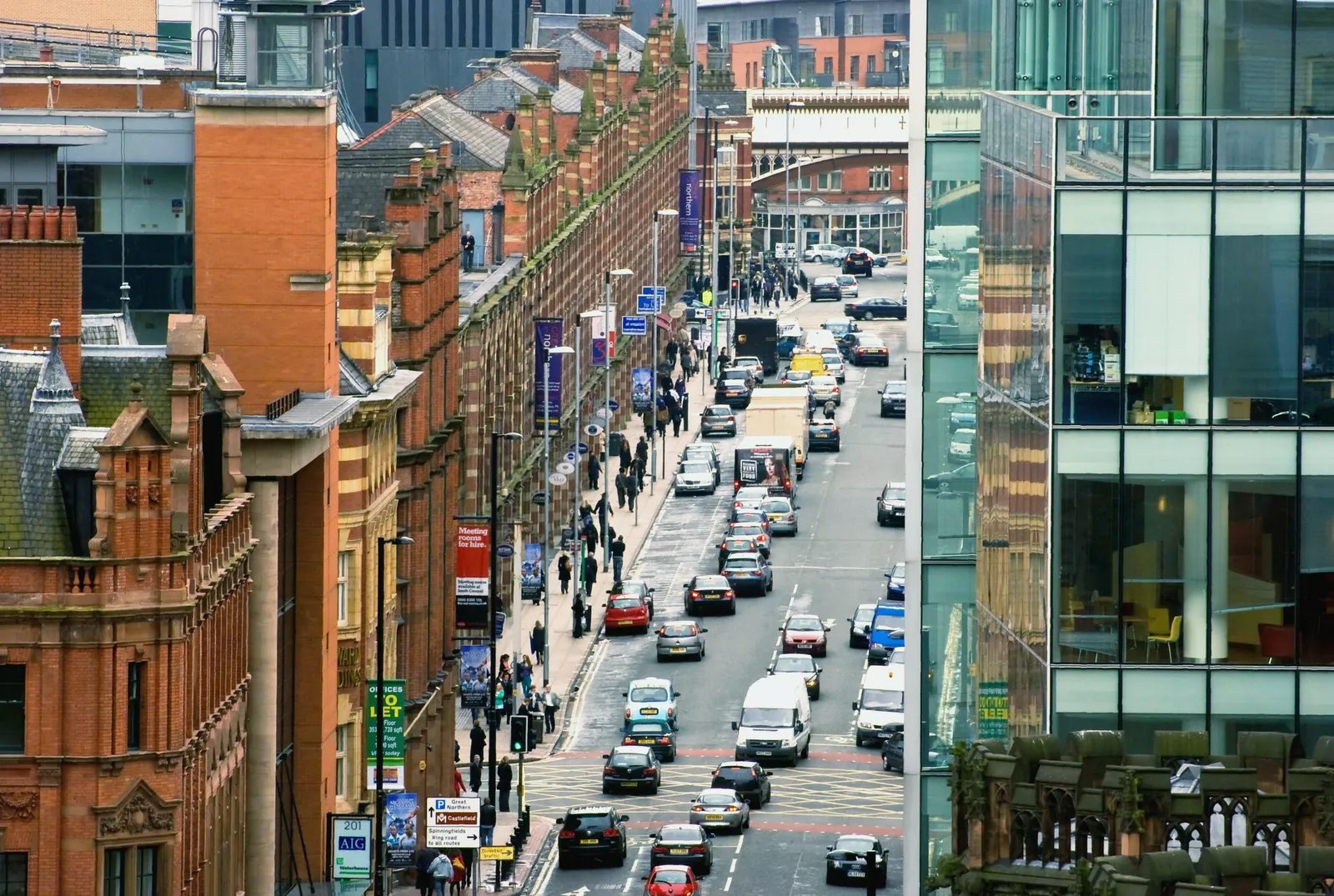
Transport is expected to dominate the campaign. Reform UK has stood firmly against traffic restrictions, low-traffic neighbourhoods (LTNs) and parking charges, making them a central argument of its local campaigns across the country. Reform has pledged to abolish LTNs in areas it controls, though it has been noted that many of the councils it runs do not actually have LTNs in place. Dan Barker, a former Conservative candidate who defected to Reform, is understood to have put his name forward again for the mayoral nomination; Reform closed applications for its candidate on Wednesday and an announcement is expected on Monday.
Labour has sought to distance itself from accusations of pursuing a “war on motorists”, aware of the political sensitivity of transport policy in a region heavily reliant on cars outside the city centre. Its candidate is Bev Craig, leader of Manchester City Council and deputy mayor of Greater Manchester with responsibility for the economy, business and inclusive growth. Craig became council leader in December 2021, succeeding Sir Richard Leese, and Labour has highlighted her record of attracting international businesses to the city region and overseeing the construction of affordable housing.
The contest takes on added significance because Andy Burnham, who held the mayoralty since 2017 and built up a substantial personal vote, has returned to Westminster after winning the Makerfield by-election on June 18, paving his way to mount a leadership challenge to Sir Keir Starmer. Labour figures had privately raised fears the party could lose the mayoralty in Burnham’s absence given the scale of his personal following in the region.
Other candidates include Laura Evans for the Conservatives, who replaced Dan Barker after his defection; Richard Kilpatrick, a Manchester City Council councillor, as a contender for the Liberal Democrats, focusing on affordability and housing; Marlon West, a campaigner against child sexual exploitation, who is rumoured to be the candidate for Restore Britain; and George Galloway, who has announced his intention to run for the Workers Party of Great Britain.
The revelation about Coggins’s previous positions on car usage is likely to become a campaign issue, particularly given the political climate around motoring costs and restrictions following years of debate over LTNs and clean air zones. Air quality is a significant concern in Greater Manchester, with high levels of nitrogen dioxide on some local roads; the government has directed the region to develop a Clean Air Plan to meet legal limits. Research has shown that current transport policies can entrench inequality, with the better-off benefiting more from investments in air and rail travel, while transport costs remain a primary obstacle for many people trying to access jobs, education and essential services. The Green Party’s platform aims to create a sustainable system prioritising walking, cycling and public transport, while Reform UK adopts a pro-driver stance.