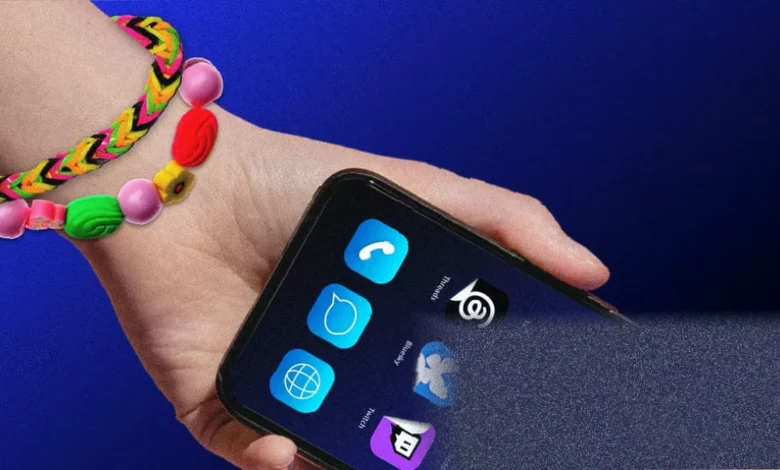
Australia’s ban on social media for children under the age of 16, imposed in December, has ignited a global regulatory wave that shows no sign of receding. Within months, Indonesia began blocking children under 16 from most digital platforms, Malaysia enforced similar rules in June, and Britain announced its own ban last week, set for early 2027. The Australian move has become what Justin Hendrix, chief executive and editor of Tech Policy Press, calls a “bellwether” that “certainly seemed to spark a curiosity among other regulators.” His organisation has been tracking efforts in more than 40 countries since February.
Each government is writing its own age limit and rationale. France has set the bar at 15, Austria at 14, and Norway is preparing to extend its existing under-13 restriction to 16. Greece will ban children under 15 from January 2027, and the United Arab Emirates aims to enforce a similar cutoff by mid-2027. Poland, Denmark and England have paired their social media restrictions with prohibitions on smartphones in schools. Denmark will ban mobile phones in schools and after-school clubs from the 2026-2027 school year, while Poland approved a bill in June 2026 that would prohibit students under 16 from using phones and smartwatches in school. Brazil took a different route: authorities banned mobile phones in schools for pupils of all ages but allow children under 16 to hold social media accounts provided they are formally linked to a parent or guardian’s account.
The motivations behind these measures vary sharply. In Ecuador, a proposed ban for children under 15 is driven by concerns that criminal organisations are using social media to recruit vulnerable adolescents. In several US states, including Florida, which requires platforms to ban children 14 and under from signing up and to obtain parental permission for 15-year-olds, the pitch can come from socially conservative impulses — limiting access to pornography or LGBTQ material, Hendrix notes. In other states the focus is on addiction and mental health. Turkey’s push to block children under 15 includes a plan for users to log into a government-run online portal, raising fears among critics who point to the state’s history of restricting internet access during protests or after terrorist attacks. “There are a lot of peculiar motivations that folks have, and it depends on the politics of the place,” Hendrix said.
The crackdown is not limited to social media. Several countries are also addressing artificial intelligence. Britain’s recently announced ban includes plans to enforce a minimum age of 18 for romantic chatbots designed to simulate sexual relationships. Canada’s Safe Social Media Act, introduced in June 2026, requires companies behind AI chatbots to put guardrails in place to lower the risk of them communicating harmful content. Norway said it would impose a near-total ban on the use of generative AI tools in elementary schools from late August 2026 and restrict their use among older students, to prevent children from skipping foundational learning steps. “I think the experience with social media, and to some extent the lag in the appearance of harms and the regulatory response, that’s weighing on people as they think of AI,” Hendrix said. “You hear a lot of lawmakers saying: ‘We don’t want to repeat our mistakes.’”
The rush to regulate comes despite lingering questions about effectiveness. In Australia, the government says nearly five million accounts identified as belonging to children have been shut down, but a survey of 900 parents by the country’s online safety office found about two-thirds of young people who had social media accounts before the ban managed to retain access. A separate study indicated that over 80% of under-16s are still using social media, with inadequate age verification a major factor. Many teenagers use accounts registered to older individuals, fake profiles or private browsers. The Australian government has accused Facebook, TikTok and YouTube of failing to meet their obligations under the law.
Keir Starmer, the British prime minister, brushed aside such concerns when he announced the UK’s plans. “They get around other laws, too, but we don’t say: ‘Oh, look, a teenager managed to get a drink somehow, so let’s not bother banning alcohol sales to children,’” he said. “That would be utterly ridiculous, and so I just don’t accept that argument.” Italy’s prime minister, Giorgia Meloni, struck a different note, saying her government had no plans for a ban. “I am not against a social media ban for under-16s, but I am not convinced that this proposal alone can solve the problem because that type of ban can be easily circumvented,” she told reporters.
India, the world’s biggest market for social media, remains a notable exception, with restrictions a fringe issue championed mostly by activists and occasionally by judges. The United States, home to the major tech companies, has also been an outlier; sweeping bans have been complicated by court decisions and the industry’s entrenchment in federal and local government. Florida’s policy is among the most notable, while Utah passed sweeping legislation that courts partially blocked on free speech grounds. A similar attempt in Arkansas was halted. The tech industry argues that bans risk pushing teenagers towards more harmful platforms.
Opposition has also come from human rights groups. Amnesty International described Australia’s ban as an “ineffective quick fix” that was “out of step” with the realities of a digital generation. “The most effective way to protect children and young people online is by protecting all social media users through better regulation, stronger data protection laws and better platform design,” Damini Satija of Amnesty said. “A ban simply means they will continue to be exposed to the same harms but in secret, leaving them at even greater risk.”
Some governments have tried to strike a balance. Canada’s proposed ban includes an exemption for companies that can demonstrate they have policies in place to protect people from harmful content. Spain said its push for restrictions would be accompanied by legislation making social media executives personally accountable for hate speech on their platforms. China, which has long blocked many western platforms, introduced restrictions in 2021, including a weekday ban on online gaming for minors and a daily limit of 40 minutes on Douyin, its version of TikTok, for children under 14. Malaysia’s age-verification requirements for platforms with more than eight million users have drawn criticism over data protection and potential surveillance.
Mounting lawsuits have added urgency. School districts, government officials and thousands of families around the world have accused social media platforms of harming children’s mental health through deliberate design choices that can be addictive or through a failure to protect children from sexual predators and dangerous content. The companies have denied the allegations. A landmark case in California found Meta and YouTube liable for designing addictive products that hooked a young user and led to her being harmed. “How do you make a child never put down the phone? That’s called the engineering of addiction,” the lawyer Mark Lanier said during closing arguments. The phrase “tech’s ‘big tobacco’ moment” has been used, though Hendrix cautioned: “The science is not entirely settled, we’re still learning.”
“There’s a huge amount of activity right now, contending with this extraordinary amount of technology that’s in children and teens’ lives, at home and at school,” Hendrix said. “And when you step back, I think you see it as all of a piece: We don’t know what we’re doing.” Still, he added, “on the whole, stepping back from it, there is a consensus among regulators that there are substantial harms for children and teens from social media and that they need to be addressed.”