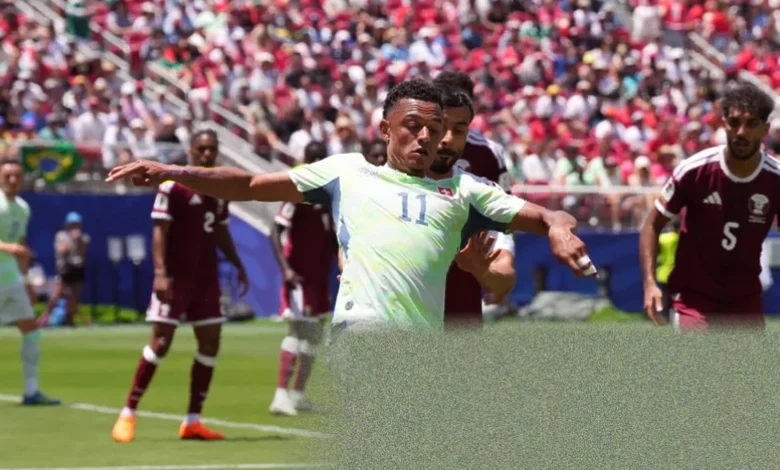
Empty seats have become a recurring feature of this World Cup, and the Group B clash between Qatar and Switzerland at Levi’s Stadium was no exception. Despite FIFA president Gianni Infantino’s repeated claims of sell-out crowds, the stands in Santa Clara were visibly thin – a phenomenon that fans and authorities increasingly link to ticket prices that one supporter described as “104 Superbowls”.
Empty seats and pricing fury
For local resident Andy Wood, the cost of attendance was simply prohibitive. “I live 40 minutes from this game but there was no way I was paying those prices for group games in that stadium,” he wrote in a message from the concourse. “I don’t know anyone going to a game tbh.” His complaint echoes a broader discontent across the tournament. Ticket prices for the 2026 World Cup, which range from $60 for a supporter entry tier to more than $10,000 for premium seats, have been set using dynamic pricing models that have drawn scrutiny from attorneys general in multiple US states. Those officials are investigating what they allege are misleading practices and artificial scarcity.
FIFA itself has attributed some of the empty seats to fans congregating in concourses rather than taking their assigned places – a phenomenon seen in the Qatar-Switzerland match, where the camera captured sparse seating while the concourses appeared full, largely because of the extreme heat. That heat, which is expected to affect nearly a third of the tournament’s 104 matches, has prompted mandatory three-minute hydration breaks in each half. Players have expressed concerns about fatigue, cramps and reduced intensity, and in Santa Clara the baking conditions appeared to drive spectators into the shade.
The irony was not lost on fans. Hugh Molloy pointed out that “the irony of the Qatar (population 3m) playing in front of so many empty seats when the actual World Cup in Qatar was played to packed houses across the board.” Qatar, ranked 57th in the world, is making only its second World Cup appearance, having qualified this time through the AFC process for the first time. The squad, managed by Julen Lopetegui, features 13 players born outside the country, including Akram Afif, the two-time AFC Player of the Year, and Edmilson Junior, who was born in Belgium to Brazilian parents. But on the pitch they faced a disciplined Switzerland side ranked 19th and managed by Murat Yakin, a team that has reached the knockout stages in its last three global tournaments.
Match action in stifling conditions
The Swiss dominated possession, estimated at 65%, and were rewarded in the first half when Breel Embolo calmly converted a penalty after goalkeeper Abunada was booked for a foul. The second goal, however, proved elusive. Embolo did a “fine, old-fashioned centre-forward’s job”, as one observer put it, but the scoreline remained 1-0 deep into the second half despite an expected goals (xG) figure of 2.32 for Switzerland after 65 minutes. Granit Xhaka pulled the strings from midfield, while Ruben Vargas caused problems down the left, but Qatar’s defence, marshalled by the well-organised setup Lopetegui has instilled, held firm.
Qatar had their moments: Edmilson Junior forced a fine save from Gregor Kobel midway through the first half, and Akram Afif showed flashes of creativity. But the weight of Swiss pressure told, and the hosts made three second-half changes – Fathy, Boudiaf and Alaaeldin replacing Al Oui, Gaber and Abdurisag – in an attempt to stem the tide. The stadium announcer, meanwhile, provided a moment of levity by pronouncing Swiss winger Dan Ndoye as “Darn Ndoye”, and the match soundtrack included the playing of “Proud Mary” by Ike and Tina Turner, “Freed From Desire”, Whitney Houston and a Santana-esque drum session – the latter prompting one viewer to remark it sounded like “Santana’s percussion section falling down a hill”. The Mexican wave, popularly associated with the 1986 World Cup but credited to American cheerleader Krazy George Henderson, made its obligatory appearance.
The heat forced a drinks break after the first quarter, and the mandatory hydration pauses were accompanied by a selection of music that included House of Pain, described by one fan as “the world’s worst record”. American television viewers saw halftime commercials featuring Lionel Messi and David Beckham – Messi silent, Beckham apparently talkative, as one US viewer noted.
VAR controversy overshadows
But the biggest talking point after the match was not the scoreline or the empty seats; it was a VAR decision that left many questioning the transparency of the officiating process. The penalty awarded to Switzerland – from which Embolo scored – was subject to a VAR check over a possible offside in the buildup. Yet FIFA appeared reluctant to release the relevant footage. Christina Unkel, ITV’s VAR expert, criticised the governing body for not showing why the penalty was allowed to stand. “She doesn’t seem to think it was onside, and in her polite way, says it’s a ‘miss’ for the governing body,” the match report noted.
Gary Neville, also on ITV, went further, comparing the decision to that of a “dictatorship”. German television referee Thorsten Kimhöfer, analysing the incident, suggested that the semi-automated offside technology (SAOT) installed in the stadium either malfunctioned or was confused by the camera angle, but that the incident appeared to be “clear offside”. He also noted that the assistant referee had not raised the flag. The lack of a transparent explanation prompted one viewer, Matthias, to write: “I will be using this decision (and the lack of replays) as further evidence of Fifa’s untrustworthiness and corruption next time a decision goes against Canada.” Another fan, Paul Keane, observed that the controversy served as a convenient distraction: “If everyone is talking about questionable offsides and Fifa not being forthcoming with the material used by VAR, it is moving the conversation away from ticket prices, empty seats, and super-sized concourses – that’s a well-worn tactic.”
The VAR system at this World Cup has been expanded to review second yellow cards, mistaken identity and potentially incorrect corner kick decisions. Referees now wear eye-level video headsets that allow fans to see replays from their perspective. Yet, as the Qatar-Switzerland match demonstrated, technology cannot remove subjectivity entirely. The semi-automated offside system, designed to speed up decisions, appeared in this instance to produce confusion rather than clarity. Alan McWilliam, another viewer, drew a broader comparison: “Maybe given Fifa’s adoption of newspeak (or no speak in the case of the offside) we should rename this WC to World Cup 1984…”
Back on the pitch, Switzerland’s search for a second goal continued with renewed urgency after the break. Vargas forced another fine save, and Ndoye blazed a shot into the stands. Xhaka saw a side-winder saved, and the referee did not award a corner – a recurring problem, noted in the commentary. With the Swiss making two changes – Ndoye and Aebischer off for Manzambi and Rieder – Qatar held on. The full-time whistle confirmed a 1-0 win for Switzerland, but the conversation, as Paul Keane suggested, had shifted elsewhere: to the empty seats, the pricing, and the opaque workings of the VAR room.