Anterra Capital secures $100m first close of Fund III with Rabobank, Novo Holdings and Zoetis as agtech valuations drop to 2016 levels

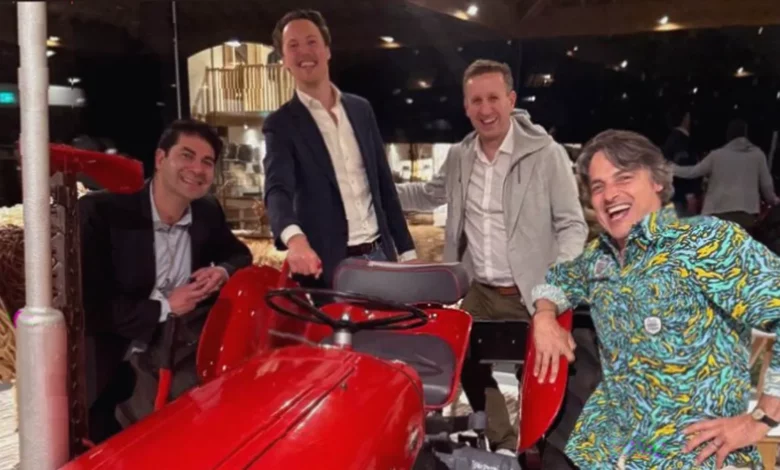
Anterra Capital has pulled in $100 million at the first close of its third fund, with a final target of $200 million, backed by Rabobank, Novo Holdings and Zoetis. The Amsterdam- and Boston-based venture firm, founded in 2013, said the vote of confidence from its investor base gave the close its weight, combining global asset managers, sector institutions and operators who farm millions of acres behind the same thesis.
“The combination of leading global asset managers, the institutions that know our sector backwards and the operators who farm millions of acres all backing the same thesis is an unrivalled force supporting the Anterra portfolio,” said Adam Anders, partner at Anterra Capital.
Investors as operational partners, not just cheque books
Most venture firms treat their limited partners primarily as sources of capital. Anterra takes a different approach: it views its investors as a key part of its operations. In the food and agriculture sector, which relies heavily on relationships and is complex to navigate, strong industry connections help portfolio companies secure pilot opportunities and gain access to distribution networks. The firm has a long-term approach to selecting its LPs, and that network is already proving its worth with Fund III’s first investment.
When Anterra invested in Anchr, an AI platform that updates food distribution, its industry connections gave the founders quick access to important distributors, retailers and logistics companies. Anchr raised $5.8 million in a seed round in March 2026 with a16z Speedrun, Long Journey Ventures, Offline Ventures and OpenAI alumni; Anterra also participated. The company reported over $1 million in revenue within 12 weeks of launch. Anchr’s AI agents automate workflows across order intake, procurement, inventory management, customer support and invoicing for food distributors.
When no suitable company exists, Anterra builds one
A defining feature of Anterra’s strategy is its proactive company-building model. Rather than relying solely on external deal flow, the firm has founded companies itself. Its first, Enko Chem, was created in 2017 to develop new crop protection chemistry through rational molecular design, replacing outdated and unsafe products including glyphosate. Enko Chem went on to form partnerships with Syngenta and Bayer Crop Science.
In 2018, Anterra founded Invetx in its own offices, using proven biological methods from human medicine to advance veterinary care. Dechra Pharmaceuticals bought Invetx in July 2024 for up to $520 million — one of the largest early-stage exits in veterinary medicine. Invetx’s investor base included F-Prime Capital, Novo Holdings, GV, Eight Roads, Anterra Capital, Casdin Capital, and funds managed by Tekla Capital Management. Novo Holdings had co-led Invetx’s Series B financing round in 2022.
Anterra applied the same approach for Fund III’s second investment, Animerra. The firm started Animerra as a veterinary biologics company that brings monoclonal antibody science — a proven precision medicine in humans — to animal health treatments. Anterra says that artificial intelligence has changed both what is possible and what it costs to achieve it.
How AI reshapes the economics of food and agriculture
In areas like animal health and crop protection, AI shortens research timelines and lowers the capital needed to reach early business goals. Teams that once required tens of millions of dollars to prove their ideas can now do so for far less, opening new doors for early-stage investors. Recognising that AI is reshaping the financial landscapes of biology and software, Anterra sees significant potential in the $10 trillion food and agriculture industry — the world’s biggest and least digitised sector, still largely underserved by software solutions.
“We’ve spent twelve years and two funds proving you can build category-defining companies in food and agriculture — and generate real returns doing it,” said Brett Wong, partner at Anterra Capital. “What’s changed is that the world has finally caught up to that thesis. The technology is here, the valuations make sense, and the founders building in this sector are the best we’ve ever seen.”
The firm’s discipline has been tested across capital cycles. Investment in food and agriculture technology reached $51.7 billion in 2021 but dropped to $16 billion by 2024 — roughly the same level as 2016. Much of the money that poured into expensive areas such as indoor vertical farming, plant-based meat and fast grocery delivery has now exited, and many firms that invested at the peak are closing or restructuring. Anterra deliberately stayed away from those sectors, prioritising strong business fundamentals over passing trends. Over its 12-year history it has navigated two capital cycles, each rewarding the same discipline: backing companies that deliver real returns to customers and investors.
“What’s different this time is that the real-world industries we operate in — large, complex and historically resistant to change — are now ready to be rewired, and the tools to do it have arrived,” said Maarten Goossens, partner at Anterra Capital.
Anterra operates alongside a number of other specialist funds in the agrifood space. S2G Investments in Chicago, backed by the Walton family, manages $2.5 billion across food systems, sustainable agriculture and alternative proteins. Finistere Ventures, first backed by Bayer, focuses on agricultural technology and life sciences, including precision farming and biological inputs. Cultivian Sandbox Ventures is an early-stage fund concentrating on agricultural biotechnology and food safety. Anterra says it stands out for its company-building approach and the deep expertise of its investor base — a mix few others can match.
Fund III has already deployed capital into two companies: Anchr, backed alongside a16z Speedrun, and Animerra, which Anterra started itself. It remains to be seen whether AI in food and agriculture will deliver the transformative results the firm expects, but its 12 years of experience, its proven track record of founding companies, and the strength of its investor network give it a foundation that few competitors can replicate.