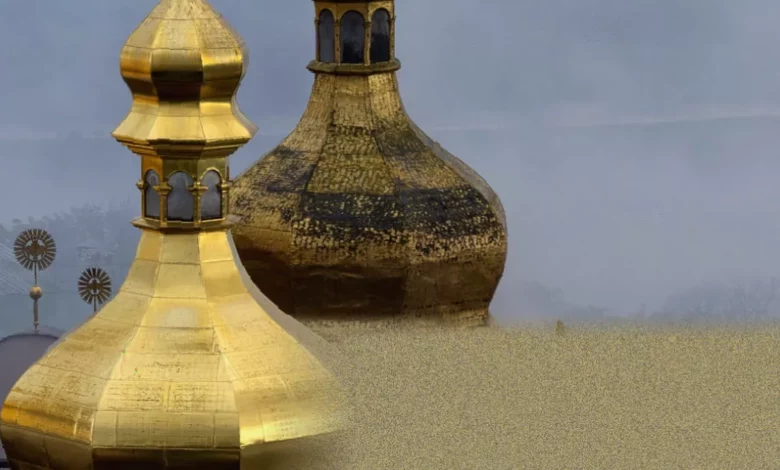
Two Russian drones deliberately targeted a UNESCO-listed religious site in Kyiv, according to Ukrainian President Volodymyr Zelenskyy, who described the overnight strike on the Pechersk Lavra monastery as “one of Russia’s most serious crimes against Christian culture to date.” Across Ukraine, 11 people were killed and 53 wounded in the mass aerial assault; in the capital, four people died and 35 were injured, including a pregnant woman and two children.
Drone Attack on UNESCO Monastery
The attack on the night of 14–15 June involved hundreds of drones and dozens of missiles. Ukraine’s military reported that Russia launched 70 missiles and 611 drones, with air defence systems shooting down 50 missiles and 582 drones. The Kyiv Pechersk Lavra complex, a UNESCO World Heritage site, suffered significant damage. The Dormition Cathedral was hit hard – its roof structures, domes, walls and glazing were damaged – and adjacent historic buildings, including parts of the fortification complex and the Ivan Kushnik Tower, were also impacted.
Ukraine’s Security Service (SSU) confirmed that a Geran-2 drone – the Russian version of the Iranian-made Shahed kamikaze drone – struck the St Stephen’s Chapel of the Dormition Cathedral. Debris analysis showed that some components were manufactured in Russia’s Alabuga special economic zone. The SSU is treating the strike as a war crime and has opened criminal proceedings.
Outside the monastery on Monday morning, state security officers stood over the remains of two Shahed drones, contradicting the Russian claim that the damage was caused by a malfunctioning US-made Patriot air defence missile. Russia’s defence ministry said it does not carry out strikes against civilian infrastructure and suggested that western countries may have supplied Ukraine with expired missiles. A young priest who volunteers as an army chaplain described the moment of the strike: “The explosion was massive and blew open one of our windows. Everything was shaking.” He added, “I’m from Bakhmut. This site is important to everyone. But for the Russians nothing is sacred – there is no sanctuary.”
UNESCO formally condemned the Russian strikes, stating that attacks on cultural property violate international law and “deprive communities of access to culture, education, and shared spaces that are essential for recovery and social cohesion.” The organisation said it stood ready to support Ukrainian authorities in assessing damage and identifying urgent measures. Ukraine’s National Commission for UNESCO has called for Russia’s exclusion from key UNESCO bodies and urged UNESCO experts to visit the damaged sites.
First responders have put out the fires in Kyiv – at the Lavra and the Mystetskyi Arsenal. I am grateful to all the services working at the sites of the strikes, and to everyone who is helping. It has been confirmed that two Russian drones deliberately targeted the part of the… pic.twitter.com/EwfUTXWAsj
— Volodymyr Zelenskyy / Володимир Зеленський (@ZelenskyyUa) June 15, 2026
Germany condemned the attack “in the strongest possible terms,” with a government spokesperson saying it “shows how little willingness there is on the Russian side to do anything to help de-escalate and resolve this conflict.” French President Emmanuel Macron said “nothing justifies this attack on our universal heritage,” comparing it to an attack on Notre Dame. French Foreign Minister Jean-Noël Barrot called it “totally unacceptable.”
President Zelenskyy had offered to meet Vladimir Putin at the G7 summit in France this week for talks to end the war, but said the Russian leader was not ready to speak. “Europe and the United States were agreed, and Russia demonstrated again that they are not ready to speak,” Zelenskyy told reporters. He called on G7 countries to provide a “decisive and substantive” response, including “more pressure on the aggressor and more support for Ukraine’s air defence, especially anti-ballistic capabilities.”
EU Sanctions Target Russia’s War Machine
EU foreign ministers, meeting in Luxembourg on Monday, signed off on a new package of restrictive measures targeting 34 individuals and 47 entities involved in Russia’s military-industrial complex, its “shadow fleet” and political interference activities. The bloc said the measures are designed “to combat Russia’s war of aggression against Ukraine, its hybrid activities and its systematic disregard for international law, including human rights.”
The listings specifically target manufacturers and suppliers of drones and other military equipment to the Russian armed forces, as well as individuals and entities linked to the shipment and export of crude oil and petroleum products from Russia. Ten further individuals and one entity were targeted for their malicious activities against the EU. One entity and 15 individuals were listed for their involvement in the “persecution, poisoning and death of Alexei Navalny” – part of the human-rights sanctions regime established after his death in 2024.
The massive bombings and attacks overnight targeting civilians and the Kyiv Pechersk Lavra, a UNESCO site, are yet another reminder that Russia is continuing its escalation.
These attacks demonstrate Russia’s unwillingness to engage seriously in peace negotiations.
But time is…
— António Costa (@eucopresident) June 15, 2026
The EU’s foreign policy chief, Kaja Kallas, said the overnight attacks on Ukrainian civilian targets – including the UNESCO site – amounted to “war crimes” and that “Russia will have to answer for them.” Announcing the sanctions, she stated: “These measures strike at the heart of Russia’s military-industrial complex, its shadow fleet, and the networks that fuel Moscow’s hybrid attacks against Europe. In parallel, work is underway on the broader 21st sanctions package. Every measure shrinks Russia’s room for manoeuvre. And the numbers speak volumes. Western sanctions have already cost Russia an estimated €1 to 1.3 trillion. Brick by brick, we are collapsing the foundations of Russia’s war economy.”
Sweden has been leading calls for tougher enforcement against Russia’s “shadow fleet” – hundreds of often old, poorly maintained vessels that sail under third-country flags, frequently disabling transponders and lacking recognised insurance. In a joint letter to EU leaders, Sweden’s minister for foreign affairs, Maria Stenergard, and minister for civil defence, Carl-Oskar Bohlin, wrote: “It is crucial that all member states share the responsibility to constrain the ecosystem that supports these vessels.” They warned that the shadow fleet “undermines maritime safety standards and poses environmental risks to our waters.” Stenergard added: “The shadow fleet is funding drones and missiles hitting Ukraine. If we’re serious about bringing the war to an end, acting against the shadow fleet is not optional.”
Sweden has intercepted five shadow fleet vessels so far this year and urged other EU states to follow suit. The intervention came after British armed forces seized a shadow fleet oil tanker on Sunday for the first time since the war in Ukraine; France and Belgium have taken similar actions in the past. Sweden also pressed for swift adoption of the EU’s latest proposed sanctions, which include measures to constrain Russia’s oil revenues in response to surging oil prices. The EU’s 21st sanctions package, proposed last week, would maintain the current oil price cap at $44 a barrel until next January to limit Russian gains from rising oil prices. According to Sweden, Russia’s oil revenues were down 50% year on year in January 2026 – before Donald Trump launched his war in Iran, plunging oil markets into turmoil. European countries fear that rising oil prices are putting more money into the Kremlin’s war chest.
The European Council president, António Costa, said the “massive bombings and attacks overnight targeting civilians and the Kyiv Pechersk Lavra, a UNESCO site, are yet another reminder that Russia is continuing its escalation.” He added: “These attacks demonstrate Russia’s unwillingness to engage seriously in peace negotiations. But time is not on Russia’s side. When G7 leaders meet in Evian today, we will discuss how to increase pressure on Russia to come to the negotiating table for a just and lasting peace in Ukraine.”
Macron’s Trade Dispute and G7 Summit
French President Emmanuel Macron arrived at the G7 summit in Évian-les-Bains carrying a trade dispute with US President Donald Trump. Trump has demanded France abolish its Digital Services Tax (DST) – a 3% levy on the French revenues of major US tech companies such as Amazon, Meta and Apple, implemented in 2019 – and has threatened to slap a 100% tariff on French wine and champagne if France does not comply. Macron told TF1 broadcaster he wanted a “respectful but firm discussion” with Trump. “Tariffs don’t do anyone any good, especially tariffs between G7 countries,” Macron said. “This digital tax, decided by Europeans, implemented by several countries, is part of our law. It’s not the United States that decides on the Europeans’ law.”
Heavy attacks on Ukraine last night, with more civilians killed and the Kyiv Pechersk Lavra, a UNESCO site, seriously damaged.
Today, G7 leaders meet in Evian.
We will discuss the next steps to increase pressure on Russia, bring Putin to the negotiating table, and end this… https://t.co/6FrSeSn2Yw
— Ursula von der Leyen (@vonderleyen) June 15, 2026
Macron also addressed the situation in the Strait of Hormuz, where Iran has reportedly finalised a regulatory mechanism to govern maritime traffic, introducing mandatory routing frameworks and transit fees, and restricting passage for vessels aligned with the US-backed “Project Freedom.” The EU has imposed sanctions on individuals and entities linked to Iran over actions threatening freedom of navigation, including an alleged toll scheme. Macron said European allies will “do everything” to ensure Iran imposes no tolls on the key shipping channel, including a potential joint mission in the area.
The G7 summit will bring together leaders to discuss Ukraine, Gaza and Iran. Trump is expected to brief the group on the Iran peace deal struck overnight, but as France’s diplomatic editor noted, Macron has “no idea if Trump, a haphazard summit attender, will last the full three days – or disrupt the proceedings every hour he stays.” On Monday, some 20,000 people clashed with police in nearby Geneva as part of broad demonstrations against the meeting of world leaders.
Meanwhile, the EU’s Ursula von der Leyen and António Costa met with Swiss Confederation President Guy Parmelin as part of the G7 build-up. Italy’s Giorgia Meloni hosted Japan’s prime minister Sanae Takaichi in Rome before travelling to France later today.
In Kyiv, the tumbled gilded dome of the Art Arsenal museum lay in the street where it had been toppled by a drone that struck the upper floors. Ukraine’s foreign minister, Andrii Sybiha, said the country would be “urgently initiating” procedures within UNESCO and other international mechanisms to ensure “immediate and adequate responses to this state barbarism.” Outside the Pechersk Lavra complex, the young priest from Bakhmut tugged at a section of copper roofing. “This site is important to everyone,” he said. “But for the Russians nothing is sacred. They will claim there was a military object here because they have no values.”