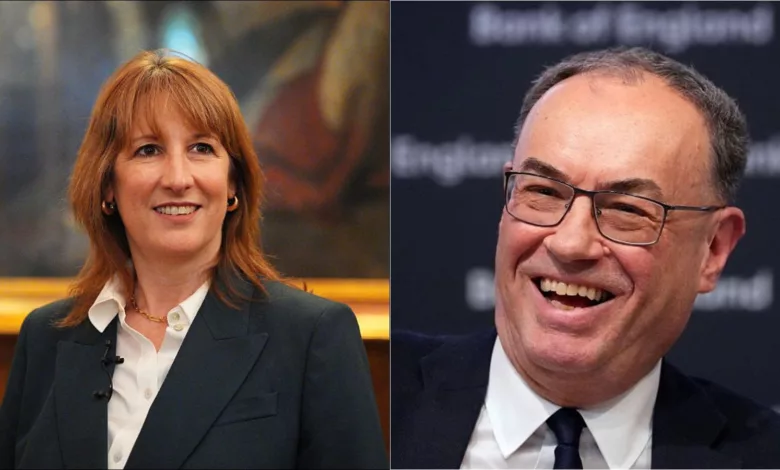
Bank of England Governor Andrew Bailey has thrown his weight behind Chancellor Rachel Reeves’s push to deepen trade ties with the European Union, arguing that an open economy like Britain’s “needs allies” to generate growth. Speaking at the central bank’s annual Agenda for Research conference on Thursday, Mr Bailey described rebuilding commercial links with Europe as “a sensible thing to do” for the UK economy and invoked the 18th-century economist Adam Smith to underline the fundamental relationship between trade and prosperity.
“We’re an open economy, we do need allies,” Mr Bailey said. “I think seeking to rebuild trade relations with Europe is a sensible thing to do.” He added: “I always sort of try to skip around the Brexit debate per se because I’m a public official, but I usually lean on Adam Smith at this point and say: ‘Look, we learned from Adam Smith the relationship between trade and growth.’”
The Governor’s remarks come as the Chancellor has been making the case that reducing barriers with Brussels is even more urgent in light of global price pressures. Ms Reeves warned last week, during the National Growth Debate, that the conflict in Iran is driving up prices and strengthening the economic logic of closer alignment with EU rules. European nations, she noted, are “our closest neighbours, our biggest trading partners”. She argued that “if you load additional costs on exporters and importers, the costs are ultimately going to be borne by the consumer”, and pointed to alignment in specific sectors such as chemicals and food standards as a way to help cut prices for households.
How aligning with EU rules could lower consumer prices
The Chancellor’s argument centres on the idea that post-Brexit trade friction adds costs at every stage of the supply chain. Every customs declaration, every additional inspection, every divergence in regulatory standards between the UK and the EU imposes a cost on businesses that move goods across the Channel. Those costs are not absorbed by companies alone; they are passed on to consumers in the form of higher prices at the till. By aligning UK rules with EU standards in sectors such as chemicals and food safety, the Government could eliminate many of those checks and paperwork requirements, allowing goods to flow more freely and cheaply.
The mechanism is straightforward. When British exporters and European importers face the same rules—on labelling, on permitted ingredients, on testing procedures—they do not need to duplicate work or pay for separate certifications. A chemical manufacturer selling into the EU, for example, currently has to comply with two regulatory regimes; aligning the UK’s framework with the EU’s would remove that burden. The savings from reduced bureaucracy and fewer border checks would feed through to lower wholesale prices, and ultimately to lower prices for consumers.
Ms Reeves has specifically highlighted food standards as an area where alignment could deliver noticeable relief. Under the “reset” agreement struck last year between Prime Minister Sir Keir Starmer and European leaders, the UK has already committed to aligning with EU food standards and accepting oversight from the European Court of Justice in certain areas. That deal also reduced customs checks on British exports entering the bloc, though it requires the UK to follow regulations it no longer helps shape and involves renewed British financial contributions to EU programmes, such as participation in the Horizon Europe research framework. The arrangement stops short of rejoining the single market or customs union, but it is designed to ease the trade frictions that have built up since Brexit.
Mr Bailey has been a consistent advocate of closer cooperation with Brussels throughout his tenure at the Bank of England. At the Mansion House dinner in 2024, he urged Ms Reeves to pursue stronger ties with the EU and warned that Brexit carried “consequences” for economic growth. In a speech in Dublin last year, he encouraged ministers to deepen cooperation to offset what he described as the “negative effects” on trade. Speaking in Washington DC in 2025, he cautioned that Brexit’s impact on the British economy would remain “negative” for the “foreseeable future”, though he believes the economy will eventually adjust and rebalance over the longer term.
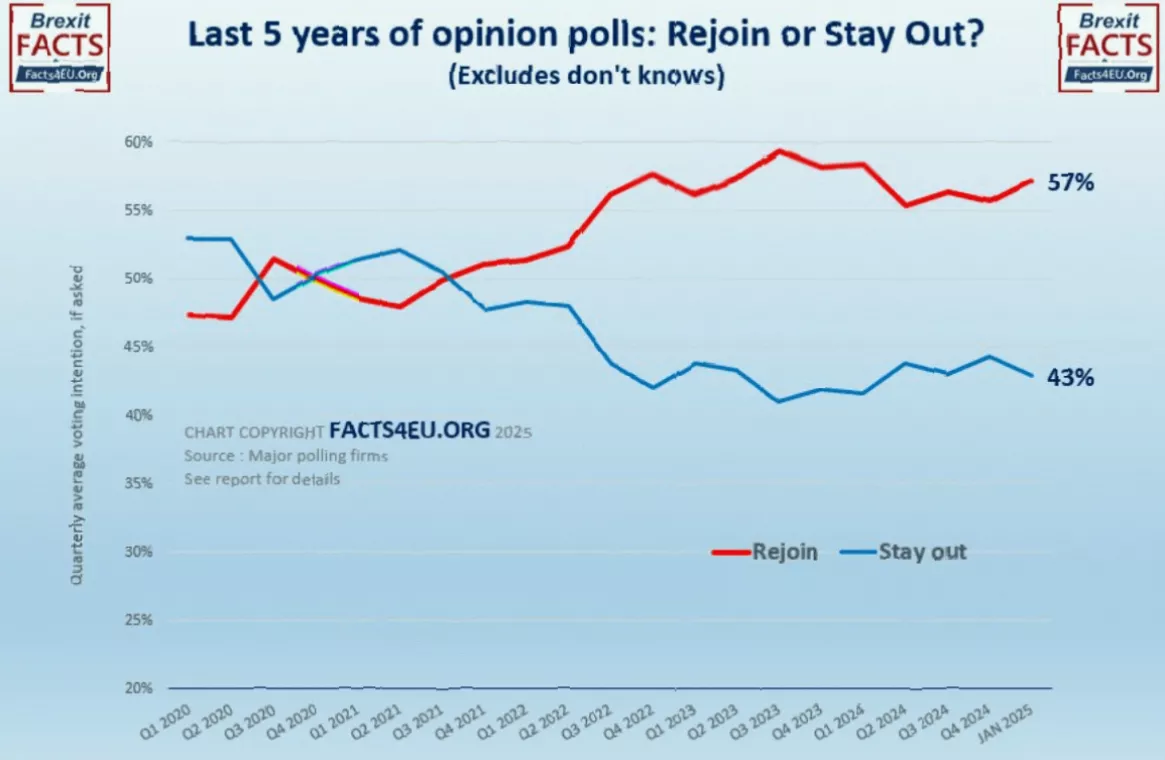
His public endorsement of the Government’s EU strategy is politically significant given the sensitivity surrounding Brexit-related remarks from senior public officials. His predecessor, Mark Carney, repeatedly faced criticism from Leave supporters for his warnings about the economic consequences of leaving the EU, including a warning that a “no deal” Brexit could be “as catastrophic as the financial crisis”. Mr Bailey’s latest intervention comes as the Prime Minister prepares to outline fresh proposals aimed at drawing Britain closer to Brussels, with announcements expected as early as Monday.
Political context and the reset strategy
The Government’s push for a closer EU relationship is unfolding against a difficult political backdrop. Labour suffered poor results in the recent local elections, with significant losses to Reform UK, increasing pressure on Sir Keir Starmer’s leadership. The Prime Minister has vowed to continue, and the EU reset is seen as a key element of his strategy to regain momentum.
Last year, Sir Keir agreed a “reset” arrangement with European leaders that included alignment on food standards, acceptance of European Court of Justice oversight in certain disputes, and reduced customs checks on British exports. Critics have argued that the arrangement makes the UK a “rule taker” and could hamper its ability to strike independent trade deals with non-EU countries. The deal also requires renewed British financial contributions to EU programmes, including the Horizon Europe research scheme. Discussions are ongoing over potential links between UK and EU emissions trading schemes, a possible youth mobility scheme, and extended cooperation on fisheries and energy.
Beyond Europe, Mr Bailey used the conference to stress the importance of preserving international economic institutions during what he described as “a critical time” for global cooperation. He highlighted Britain’s upcoming role as chair of the G20, which the UK is set to assume from the United States next year. “We’re going to inherit the chair of it next year from the US,” he said. “We have to preserve it and seek to rebuild it.” He warned that without the structure provided by organisations such as the G20 and the International Monetary Fund, “we are in a much more dangerous place”, and urged continued British support for those bodies.
Mr Bailey has previously linked the UK’s declining potential growth rate over the past 15 years to lower productivity, an aging population, and trade restrictions. He has also identified investment in artificial intelligence as an area that could boost productivity, while cautioning about its potential impact on financial stability. His latest remarks reinforce the message that, in his view, an open trading relationship with Europe is not a matter of political preference but a necessary condition for sustainable economic growth.