Chasing clients due to legal AI demand, $5.6B Legora launches London engineering hub and three European offices

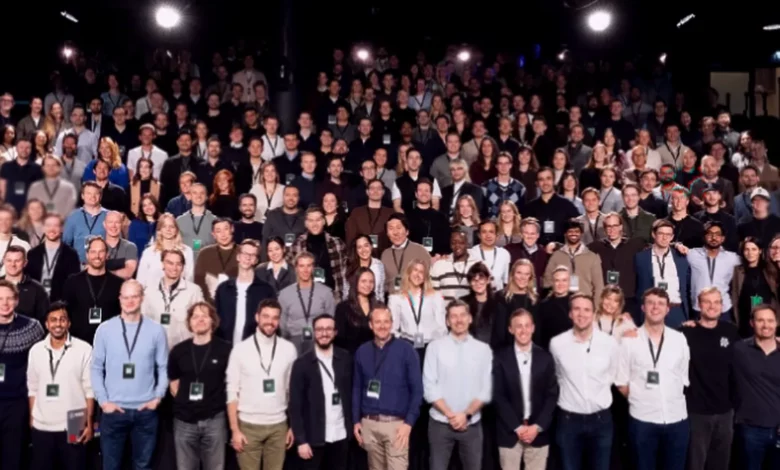
Legora is opening new offices in Madrid, Milan, and Paris in Q3 2026 and expanding its existing London presence into a dedicated AI engineering hub, the company has confirmed. The move brings the legal AI platform’s global footprint to 16 cities across four continents and forms part of a broader push to embed itself physically in the markets where its technology is already running.
Expansion across Europe
The three new continental offices will each serve as regional centres for customer success, go-to-market functions and legal engineering, according to Legora. They follow what the company described as significant customer traction in Spain, Italy and France — countries where law firms had adopted the platform before any local office existed. The London hub becomes Legora’s third global engineering centre alongside Stockholm and New York, giving the company continuous development capacity across three time zones.
Legora is targeting a combined EMEA headcount of 700 within 6 to 12 months. Hiring is already underway across all four locations. The company currently employs around 650 people globally, with just over half based in EMEA across existing offices in London, Stockholm and Munich.
“Our customers in these countries have built Legora into the way they work,” said Max Junestrand, chief executive and co-founder. “Opening offices in Madrid, Milan and Paris means we can be genuinely close to them as we build the future of the platform together.”
The UK’s AI minister, Kanishka Narayan, welcomed the London hub, calling it “a vote of confidence in the UK’s technical talent base.” Narayan, who serves as Parliamentary Under-Secretary of State for AI and Online Safety, has promoted several government initiatives including the Pro-Worker AI Adoption Prize and a Data Centre Design Challenge.
The expansion follows a $600 million Series D round in April 2026 that valued Legora at $5.6 billion. The round included an extension of $50 million, attracting new investors such as Atlassian, Nvidia’s venture arm NVentures, Airtree, Barclays, Geodesic, Insight, Liberty Global and Nikesh Arora. A prior Series C in October 2025 raised $150 million at a $1.8 billion valuation led by Bessemer Venture Partners. In total, Legora has secured more than $866 million across eight funding rounds.
How Legora’s agentic platform works
Legora builds what it calls an agentic AI platform for legal professionals — a system designed to automate entire legal workflows rather than assist with isolated tasks. The platform acts as an active participant in legal processes, from initial research through to final draft.
A lawyer can use Legora to research case law by submitting natural language queries; the AI identifies relevant precedents, summarises judicial reasoning and blends internal firm knowledge with external databases. For document analysis, a feature called Tabular Review extracts key data points from large document sets into a structured grid. Contract review and drafting are handled through a Microsoft Word add-in that marks up and redlines clauses, and can generate tailored drafts based on practice area requirements, jurisdictional rules and firm-approved templates. The platform also supports collaboration through shared prompt libraries and team-based workspaces.
Legora gives the example of a lawyer at Linklaters running a multi-jurisdiction due diligence review across hundreds of documents: the platform flags risk factors and generates a structured output in hours rather than days. Linklaters has announced firmwide implementation of the platform, and other notable customers include Bird & Bird, White & Case, Cleary Gottlieb, Dentons, Deloitte and Goodwin. In total, Legora now serves more than 100,000 users across 1,200 law firms and legal teams in over 50 markets.
The company was founded in Stockholm in 2023 as Leya by Max Junestrand, Sigge Labor (president) and August Erséus. It rebranded to Legora and moved its headquarters to New York after joining Y Combinator’s Winter 2024 cohort. In April 2026 Legora acquired Qura, a Stockholm-based AI-native legal research start-up. The platform holds ISO 42001, ISO 27001 and SOC 2 Type 2 certifications, is GDPR compliant, uses AES-256 encryption and offers a Bring Your Own Key option for data security.
Competition and market context
Legora’s closest direct rival is Harvey, the San Francisco-based legal AI company, which raised $200 million in March 2026 at an $11 billion valuation — nearly double Legora’s. Luminance, a London-based legal AI platform focused on document review, raised $75 million in a Series C in February 2025. Thomson Reuters CoCounsel brings the distribution advantage of an established publisher that pure-play startups cannot easily replicate.
Where rivals tend to target legal research or document review in isolation, Legora differentiates on end-to-end agentic workflows — positioning AI not as a supplementary search layer but as an active participant from research through to final drafting. The global legal AI software market is valued at $5.21 billion in 2026 and is projected to reach $40.94 billion by 2034, growing at a compound annual rate of 29.4 per cent, according to Fortune Business Insights. European law firms are moving from experimentation to enterprise-scale deployment, embedding AI into everyday legal work and redesigning processes end-to-end. The EU AI Act’s risk-based framework is also shaping how organisations approach transparency, accountability and decision-making in legal AI tools.
For Legora, the question is whether physical presence in its fastest-growing markets translates into the kind of customer lock-in that justifies a $5.6 billion valuation against a rival priced at nearly twice as much.