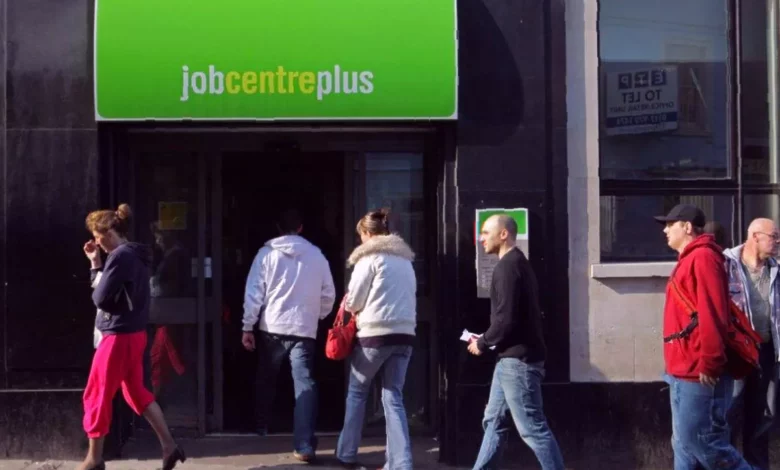
The number of job vacancies across the UK has fallen once again, deepening the challenges facing those looking for work, according to the latest figures from the Office for National Statistics (ONS).
Job vacancies fall to five-year low
The ONS reported that vacancies declined by 19,000 between March and May 2026, leaving the total at 705,000 in the three months to April — the lowest level since February to April 2021, when pandemic restrictions were still in place. That represents a year-on-year drop of 54,000, or 7.1 per cent. New recruits have slumped to their lowest in five years, the ONS noted, while payrolled employees fell by 104,000 (0.3 per cent) between March 2025 and March 2026. Early estimates for April point to a further annual decline of 210,000 (0.7 per cent).
Separate data compiled from online job postings underscores the trend: summer job listings in 2026 are running 31 per cent lower than at the same point last year, as of 22 May.
Labour market pressures mount
The unemployment rate eased to 4.9 per cent in the three months to May, down from 5.0 per cent in the previous period and below market expectations. But the headline figure masks deeper strains, particularly for younger workers. The unemployment rate for people aged 16 to 24 not in full-time education stands at 14.6 per cent — the highest since 2014 — and the economic inactivity rate for this group has reached its highest level since ONS records began in 1992. Almost one million young people in the UK are not in education, employment or training (NEET).
Overall economic inactivity for those aged 16 to 64 was 20.9 per cent in January to March 2026, down 0.4 percentage points on the year but up 0.1 points over the quarter. The UK Claimant Count — those claiming unemployment-related benefits — rose to an estimated 1.712 million in May, increasing on both the month and the year.
Wage growth continues to outstrip expectations, adding to cost pressures for employers. Excluding bonuses, annual pay growth stood at 3.4 per cent in the three months to March — the weakest increase since October 2020, but still above forecasts. When bonuses are included, wage growth hit 4.4 per cent in the three months to April, also higher than anticipated. Liz McKeown, director of economic statistics at the ONS, said: “Payroll numbers continued to fall over this period, with new recruits at their lowest level in five years. Overall employment was little changed, with some signs of workers moving into self-employment.”
Businesses are citing rising labour costs, driven by strong wage pressures and a considerable tax burden, as a major concern. Andrew Griffith, the shadow business secretary, warned that surging business costs of up to 9 per cent risk delivering either steeper prices on the high street, a wave of company closures and job losses, or potentially both.
The engineering sector appears to be a rare bright spot, with increased permanent vacancies. More broadly, however, lower-income regions are expected to bear the brunt of job losses linked to the conflict in the Middle East. South Wales and the Humber — heavily reliant on manufacturing and construction, sectors vulnerable to rising energy prices and supply chain disruption — are among the most exposed. London is projected to lose 25,000 jobs, Birmingham 12,500, Leeds 9,800 and Glasgow 6,200.
Work and pensions secretary Pat McFadden said the figures show 400,000 more people in work than a year ago, but acknowledged that “ongoing instability in the Middle East is causing uncertainty in our labour market”. He added: “We have the right economic plan for growth and stability in a volatile world – and we are taking action to create opportunity and make sure that no one is left behind.” The government is launching a £2.5 billion youth employment support package, including new Youth Hubs, to tackle rising NEET numbers.
Helen Whately, the shadow work and pensions secretary, pointed to the rise in economic inactivity, arguing it suggests “people aren’t even trying to get work anymore. That means more people on benefits and a higher welfare bill, at the taxpayers’ expense.”
Economic outlook clouded by energy costs
The wider economic picture remains fraught. Inflation held steady at 2.8 per cent in May, unchanged from April and well below the Bank of England’s own forecast of 3.3 per cent a month earlier. Core inflation — which excludes volatile energy and food prices — crept up to 2.6 per cent, while services inflation, closely watched by rate-setters for signs of wage pressure, climbed from 3.2 per cent to 3.7 per cent.
Producer input prices rose by 8.7 per cent in the year to May — the largest annual increase since February 2023 — while factory gate prices increased by 4.0 per cent. The effective closure of the Strait of Hormuz amid the Iran war has sent energy prices soaring, with analysts expecting inflation to accelerate later this year as higher costs feed into household bills. Chancellor Rachel Reeves noted that while the war pushes prices up globally, the government has the right economic plan and inflation has held steady, protecting families and businesses.
The Bank of England’s Monetary Policy Committee faces a delicate balancing act, navigating a weakening labour market alongside elevated inflation expectations that could drive prices well beyond its two per cent target. The MPC is expected to hold interest rates at 3.75 per cent at its upcoming meeting on 18 June, with persistent services inflation and wage growth keeping pressure on policymakers. Some economists have suggested the Bank will leave monetary policy unchanged for the rest of the year before cutting rates in 2026, as weakened demand could prevent prices from spiralling.
The trajectory of the UK economy hinges largely on whether the Strait of Hormuz fully reopens following the peace agreement between the US and Iran. Meanwhile, the UK Claimant Count has already risen to 1.712 million, and summer job postings are down nearly a third from a year ago — stark measures of the strain on the labour market.