Congressman Jamie Raskin has demanded a full accounting of the ties between Jeffrey Epstein and two of America’s most prestigious universities, accusing Harvard and Bard College of running investigations that were either incomplete or misleading. The top Democrat on the House Judiciary Committee said the institutions had failed to uncover the extent to which the convicted child sex trafficker leveraged his academic relationships to traffic women and burnish his reputation.
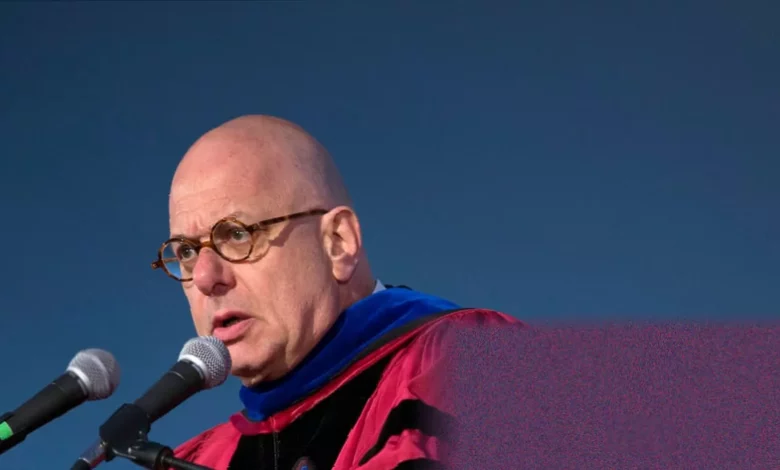
In letters sent on 17 June, Raskin set a 1 July deadline for both colleges to hand over extensive records and make senior figures available for transcribed interviews. He has asked Bard to produce its outgoing president, Leon Botstein, and requested all documents relating to Epstein’s donations, communications, admissions, interactions and internal decision-making, along with the full results of an internal review. From Harvard, Raskin is seeking financial records, communications and other materials concerning Epstein’s research funding and his personal relationships with faculty members.
Bard College under scrutiny
Leon Botstein is stepping down after 51 years as president, a departure that Bard’s board of trustees voted to impose after being presented with the findings of an independent investigation. The law firm WilmerHale, which conducted the probe, concluded that nothing Botstein did in connection with Epstein was illegal but said the president had “minimised and was not fully accurate” in describing his relationship with Epstein publicly and to the Bard community. The report also found that Botstein did not fully recognise the risk to the college’s reputation or the potential danger to students, and that he had accepted undisclosed consulting fees from an Epstein entity, telling the board he intended to donate them to Bard. The firm could not confirm that the donation had been made.
Botstein has defended his dealings with Epstein, arguing that the college’s need for funds was “paramount” and that he “would take money from Satan if it permitted me to do God’s work”. He previously denied being friends with Epstein, describing him as a prospective donor, and said he never witnessed anything inappropriate. Yet evidence indicates extensive contact: Botstein made approximately 25 visits to Epstein’s townhouse, took a two‑day trip to Epstein’s island in 2012, and in 2018, weeks after Epstein’s criminal prosecution was reported, reached out to wish him well. One Epstein victim said she believed Botstein was part of a group of influential men whose proximity to Epstein helped rehabilitate his reputation.
Raskin said there was evidence that Epstein’s relationship with Botstein and other Bard leaders “helped him maintain and expand his illegal activities, including potentially trafficking women in New York and the Russian Federation”. The WilmerHale review also noted that Botstein’s departure has created a rift on Bard’s board, with one member calling the vote “compromised”. A Bard College spokesperson said the institution had received Raskin’s letter and was reviewing it.
Harvard’s incomplete investigations
Harvard has faced renewed questions over its handling of Epstein’s connections. Raskin said the university’s previous investigations – conducted in 2008 and again in 2019 – were at best incomplete and at worst misleading. They failed, he argued, to uncover a series of donations Epstein made after Harvard had instituted a ban on such contributions in 2008, as well as the full extent of his relationship with faculty members, including former president Larry Summers, and his personal involvement in student admissions and faculty research.
Epstein donated more than $9 million to Harvard and its affiliated programmes between 1998 and 2008, overlapping with Summers’s tenure as president. Summers served from 2001 to 2006. Emails released from Epstein’s estate as part of the justice department’s disclosure of Epstein files show that Summers and Epstein communicated frequently from 2017 until early 2019, discussing topics ranging from politics to women, including Summers pursuing a relationship with a person who saw him as an “economic mentor”. Flight records indicate Summers flew on Epstein’s private plane at least four times. Summers announced in February 2026 that he would resign from teaching at the end of the academic year, shortly after the release of those emails.
Summers has said: “I am deeply ashamed of my actions and recognise the pain they have caused. I take full responsibility for my misguided decision to continue communicating with Mr Epstein.” He has called his association with Epstein “a major error of judgement”. Harvard has said it is conducting a review of information concerning individuals linked to Epstein. The university did not respond to a request for comment on Raskin’s letter.
How Epstein exploited university ties to traffic women
Raskin’s investigation is the most comprehensive effort yet to understand how Epstein used his links to higher education to further his sex trafficking operation and avoid detection. Survivors have provided evidence that Epstein lured victims by promising them admission to elite universities – including Columbia and New York University – and paying their tuition to ensure their silence. He himself enrolled at NYU, taking graduate‑level classes, and his foundations made donations to the university and its medical school.
Columbia has taken disciplinary action, removing administrators and donating to survivor support funds after revelations about Epstein’s ties to its dental school, including an irregular admissions process for a student linked to him. Nobel laureate Richard Axel resigned from his leadership post at Columbia’s neuroscience institute because of his association with Epstein.
The scope of the inquiry also extends to New York University, where survivors reported that Epstein used promises of admission and tuition payments as a means of controlling them. Raskin’s letter to Bard referenced “multifarious ties in higher education” spanning Columbia, Harvard, NYU and Bard itself. The congressman said it was time for these institutions to provide the “comprehensive accounting that will allow us to learn from this nightmare, take appropriate legislative action, and make sure nothing like it ever happens again”.
Raskin is seeking information from both Harvard and Bard by 1 July. Harvard has not responded; Bard has said it is reviewing the request.