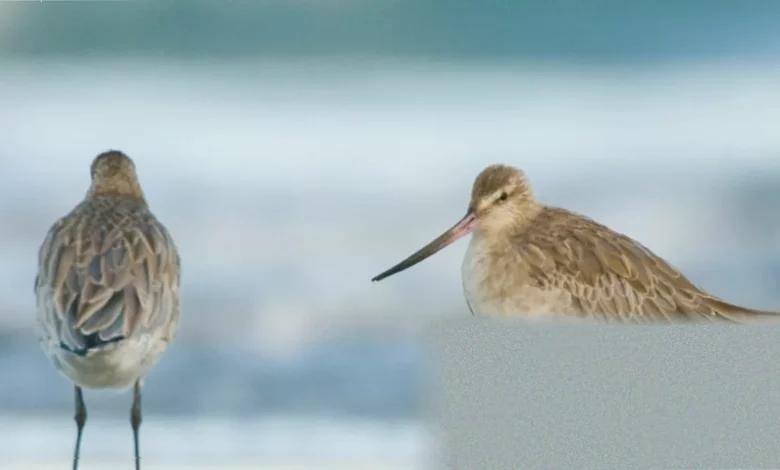
When we think of spring migrant birds, it is easy to focus on songbirds such as warblers, flycatchers and swallows. Yet during late spring, many are waders – passing through Britain on their way north to breed in the high Arctic from their winter quarters in sub-Saharan Africa.
Wader Migration in Focus
According to the British Trust for Ornithology’s regular migration blog, it has been a good year for waders. Reports of common species such as ringed plover, grey plover, bar-tailed godwit, sanderling and knot have increased. Scarcer species are also turning up: elegant wood sandpipers and tiny Temminck’s stints, which breed on the boggy wetlands of Scandinavia and Siberia, with a few pairs occasionally stopping off to nest in the Scottish Highlands. The BTO notes that this spring has been particularly good for Temminck’s stints, with reporting rates more than double the average, while easterly winds have driven a significant influx of wood sandpipers, whose reporting rates are six times higher than the historic average.
These birds follow the East Atlantic Flyway, a major migration corridor that connects breeding grounds in North America, Greenland, Iceland, the UK and western Europe to southern Africa. Britain’s estuaries and coastlines serve as crucial stopover sites, providing essential feeding and resting grounds. Key locations include The Wash, the Ribble Estuary, Morecambe Bay, the Dee Estuary and the Thames Estuary, all of which support large numbers of wintering and passage waders. Spurn Point in Yorkshire is highlighted as one of the best sites in the UK for observing visible migration.
Climate Change Disrupts Breeding Success
But like all birds that breed in the Arctic and subarctic, these waders are being affected by the climate crisis, whose effects are more extreme the further north you go. The Arctic is warming at a faster rate than the global average, bringing profound environmental changes. The taiga forests and tundra to the north are experiencing much higher temperatures than normal, which leads to wetland habitats such as bogs drying out, and an increase in forest cover due to the longer growing season. Warming also causes earlier snowmelt and later autumn frosts, altering nesting conditions.
The most critical disruption is a “phenological mismatch” – the timing of the birds’ arrival at their breeding grounds no longer aligns with the peak availability of insect food. These migrant waders have evolved to reach the Arctic in late May or June, when long hours of daylight and abundant insects provide ideal conditions to raise their young. But warmer winters and springs mean insects emerge earlier, potentially before the birds arrive. This can lead to reduced breeding success and lower chick survival rates. The BTO’s monitoring research indicates that such mismatches are becoming more common across Arctic-breeding species.
Habitat changes compound the problem. Drying bogs reduce the area of suitable wetland, while encroaching forest shrinks the open tundra that many waders require for nesting. Rising sea levels and coastal development also threaten the UK’s intertidal stopover sites. Meanwhile, climate change is driving a north-eastward shift in the distribution of some wader species in Europe, potentially reducing the number of birds overwintering on Britain’s east coasts. Some populations are migrating less far as previously inhospitable areas become milder.
Indirect effects on predator-prey dynamics add further pressure. In the Arctic, altered lemming cycles can cause predators to switch to wader eggs and chicks when their usual prey is scarce. In the UK, increased populations of generalist predators such as badgers and foxes pose a significant threat to ground-nesting waders, and predation rates rise during cold or dry weather when alternative prey is less accessible. Research has also shown a decrease in the average body size of some species, such as knots, as their Arctic breeding grounds warm, which may impair their ability to access food in wintering areas.
The Problem of Timing
Timing is therefore an issue that runs through every aspect of wader migration and breeding. The birds have evolved to synchronise their arrival with the northern summer’s peak insect emergence, but climate change is uncoupling that relationship. Even when habitat remains intact, a mismatch of just a week or two can slash the number of chicks that survive to fledge. The BTO’s regular migration blog and citizen-science schemes such as BirdTrack are vital for tracking these shifts, helping researchers understand how populations are responding.
Many wader species are already in long-term decline across Europe, including in the UK. BTO surveys show that numbers of lapwing, curlew, redshank and turnstone wintering on non-estuarine coasts have decreased significantly. Ringed plovers, redshank and dunlin – one of the smallest waders – have shown consistent declines over 10 to 20 years. At The Wash, dunlin numbers have nearly halved in recent decades. Curlew is identified as a high conservation priority, while ringed plover populations continue to fall. Conservation efforts, including habitat creation, restoration and agri-environment schemes, have had some local successes, but many populations continue to struggle. There is an ongoing debate among conservationists about the most effective ways to reduce predation on breeding wader clutches and broods, and conservation breeding projects are under way for the most endangered species.