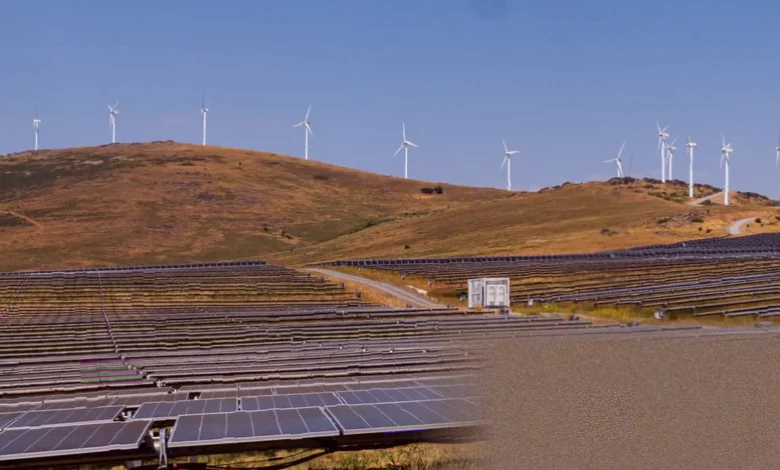
Spanish households are saving €10 a month on their electricity bills thanks to wind turbines and solar panels installed over the past five years, according to a report by the climate thinktank Ember. Without that expansion, typical energy bills would be 19% higher, the analysis found, as the country’s strategic build‑out of renewables has broken the tight link between electricity costs and volatile gas prices.
The savings stem from a dramatic decoupling of Spain’s electricity market from fossil gas. In 2021, gas influenced the price of electricity 52% of the time; by the first five months of 2026 that had fallen to just 9%. The shift has shielded Spanish households from the latest surges in fossil fuel prices, including those triggered by the war in Iran, which has disrupted shipping through the Strait of Hormuz and doubled European gas prices. “We just had a 60% rise in gas prices and electricity bills in Spain basically haven’t reacted – they actually got a bit cheaper in April,” said Chris Rosslowe, an analyst at Ember and lead author of the report. “That’s a clear and obvious contrast to the previous gas crisis, when electricity bills were climbing immediately.”
How renewables shield Spain from volatile gas prices
The analysis, which used data from March and April 2026, modelled a regulated electricity tariff paid by about one‑third of Spanish households. It compared actual bills with a scenario in which no new wind or solar capacity had been added in the previous five years. The report accounted for balancing costs paid when renewables generate too much or too little, but did not factor in the additional grid infrastructure that variable renewables require.
Spain’s strategic expansion accelerated after Russia’s full‑scale invasion of Ukraine in 2022, and was reinforced following the Iberian blackout of April 2025. The country’s wholesale electricity prices have been consistently among the lowest in Europe since March 2026, averaging €42 per megawatt‑hour that month. In Italy, which has the highest wholesale prices in Europe, gas still influences electricity costs 75% of the time and prices averaged €143/MWh. Ember found that Spain’s electricity prices rose by about 50% in the first half of 2021, in line with European gas prices, but remained “largely unaffected” by higher gas prices in 2026. The effects of wholesale gas volatility were visible only as higher price peaks during the dwindling periods when large volumes of gas had to be burned.
Wind and solar generated 33% of Spain’s electricity in 2021. By 2025 that share had risen to 42%, a 37% increase in capacity. Overall, low‑carbon sources supplied 75% of Spain’s electricity in 2025, exceeding the EU average. Spain and Portugal together generated more than 40% of their electricity from solar and wind in 2025, compared with an EU average of 30%. In 2025 alone Spain added over 10 GW of new renewable capacity, nearly 9 GW of which was solar PV. Total installed renewable capacity stood at over 80 GW by the end of 2025.
Government policy has also provided direct relief. Temporary tax reductions on electricity between March and May 2026 cut the average household bill by €8 a month, a measure designed to incentivise electrification as part of a broader strategy to reduce dependence on imported fossil fuels. Spain’s energy policy has prioritised massive renewables deployment, energy efficiency, electrification and renewable hydrogen.
The contrast with other European countries that expanded renewables rapidly is instructive. Germany increased its share of wind and solar in power generation from 28% to 45% over the same five‑year period, but consumer benefits have been more muted because the new renewables displaced coal and nuclear rather than fossil gas alone.
Expert analysis: benefits and challenges
Mar Reguant, an energy economist at Northwestern University who was not involved in the report but whose research findings paint “the same picture”, said ambitious policy allowed Spain to make the most of favourable natural conditions. “There is no question that Spain and Portugal are greatly benefiting from their early transition,” she said. “The Iberian peninsula has a privileged position and has acted smartly.” Reguant, whose work focuses on auction design and environmental regulation, noted that Spain benefits from decent wind, “unbeatable solar” and pre‑existing pumped hydropower storage.
Yet analysts caution that Spain is not fully insulated from gas shocks. Dr Diego García Gusano, a senior energy planning researcher at Tecnalia, a Basque technology centre, who was also not involved in the Ember analysis, pointed out that gas‑fired power plants still set the price during key hours. Frequent periods of very low electricity prices driven by high renewable output, he said, were weakening the investment signal for further renewables. The slow deployment of storage and limited flexibility in electricity demand had “intensified” the situation, preventing the system from efficiently absorbing excess renewable generation. Spain has a target of 22.5 GW of storage by 2030, with 9.2 GW planned by 2025 and a €700 million programme for storage facilities, but standalone battery capacity remains significantly lower than in other European countries.
The April 2025 blackout highlighted that an infrastructure built for a fossil‑fuel era may struggle to handle rapid transformation, underscoring the need for a wholesale rethinking of grid operations. “Spain is less exposed to gas shocks than other countries, but it is not immune,” Gusano said. “The bet on renewables is very sound, but much more is needed to make that bet structural and not circumstantial.”
Rosslowe at Ember agreed that electrification of end‑use sectors – transport, industry and heating – is the crucial next step to protect the wider economy from price shocks and drive deeper reductions in fossil‑import dependency. “The growth of wind and solar acts as a shield against global instability, keeping electricity bills low for Spanish households and businesses,” he said.