Google Search requires user consent to function on this website. Before you can use the search feature, we ask for your permission to load Google Custom Search, which may use cookies or similar technologies. This consent is not a trivial matter — it sits at the heart of how we balance functionality with your privacy, particularly when the search results may involve the most pressing geopolitical developments of the day.
The need for your consent arises because Google Custom Search, once activated, may process data about your browsing session. This is standard practice for many web services, but its implications become significant when you consider the nature of the news we report. Take, for instance, the 52nd G7 Summit currently under way in Évian-les-Bains, France, from June 15 to 17, 2026. With France holding the G7 presidency, the summit is addressing global economic governance, critical mineral supply chains, development financing, artificial intelligence, online safety for minors, and major geopolitical crises — above all, the war in Ukraine. Partner countries including Brazil, Egypt, India, Kenya, and the Republic of Korea have been invited, adding to the complexity of the discussions. Preparatory Sherpa meetings had been ongoing since January 2026, reflecting the lengthy diplomatic groundwork behind the announcements.
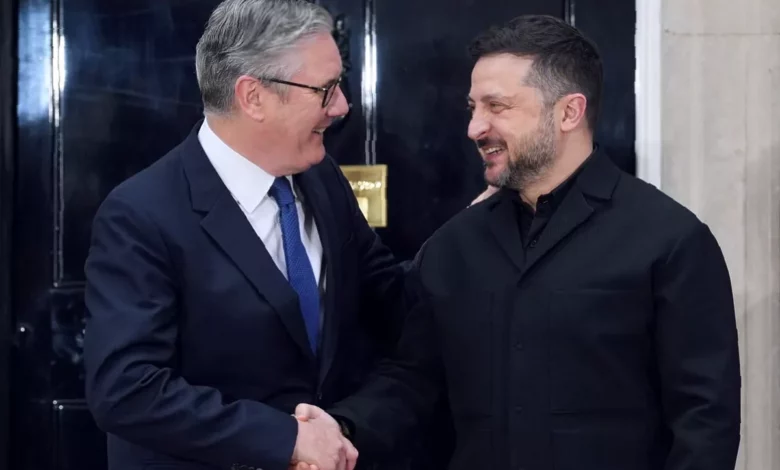
It is in this context that Prime Minister Keir Starmer is announcing a significant new package of sanctions against Russia, designed to “choke off” Russian revenue and disrupt its war effort. The measures target Russia’s shadow fleet and finance networks used to circumvent Western sanctions and procure military equipment. Specifically, the package includes sanctions on over 600 shadow fleet and Russian LNG vessels — the first time a G7 country has sanctioned ships linked to Russia’s Arctic LNG 2 project. These vessels are now banned from UK ports, may have their registrations revoked, and are prohibited from receiving technical, brokerage, or financial services. Five banks — Eurofinance Mosnarbank, Yandex Bank, Wildberries Bank, Vyatich Bank, and Lao Joint Development Bank — are also targeted. In addition, a Russian state-linked network involved in covertly procuring Western technology for Russia’s military has been hit, including 10 GRU officers and a front company named Neptune. Foreign intermediary companies that have helped Russia circumvent sanctions are named, as are insurance companies such as Balance Insurance and Rosgosstrakh.
The scale of this action is substantial. These new measures bring the total number of individuals, entities, and ships sanctioned by the UK under its Russia sanctions regime in 2026 to almost 500. In total, the UK has now sanctioned more than 600 shadow fleet and Russian LNG vessels. The government has also introduced new and enhanced powers targeting oil tankers, with over 20 oil tankers specifically targeted in the latest package. The sanctions follow the recent interdiction of a Russian shadow fleet oil tanker, the Smyrtos, in the English Channel by British troops — the first time British troops had boarded and detained a ship suspected of helping Russia export oil despite Western restrictions. The captain of the Smyrtos, Ajay Pant, has been charged with contravening sanctions. Earlier in May 2026, John Ormerod was charged for breaching UK sanctions against Russia, and by May 15, 63 individuals and 22 entities had been added to the UK Sanctions list under the Russia regime, illustrating the government’s sustained enforcement effort.
This is precisely the kind of fast-moving, detail-rich story that users may wish to search for. But the search itself relies on your consent. Without it, we cannot load the Google Custom Search tool, and you cannot query our content. The decision to grant consent therefore has direct implications for your ability to access information — information that, as Starmer put it, is about “the vessels, the money and the actors propping up Russia’s war economy.” The Prime Minister also pledged £210 million in export finance over two years to support Ukraine’s nuclear energy sector, allowing UK-based Urenco to supply enriched uranium to Ukraine’s state nuclear power producer, Energoatom. A third of that uranium content comes from Urenco’s plant in Chester, supporting hundreds of British jobs. Starmer reiterated that the UK will stand with Ukraine “for as long as it takes,” adding: “Putin should roll back his tanks, end his barbaric strikes, and come to the negotiating table.” In a broader statement, he said: “Russia’s aggression threatens not just Ukraine, but the security of all Europe. That is why the UK is stepping up – choking off the revenues that fuel Putin’s war and powering Ukraine through the winters ahead.” He concluded: “Working with our G7 allies, we will continue to increase the pressure on Putin and his circle of collaborators until Russia’s war machine is brought to a halt and peace returns to our continent.”
Beyond the sanctions and energy deal, the G7 summit provides a wider political backdrop. Starmer is expected to hold bilateral meetings with Indian Prime Minister Narendra Modi and Ukrainian President Volodymyr Zelenskyy on Tuesday, the first full day of the summit. This comes after a “torrid political week at home” for Starmer, who is seeking to assert himself on the international stage. There is potential for friction with US President Donald Trump, who was pictured sitting next to Starmer at a working leaders’ dinner. Trump’s administration had previously urged the UK not to impose a social media ban for under-16s, a policy Starmer has since announced. Starmer is also facing domestic pressure regarding long-term funding for the military. The broader summit themes include cancer research and reduction of global economic imbalances, and the event takes place against what organisers describe as a “particularly volatile and uncertain international context, marked by increased conflict, deepening economic imbalances, weakened global governance and reduced financing for official development assistance.” The UK’s support for Ukraine has been a consistent theme, with Starmer having previously condemned Russia’s aggression in Parliament and reaffirmed Britain’s unshakeable support.
All of this — the sanctions, the energy deal, the diplomatic manoeuvring, the enforcement history — is searchable once you grant consent. But consent also carries privacy implications. Our privacy policy, accessible via the link provided alongside the consent prompt, explains how Google Custom Search may use cookies or similar technologies to improve its service. It details what data is collected, how it is processed, and your rights in relation to that data. We encourage you to read it before making your decision.
The final step is the button itself. Clicking ‘Allow and Continue’ is how you give your permission. It tells us that you understand and accept the terms under which Google Custom Search will operate on this site. Once you click, the search feature becomes available, and you can explore our full coverage of the G7 summit, the new sanctions, the Smyrtos interdiction, and every other story we report. The choice is yours, but it is a choice with real consequences — for your privacy, and for your access to the news that matters. The captain of the Smyrtos, Ajay Pant, has been charged with contravening sanctions.