Ministers have launched a concerted lobbying operation aimed at averting a trade war with Washington after Sir Keir Starmer announced sweeping social media restrictions for under-16s, with officials spending weeks trying to persuade the Trump administration that the measures are not a veiled attack on American technology giants.
British officials acknowledge the risk of retaliation from President Donald Trump, who has previously threatened the UK with “a big tariff” if the government does not scrap its digital services tax — a 2 per cent levy on the revenues of major US tech firms. That existing trade tension now looms over the social media ban, which covers platforms including X, Facebook, YouTube, Snapchat and TikTok, and makes Britain the second country in the world after Australia to impose such sweeping age-based restrictions.
One person involved in the effort described a three-pronged strategy: “engage the companies, pre-brief the administration and mythbust in the media.” They added: “This is about protecting children in Britain, not taking on US tech.” The lobbying comes as Starmer prepares to meet Trump at the G7 summit in Évian-les-Bains this week; the prime minister said he had already spoken to the US president on Saturday and would raise the issue again, adding: “Lots of other leaders are very interested in it.”
By Monday evening Trump had not commented publicly on the plans, but his ally Elon Musk, who owns X, posted that the policy was “a wolf in sheep’s clothing”, alleging the “real goal is to enable the UK government to track everyone”. The Trump administration has previously urged the UK not to proceed, arguing the ban could damage freedom of speech and impose disproportionate burdens on American companies, and advocating for “narrowly targeted requirements” for adult content rather than blanket restrictions. US officials also expressed concern that current technology is insufficient for accurate age verification for those under 16.
How the ban would work
The proposed restrictions go further than Australia’s model, which came into force on 10 December 2025 and places the onus on social media companies to prevent under-16s from creating accounts, with potential fines of up to $50 million for non-compliance. In the UK, the government will not only set age limits for many platforms but also prevent under-16s from livestreaming themselves, ban adults from making unsolicited contact with children on gaming sites, and prohibit under-18s from engaging with “romantic” chatbots. Ministers are working on further measures to be unveiled next month, including late-night social media curfews for 16- and 17-year-olds.
Certain services have been specifically excluded, including YouTube Kids, Lego Play and Google Classroom. Messaging services such as WhatsApp and Signal are expected to be exempt. The ban is expected to come into effect in spring 2027, following legislation planned before Christmas 2026.
The announcement was welcomed by the Conservatives, who called for a ban several months ago, Labour backbenchers and several campaign groups. Esther Ghey, the mother of murdered teenager Brianna Ghey, said the ban could “save so many children’s lives”, though she emphasised the need for accompanying measures such as investment in after-school clubs.
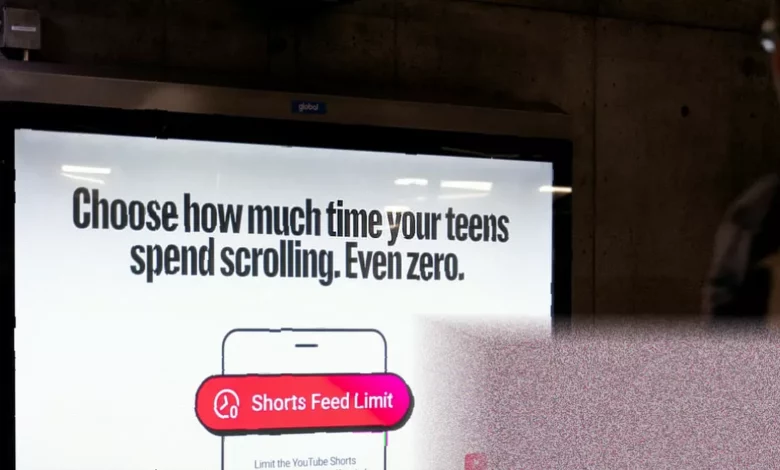
But the move has encountered scepticism from some experts. An independent expert panel convened by the government found that the impact of social media was “nuanced” and did bring some benefits to teenagers. Professor Jon Crowcroft of the University of Cambridge suggested that while well-intentioned, social bans might be misguided and could drive users to worse sites. The world’s largest technology companies have warned that the move would push teenagers towards more dangerous parts of the internet, though they are not thought to be preparing legal action to block it. A spokesperson for Meta, which owns Facebook and Instagram, said: “As we’ve seen in Australia, bans risk isolating teens from online communities and information, and driving them to unregulated alternatives that lack built-in protections and parental controls.” YouTube said: “Blanket bans push kids out of such curated, supervised, beneficial experiences and towards anonymous, less-safe services.” Snapchat stated that an outright ban would not make teens safer and might push them to less safe platforms.
Telegram founder Pavel Durov has argued that teens will use VPNs to bypass restrictions and access dangerous content. Elon Musk’s ally Musk also criticised the policy, while Musk himself has described it as a censorship law.
Government strategy to prevent US retaliation
The lobbying operation is the centrepiece of the government’s efforts to avoid a trade war, with officials spending weeks reassuring senior Trump officials and the US president himself that the restrictions are not aimed at US technology companies. The three-pronged approach — engaging the companies, pre-briefing the administration and mythbusting in the media — reflects a recognition that the ban could easily be framed as a protectionist swipe at Silicon Valley, especially given the backdrop of the digital services tax dispute. One person involved said: “This is about protecting children in Britain, not taking on US tech.”
This censorship law is a wolf in sheep’s clothing. The real goal is to enable the UK government to track everyone. https://t.co/aZKpGDdPmX
— Elon Musk (@elonmusk) June 15, 2026
Starmer himself has sought to downplay the risk, telling a press conference: “I honestly think that across world leaders there has always been a recognition that leaders have to take steps to protect children.” He added that he would discuss the issue with Trump at the G7, and that “lots of other leaders are very interested in it”. The prime minister denied rushing the announcement in an attempt to cement his legacy should he be ousted in the coming weeks — a reference to the possibility of a leadership challenge, with Greater Manchester mayor Andy Burnham hoping to win the Makerfield byelection and vowing to challenge Starmer if he does so.
The government’s consultation, “Growing up in the online world”, ran from March to May 2026 and received over 116,000 responses, with approximately 90 per cent of parents supporting a ban for under-16s. Starmer once opposed such a move but said he had been persuaded by the evidence gathered during that consultation. The Academy of Medical Royal Colleges has indicated an “overwhelming consensus” among senior doctors that screen time and social media harm children.
Starmer told a press conference in Downing Street: “Social media is making children unhappy, it’s making it easier for bullies to harass and abuse them, and it could even be harming their mental health.” He added: “This is a huge statement of our values, who we are as a country. And it’s a way of actually bringing our country together.”
Enforcement, impact and further risks
Ministers have asked the media regulator, Ofcom, to come up with detailed proposals for how to enforce the ban. Companies could be asked to take into account written forms of identification, the number of years spent on a platform and facial recognition tools when deciding whether people should be allowed to use their services. Ofcom will make its recommendations in the autumn, while the technology secretary, Liz Kendall, said on Monday she wanted to see a ban in place “as early as possible … first couple of months of 2027”.
Kendall acknowledged that many teenagers would try to get around the ban, telling the BBC: “I have no doubt children who are currently on social media, for whom it’s an integral part of their lives, will try and get around the ban, and many will succeed. But we do think we need to draw this line in the sand, give greater clarity to parents and greater protections for children.” She said the restrictions were not a “complete silver bullet” but would help “reset expectations and social norms for children who are seven, eight, nine, 10, now that they won’t be going on social media until they’re 16”.
The move could have a huge impact on the lives of young people. Among 13- to 15-year-olds, nine out of 10 have a social media account and say their main sources of news are YouTube, TikTok, Facebook and Instagram. Research by the Molly Rose Foundation found that a significant percentage of teenage girls and boys encountered harmful content related to suicide, self-harm and eating disorders in a single week.
Officials have also suggested there could be additional regulations for virtual private networks (VPNs), which allow users to circumvent geographical internet controls. Daniel Berntsson, the chief executive of Mullvad VPN, said he thought the government would probably require companies like his to demand users provide identification to prove their age. Mullvad has warned that mandatory identity verification for VPN usage would pose risks to whistleblowers and activists, and represent a step towards an authoritarian society.
The ban builds on the foundation of the Online Safety Act 2023, which established systems for protecting children from illegal and harmful content online. A recent US jury ruling found Meta and YouTube liable for creating addictive platforms that led to harmful behaviour in young users, a case that could set a precedent for similar allegations.