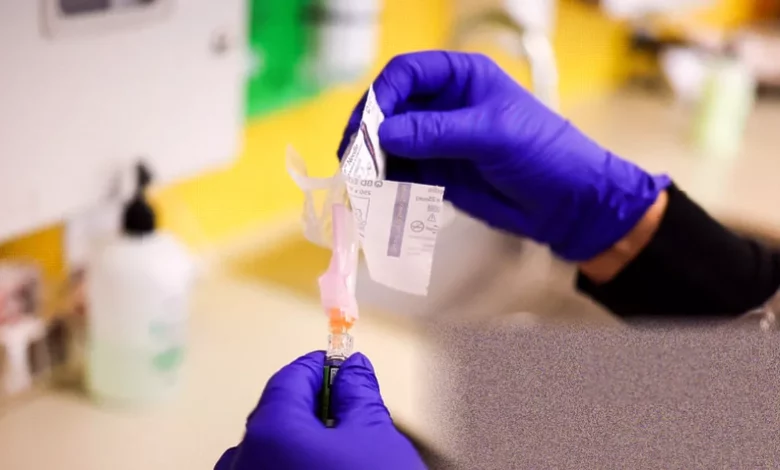
US health advisers are today debating a new type of flu vaccine – the first to be made with the same messenger RNA (mRNA) technology that powered the Covid-19 jabs – as the manufacturer, Moderna, seeks regulatory approval for people aged 50 and over.
The company is asking the Food and Drug Administration (FDA) to give full approval to its candidate, dubbed mFlusiva, for adults aged 50 to 64, and to authorise it for those 65 and older while it carries out additional testing. An FDA advisory panel has been convened to examine the evidence ahead of a final decision before the winter flu season.
The review process
The meeting comes after a highly unusual public dispute earlier this year, when the then-head of the FDA’s vaccine division, Dr Vinay Prasad, blocked Moderna’s application. Dr Prasad, who was later replaced, argued that the company should have compared its mRNA shot against a high-dose flu vaccine already recommended for seniors rather than a standard-dose brand. His intervention was seen as a sign of heightened vaccine scrutiny under the health secretary, Robert F Kennedy Jr.
Moderna challenged the decision, pointing out that FDA staff had approved the design of the main study in question. The company also cited a separate, smaller trial that directly compared its mRNA vaccine with a high-dose shot for older adults. Days after the public spat, the FDA accepted the application and put it before the expert panel, which will also assess that smaller study.
The technology behind the new vaccine
Influenza kills tens of thousands of Americans every year, with older adults among the most vulnerable. While several types of flu vaccine already exist in the US – including three specifically recommended for those aged 65 and older – the mRNA approach offers a key advantage. The Nobel Prize-winning technology allows vaccines to be manufactured far more quickly than traditional methods, a flexibility that experts say could prove crucial if the shape-shifting flu virus mutates in a way that requires a sudden change in the formulation.
Study results and implications for vulnerable groups
The main study underpinning Moderna’s application enrolled 40,000 people aged 50 and older. It found that the mRNA vaccine reduced laboratory-confirmed flu cases by about 27% compared with those given another routinely used vaccine brand. The FDA published a favourable review of that data ahead of the meeting and reported no safety concerns.
The agency’s initial review also noted, however, that the new vaccine lacks data on very frail older adults and those with weakened immune systems – a gap that may be significant given that the oldest and sickest patients are often the ones most in need of protection. The advisory panel will weigh this limitation alongside the smaller study, which showed that Moderna’s shot generated flu-fighting antibodies at levels similar to a high-dose senior vaccine. Moderna has argued that this antibody evidence supports the case for authorisation in the 65-plus age group while further testing is completed.