Border Force employee and Hong Kong trade official sentenced to prison for Chinese espionage

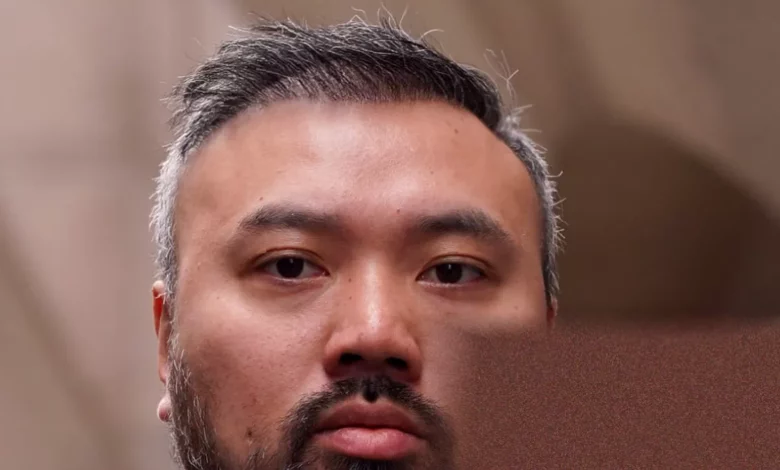
A UK Border Force officer and a senior manager at the Hong Kong Economic and Trade Office in London have been jailed for spying for China in the first such conviction under British criminal law. Peter Wai, 41, who conducted so‑called “shadow policing” operations against Chinese dissidents in the United Kingdom, was sentenced to ten years; his handler, Chung Biu Yuen, known as Bill Yuen, received eight years. The pair were convicted after a two‑month trial at the Old Bailey under the National Security Act 2023 of assisting a foreign intelligence service.
Sentences handed down
Wai, a Border Force officer stationed at Heathrow airport who had previously served in the Metropolitan Police and as a special constable with the City of London Police, was also found guilty of misconduct in a public office for using a Home Office computer system to obtain details about his targets. For that additional offence he received a further four years, making a total of ten. Yuen, 66, a former superintendent in the Hong Kong Police who took over handling Wai shortly after they met in 2021, was sentenced to eight years for the intelligence offence alone.
In a televised sentencing, Mrs Justice Cheema‑Grubb described the defendants’ actions as “deliberate, concerted and serious”, causing “real and significant” harm that left the people targeted in fear and distress. She said Wai’s attitude was “arrogant” and that he displayed a “sense of entitlement” to do as he pleased. The judge noted that she could not take into account evidence of spying committed before the National Security Act came into force in December 2023.
The case is one of the first prosecuted under the Act. In her remarks, Cheema‑Grubb stated: “The offence of which you have been convicted is a grave one. Parliament has enacted the National Security Act in response to the growing reality that the UK now faces persistent, active and often clandestine interference by foreign state actors. Modern foreign intelligence activity is not confined to orthodox espionage and may take the form of surveillance and information gathering about dissidents. Conduct of this kind threatens not only the individual victims but the sovereignty of the state and public confidence in institutions and the safety that this jurisdiction must afford to those lawfully present here.”
The ‘shadow policing’ operation and its victims
The court heard that the pair ran a “shadow policing” operation, a term the judge adopted to describe a system of surveillance, information gathering and intimidation aimed at Chinese dissidents and pro‑democracy activists living in the UK. The nature of this form of covert policing means that targets are monitored, their movements tracked, their personal data extracted from official databases, and their families abroad put under pressure — all while the victims remain unaware of the extent of the state‑linked apparatus arrayed against them.
Among those targeted was Nathan Law, an exiled politician and former leader of the Hong Kong student protest movement. Law had been the subject of several spying operations, including one in November 2023 when his photograph was taken as he entered the Oxford Union. He said the revelations did not surprise him, given the Hong Kong government’s record. A second young activist in the UK whose family was being persecuted in mainland China was also a target. Wai infiltrated Hong Kong pro‑democracy groups and was instructed to gather information on British politicians, including the former Conservative leader Iain Duncan Smith and Baroness Helena Kennedy. The judge said she had “no doubt” that the men’s criminal activities contributed to “fear, insecurity and distress for those targeted”.
Wai, who referred to Chinese dissidents as “cockroaches”, used his Border Force role to access Home Office computer systems and search for personal details of individuals of interest to the Hong Kong authorities. He also operated a private security firm. Before his arrest he had served in the Metropolitan Police based in Hounslow between February 2015 and April 2019, resigning while under investigation for misconduct after using his deceased grandfather’s address on a loan application to avoid tax and accessing police records as a favour for friends. The police said there was no evidence he had used the Met database for spying. Despite the misconduct investigation remaining on his file, he was later allowed to join the City of London Police as a volunteer constable. A City of London Police spokesperson said: “After Wai was arrested, we carried out an extensive review of his time as a special constable, despite assurances this position was not used in his offending. Our checks concluded no live misconduct on Wai’s file when vetting was granted. Despite his sentence today, Wai is still subject to an accelerated misconduct hearing related to his role as a special constable. Our vetting procedures have improved since 2019 and we regularly review our processes in line with national guidance to ensure they are as robust as possible.”
The operation also involved a failed break‑in at the flat of Monica Kwong in Pontefract, West Yorkshire, on 1 May 2024. Kwong, a personal assistant who had fled Hong Kong in 2023 after being accused of defrauding her employer of £16 million — an allegation she claims was a set‑up — was the target. The group is said to have posed as maintenance workers, using a snake camera and pouring water under the door to gain entry. Wai, Yuen, a third British national and former Royal Marine named Matthew Trickett, Kwong’s former employer Tina Zou, and two former Hong Kong police officers were arrested at the scene. Seven others who had recently arrived in the UK fled the country after being released. The police did not have the interpretation resources to analyse the 200 devices seized during the arrest in order to charge them. Trickett, 37, an immigration enforcement officer, was found dead “by his own hand”, the judge said, in a park in Maidenhead, Berkshire, shortly after being bailed. His death was not treated as suspicious and the case against him was formally discontinued. An inquest is scheduled for November 2026.
Yuen’s role as the organiser and tasking figure in the surveillance operation stemmed from his position at the Hong Kong Economic and Trade Office (HKETO) in London, which critics describe as an extension of the Hong Kong government. The spying coincided with Hong Kong authorities offering bounties of around £100,000 for information leading to the identification of UK‑based activists, including Nathan Law. The case has highlighted the broader issue of transnational repression, where authoritarian states extend their reach beyond borders to target dissidents. Human rights groups, including Amnesty International UK, said the case “lays bare the Hong Kong government’s chilling determination to intimidate, harass and spy on Hong Kong activists living in the UK”, exporting a “climate of fear” and exposing gaps in the UK’s response.
Police reassurances and official reactions
The Chinese embassy in London denounced the convictions as an “abuse of law” designed to embolden “anti‑China elements bent on destabilising Hong Kong”, calling the process a “political farce”. The Chinese Ambassador was summoned to the British Foreign Office following the sentencing. Hong Kong Watch welcomed the sentences and urged the UK government to review the privileges of the HKETO and include China in the enhanced tier of the Foreign Influence Registration Scheme. Sir Iain Duncan Smith, a prominent critic of China who has raised concerns about Chinese infiltration in Parliament, described the government’s policy on China as a “shambolic mess”. The Speaker of the House of Commons, Sir Lindsay Hoyle, expressed concern that the dropping of previous charges against two men suspected of spying for China had left Parliament vulnerable to “foreign actors”.
Commander Helen Flanagan, head of Counter Terrorism Policing London, which led the investigation, said: “Wai and Yuen were targeting pro‑democracy campaigners here in the UK and sending highly sensitive details about them and their families to the Hong Kong authorities. Our investigation, along with the convictions and sentences, show how seriously this kind of activity is taken in the UK and that it will not be tolerated. It should also serve as a warning to anyone else who might consider doing similar that it is simply not worth it and that when you are caught, you will likely face a lengthy prison sentence.” Flanagan added that she hoped the sentencing “reassures those living in the UK who may be concerned about being targeted by any foreign state, that we will take action to stop this from happening and that we will do everything we can to help keep them safe.”