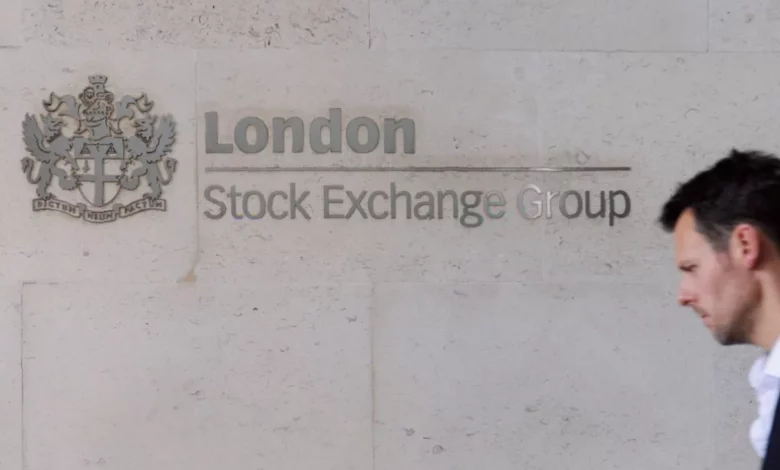
The FTSE 100 closed up 28.02 points, or 0.3%, at 10,360.32 on Thursday, a modest gain that masked divergent performances beneath the surface as falling oil prices dragged on major energy stocks and a regulatory clampdown in China pummelled Asia-exposed banks and insurers.
The FTSE 250 fared better, rising 116.36 points, or 0.5%, to 23,302.65, while the AIM All-Share edged up 1.02 points, or 0.1%, to 808.26. London’s benchmark underperformed its continental peers: the CAC 40 in Paris advanced 1.2% and the DAX 40 in Frankfurt rose 0.6%.
Oil and Geopolitical Pressures
Brent crude for August delivery traded lower at $94.88 a barrel on Thursday, down from $97.37 at the time of the London equities close on Wednesday, as investors tracked conflicting signals from the Middle East. Iran reported “no tangible progress” in negotiations to end the war, even as the US House of Representatives passed a war powers resolution seeking to halt American military action in Iran — a bipartisan rebuke that saw four Republicans join Democrats in defying President Trump. The resolution, the fourth time the House has voted on such a measure but the first it has succeeded, now moves to the Senate. The House also reaffirmed Iran’s designation as the world’s largest state sponsor of terrorism, citing its support for Hezbollah, Hamas and the Houthis.
Meanwhile, Israel struck south Lebanon and threatened new attacks on Beirut, despite an earlier announcement that the opposing sides had agreed to implement a conditional ceasefire. Dan Coatsworth, head of markets at AJ Bell, said: “Domestic pressure on Donald Trump to end the war with Iran and a reported ceasefire between Israel and Lebanon have swung the pendulum once again for markets.”
The drop in oil prices weighed on London’s two largest listed energy companies: BP fell 1.2% and Shell declined 1.5%.
Asia-Focused Financials Hit by China Capital Controls
By far the heaviest drag on the FTSE 100 came from banks and insurers with large exposure to mainland China, after a report in the South China Morning Post that residents of mainland China are facing greater constraints — including outright prohibition — when trying to open offshore accounts at mainland branches of major Hong Kong banks.
Prudential, the insurer with significant business from mainland Chinese visitors to Hong Kong, plunged 7.2%, putting it on course for its steepest single-day drop since February. Standard Chartered slid 3.2%, while HSBC fell 2.2%.
JPMorgan said China’s State Council decree 837, which takes effect on July 1, has “generated meaningful noise around insurers, with mainland Chinese visitor exposure, such as Prudential”. The decree tightens the process around outbound capital flows by adding requirements on filings, approvals and oversight, but the bank noted it introduces no changes to quantitative limits on permitted flows. “While these headlines look concerning, we think they are likely to have little practical effect,” JPMorgan said.
AI and Technology: Contrasting Fortunes
Stocks that have previously suffered from fears of disruption by artificial intelligence led the FTSE 100 risers. Relx climbed 6.0%, London Stock Exchange Group added 5.3%, and Autotrader rose 3.4%.
Across the Atlantic, US technology bellwether Broadcom saw its stock plunge 14% despite reporting record quarterly results, as expectations for AI revenue guidance fell short of investor hopes. Analysts at UBS said: “Orders were very strong, but Broadcom didn’t raise AI revenue for either 2026 or 2027, disappointing especially when compared to peers.” The company’s second-quarter semiconductor revenue from AI reached $10.8 billion, up 143% year-on-year, and it reiterated its fiscal 2027 AI semiconductor revenue target of over $100 billion. Broadcom has secured orders with visibility extending to 2028, driven by partnerships with hyperscalers including Google, Meta, OpenAI and Anthropic.
Construction Sector Deepens Slide
Fresh economic data painted a grim picture for the UK construction industry. The S&P Global construction purchasing managers’ index fell to 38.2 in May from 39.7 in April, remaining well below the 50-point threshold that separates growth from contraction for the 17th consecutive month. May’s reading signalled the steepest decline in construction activity since May 2020 and, excluding that pandemic period, the sharpest contraction since March 2009.
According to the S&P Global survey, the downturn was driven by shrinking order books, rising economic uncertainty, higher energy, fuel and transportation costs, and geopolitical tensions. Total new orders declined at the fastest pace in six years, while input price inflation accelerated to its highest since June 2022, fuelled by fuel surcharges and transportation bills. Business activity expectations for the next 12 months remained positive but eased to the second-lowest level since December 2022, with firms citing concerns about inflation, borrowing costs and domestic economic conditions.
Corporate Highlights: CMC Markets, Ceres Power
On the FTSE 250, CMC Markets surged 17% after the trading platform said the next 12 months are expected to be a “defining” period for the group and forecast net operating income for financial 2027 well above market expectations. Net operating income rose 15% to £392.6 million in the year to March 31, ahead of the £375.6 million consensus, while pretax profit increased 20% to £101.3 million — although that was below the £106.7 million company-compiled consensus. For the current year, CMC expects net operating income of between £460 million and £480 million, at least 17% higher and well above the consensus forecast of £385.5 million. Operating costs are projected to be about £280 million. Following the results, RBC Capital Markets raised its share price target for CMC to 460p from 400p and lifted its earnings per share forecasts for financial 2027 and 2028 by 23% and 30% respectively.
In contrast, Ceres Power’s recent stellar run faltered, with the stock down 7.3% after Panmure Liberum downgraded its rating to “sell” from “buy”.
Currency, Bond and Commodity Markets
The pound traded at $1.3436 on Thursday, little changed from $1.3435 the previous day, but eased against the euro to €1.1558 from €1.1574. The euro rose against the dollar to $1.1624 from $1.1606, while the dollar edged higher against the yen to ¥159.99 from ¥159.96.
US Treasury yields edged lower: the 10-year note trimmed to 4.47% from 4.49%, and the 30-year bond narrowed to 4.97% from 4.99%. Gold rose to $4,471.69 an ounce from $4,443.05.
FTSE 100 Risers and Fallers
The biggest risers on the FTSE 100 were Relx, up 147.0p at 2,583.0p; London Stock Exchange Group, up 460.0p at 9,162.0p; JD Sports Fashion, up 3.9p at 87.4p; Experian, up 89.0p at 2,610.0p; and Sage Group, up 30.0p at 883.2p.
The biggest fallers were Prudential, down 80.2p at 974.8p; J Sainsbury, down 9.4p at 295.2p; Standard Chartered, down 56.5p at 1,955.5p; Rio Tinto, down 225.0p at 7,847.0p; and Polar Capital Technology Trust, down 18.5p at 710.0p.
Friday’s global economic calendar includes US nonfarm payrolls figures, jobs data from Canada and the Halifax house price index in the UK. No significant events are scheduled in the local corporate calendar.