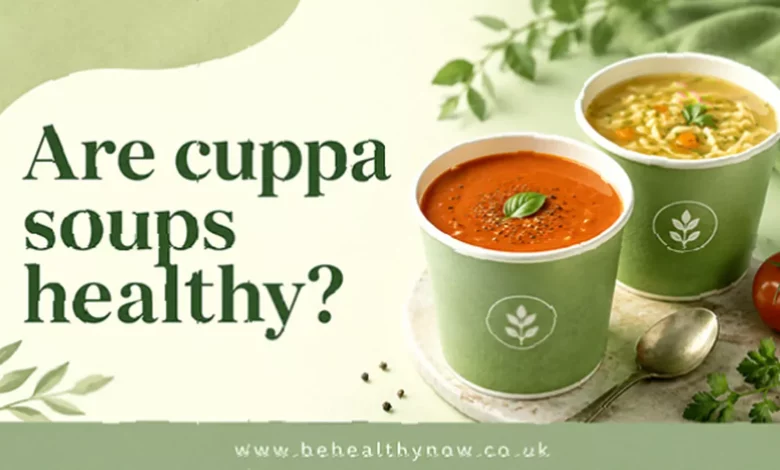
Instant cup soups may be quick and convenient, but they are often packed with salt and lacking in protein, making them a poor choice for a meal replacement. While a low calorie count might look appealing, it does not guarantee a healthy option. UK adults are advised to consume no more than 6g of salt per day — roughly a teaspoon — and a single cup can take up a noticeable chunk of that limit, sometimes reaching 1g or more. With around three-quarters of the salt in the average diet coming from packaged and everyday foods, it is easy to exceed the recommended intake without realising it.
Salt: the biggest concern
The salt content in many instant cup soups is arguably their greatest drawback. Excessive salt consumption is linked to high blood pressure, which increases the risk of heart attacks, strokes and kidney disease. Research also suggests a potential connection between high salt intake and depression or dementia, though the exact mechanisms are still being studied. Despite decades of public health advice, most UK adults still consume around 8.4g of salt daily — 40 per cent above the recommended target. Government reformulation schemes have helped reduce salt in some food categories, but many products remain high. Action on Salt continues to push for stricter, mandatory targets for the food industry. For those in the US, labels typically show sodium rather than salt; to convert, multiply the sodium figure by 2.5. In the UK, many packages feature a traffic light system, where red indicates high levels of salt, fat or sugar.
What’s actually inside the cup?
The ingredients list reveals far more than the nutrition panel alone. Many instant cup soups rely on starches — maize starch, potato starch, corn starch or modified starch — to create thickness and creaminess. These add little nutritional value. Glucose syrup, maltodextrin and even plain sugar appear in savoury soups more often than people expect; tomato flavours are particularly prone to higher sugar levels. Batchelors Tomato Cup a Soup contains 8.3g of sugar per prepared cup, while Heinz Cream of Tomato Cup Soup contains 11.3g — nearly three teaspoons. That is more than you would find in some biscuits or ice cream. Sugar is often added to balance other flavours without being tasted, which can lead to overconsumption.
Flavourings and flavour enhancers, such as yeast extract, are common, especially when the actual amount of the main ingredient — chicken, vegetables or mushrooms — is very small. Oils, milk powders, whey powder and sometimes palm oil or palm fat are used to give creamy soups their texture, but they add to the processed nature of the product. The name on the front of the packet does not always reflect the quantity of real food inside. A soup labelled “chicken” may contain only a small proportion of chicken, with most of the savoury taste coming from added flavourings.
Most instant cup soups fall into the category of ultra-processed foods (UPFs). The widely used NOVA classification defines UPFs as products made with multiple industrial ingredients and techniques, containing substances not typically found in a home kitchen — such as emulsifiers, stabilisers and artificial flavourings. UPFs now make up around 60 per cent of the total energy intake in the UK. Diets high in UPFs have been linked to obesity, type 2 diabetes, heart disease, certain cancers, depression and dementia, although researchers are still debating whether the harm comes from the processing itself or from the fact that many UPFs are high in calories, saturated fat, salt and sugar, and low in fibre and micronutrients. It is worth noting that not all UPFs are equal: wholemeal bread and baked beans are also classified as UPFs but can offer nutritional benefits, particularly fibre. Experts agree that overall nutritional quality matters more than the level of processing alone.
Reading the label: what to look for
Choosing a healthier instant cup soup means looking beyond the calorie count. Salt should be the first thing to check, especially if you eat other processed foods during the day. The “per 100g” information is more useful for comparing products than the “per portion” figure, because portion sizes vary widely between brands. UK law requires a full ingredients list in descending order by weight, so the first few ingredients tell you what the product is mostly made of. Look for vegetables, beans, lentils or chicken near the top, not starches or sugars. Quantitative Ingredient Declaration (QUID) tells you the percentage of a key ingredient — useful for checking how much chicken or tomato is actually present.
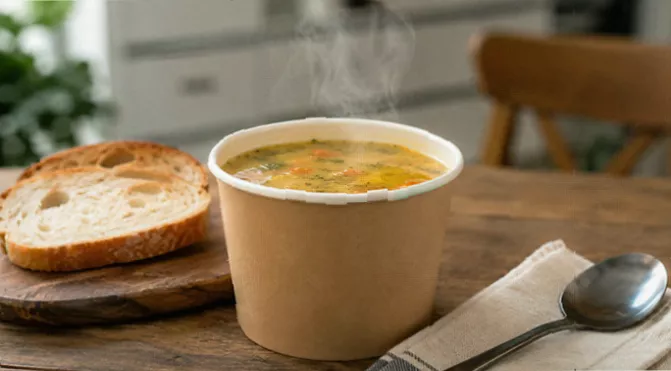
Protein and fibre are both important for feeling full. Protein is more satiating than carbohydrates or fats, and fibre, particularly soluble fibre, helps delay stomach emptying and can reduce hunger. A 50–80 calorie cup of soup with hardly any protein or fibre is unlikely to keep you satisfied for long. The NHS defines foods with less than 5g of sugar per 100g as “low” in sugar, and those above 22.5g as “high”. Many savoury cup soups fall in between, but tomato and creamy varieties can be surprisingly high.
Some products are better than others. FUEL10K High Protein Chicken Instant Cup Soup, for example, contains 101 calories, 5.2g of protein, 1.1g of sugar and 1.1g of salt per serving, with a shorter ingredients list than many typical cup soups. It is still a processed instant product, not comparable to homemade soup, but it offers more protein and may be slightly more filling. Even so, it remains a snack rather than a meal.
For people with diabetes, checking carbohydrates, sugar and salt is especially important. Tomato and creamy flavours tend to be higher in sugar. A cup soup with very little protein or fibre is not ideal on its own; pairing it with eggs, chicken, wholegrain toast or vegetables would be a better option. Those with sensitive digestion may also react to onion, garlic, dairy powders, gluten or flavour enhancers in some instant soups. The high salt content can cause bloating or discomfort for some individuals.
Consumers are becoming increasingly concerned about ultra-processed foods: around three-quarters of people surveyed have expressed worry. Yet the convenience of instant cup soups keeps them on the shelves. The key takeaway is not to judge a soup by its calorie count alone. Check the ingredients, the salt level, the protein and fibre, and ask yourself whether that small cup offers anything genuinely useful, or whether it is just a salty, low-nutrition snack in disguise.