The full economic toll of the Iran conflict on British households will come into sharp focus this week as official figures for April are set to reveal a stark reversal triggered by surging fuel prices. Data due on Friday from the Office for National Statistics (ONS) is expected to show that the cost of petrol and diesel has begun to squeeze household incomes and business margins, pulling the economy back from a surprisingly strong start to the year.
April’s expected downturn
The signs of a slowdown are already evident in retail sales figures for April, which fell at their fastest rate for almost a year, dropping by 1.3% month-on-month. The sharpest blow came from motor fuel sales, which plunged by 10.2% — the largest fall since November 2020. The ONS said much of this reversal came as households, having stocked up on fuel in March when prices first began to rise, then conserved petrol and diesel in April. Retailers reported that motorists were deliberately holding back, reinforcing the view that much of March’s unexpected resilience was driven by forward-buying.
Sales outside the fuel sector also weakened. Demand for clothing waned, and the broader retail sector recorded a 0.7% year-on-year decline in spend — the largest drop since November 2024. Department stores saw a 5.1% fall, garden centre spending dropped by 5.8%, and online sales values fell by 2.3% month-on-month in April, though they remained 9.3% higher on a year-on-year basis over the three months to April. Even the travel sector took a hit, with spending down 5.7% in April and airline spend falling by 8.3%, as consumers delayed holiday decisions amid concerns over rising costs and disruption.
This collapse in fuel sales is set to drag on the dominant services sector, leaving overall Gross Domestic Product for April far below the 0.3% growth recorded in March. Deutsche Bank expects a monthly decline of around 0.1%, Investec Economics forecasts flat output, and Pantheon Macroeconomics is more pessimistic, predicting a 0.2% contraction.
March’s surprising strength
March’s out-turn was far better than most economists had expected. That month’s 0.3% growth helped drive overall GDP expansion of 0.6% for the first quarter of 2026 — a figure that beat the Office for Budget Responsibility’s March forecast of 0.3% and the Bank of England’s April prediction of 0.5%. However, Investec economist Ellie Henderson cautioned that some of that strength could be attributed to consumers and firms bringing forward purchases in anticipation of subsequent price rises as the shock of higher energy prices filtered through. “This frontloading might have also lifted output in some areas in April, but ultimately its effect will be temporary and will lead to weaker numbers thereafter as inventories are then run down,” she said.
The first-quarter performance now looks like a fleeting bright spot. EY’s UK Chief Economist Peter Arnold said the Middle East conflict meant the UK economy was “once again being shaped by external shocks and on track for another year of subdued growth”. He noted that cautious consumer spending patterns seen since the pandemic now appeared to be structural rather than temporary, with households reallocating money towards savings and essentials.
The fuel price squeeze on households and businesses
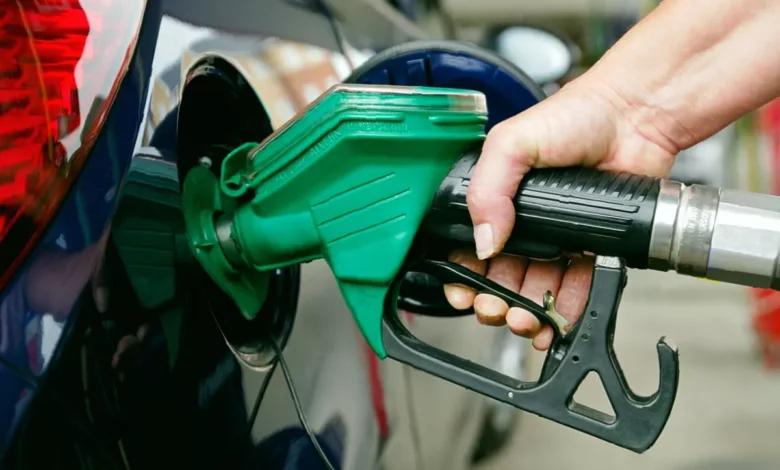
The mechanism by which higher fuel costs are squeezing the economy is becoming increasingly clear. The average price of petrol in April reached 156.8 pence per litre — the highest since November 2022 — and diesel prices also rose sharply. According to the Resolution Foundation, the sustained conflict could deliver an £11 billion hit to UK family finances, leaving the typical household £480 worse off this year. A report from Barclays showed that essential spending rose by 0.3% in April, driven by a 10.4% year-on-year surge in fuel spend — the largest uplift since December 2022. Meanwhile, non-essential spending dropped by 0.3%, its biggest year-on-year decline since July 2024.
The squeeze extends beyond household budgets. Businesses are also feeling the strain as input costs rise sharply. The National Institute of Economic and Social Research warned of a £35 billion economic hit and said the UK faced a risk of recession this year as a result of the fallout. Niesr Director David Aikman said the Middle East conflict “has laid bare the fact that the UK remains highly exposed to global energy shocks”, adding that higher energy prices would leave households poorer and businesses facing higher costs.
The hospitality and leisure sector saw a 1.4% decline in April, largely due to weaker travel spending, although the London Marathon provided a temporary boost to pubs, with transactions up 35.5% week-on-week on April 26th. Department stores and garden centres also suffered, while digital content and subscriptions bucked the trend, rising by 9.2%. Consumer confidence has soured markedly: overall confidence fell for the second consecutive month in April, with confidence in the global economy dropping to 20% — its lowest since April 2025 — and confidence in non-essential spending falling to 49%, a level not seen since March 2023. A full 72% of consumers now expect Middle East tensions to impact the cost of living throughout the rest of the year.
Expert forecasts for the months ahead
Deutsche Bank’s chief UK economist, Sanjay Raja, said the second quarter of 2026 was likely to see a “course correction” after the strong start to the year. “Indeed, with the energy shock from the Iran conflict in full swing, household incomes will likely be squeezed,” he said. “The cost of living and the cost of doing business will have likely increased, weighing on activity and investment.” He added that he did not expect a “big drop-off in momentum just yet”, but warned that activity would remain subdued as the energy shock caught up with households and businesses, while domestic political uncertainty likely ramps up over the summer.
Investec’s Henderson said she anticipated “some weakness in broader discretionary spend in April, which is likely to have impacted spending on food services, accommodation and arts”. The broader economic picture remains uncertain. The Bank of England’s Monetary Policy Committee left interest rates unchanged at 3.75% on 30 April, and Deutsche Bank analysts believe rate cuts in 2026 are now unlikely, with the risk of a rate hike increasing if inflation pressures persist. The IMF reduced the UK’s GDP growth forecast to 0.8% for 2026 in April, noting the UK is more exposed to energy price shocks than its counterparts. For the full year, forecasts vary: Deutsche Bank projects UK GDP to expand by 1%, EY forecasts 0.8%, the OECD has a slightly upgraded forecast of 0.9%, and HM Treasury’s May survey of independent forecasts indicates an average of 0.9%. However, Pantheon Macroeconomics has revised its 2026 UK economic growth forecast down from 0.9% to 0.5%.
Meanwhile, the labour market is expected to weaken. Bank staff project the unemployment rate to rise to 5.1% in the second quarter of 2026, while EY forecasts unemployment to increase slightly to 5.8% by the end of the year. The conflict has also highlighted the UK’s vulnerability to global energy supply disruption, with rural areas identified as particularly at risk of diesel shortages. CPI inflation stood at 2.8% in April, down from 3.3% in March, but EY forecasts it will peak above 4% by the end of 2026 due to increased wholesale energy prices, and the OECD expects inflation to average 3.7% for the year. As an Investec economist put it, the frontloading effect that lifted March will prove temporary, and the numbers that follow will reflect the reality of a deeper, more persistent squeeze.