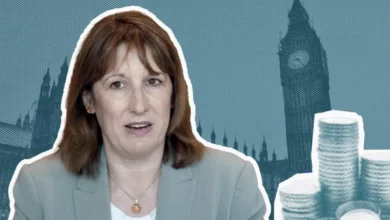
The controlling interest in OnlyFans, the multi-billion pound adult content platform, now rests with Yekaterina Chudnovsky, the widow of its late owner Leonid Radvinsky, placing the private mother-of-four and lawyer at the helm of one of the internet’s most profitable and contentious businesses.
Following Radvinsky’s death from cancer last week at 43, it is understood Chudnovsky holds a controlling stake through a family trust established in 2024 as his illness progressed. The trust’s holding in the London-based company is valued at approximately $5.5bn (£4.1bn). Her ascent to this position is set against a backdrop of exclusive negotiations to sell a 60% stake in OnlyFans to the San Francisco-based investment fund Architect Capital, a deal that was pending at the time of Radvinsky’s death and whose future is now uncertain.
A Business Built on a 20% Cut
The platform’s operational genius lies in a deceptively simple model. It allows creators to charge fans a monthly subscription—typically between $5 and $50—for access to content and direct messaging. OnlyFans takes a 20% commission, paying out the remaining 80% to creators. This formula has proven phenomenally lucrative, generating gross revenue of $7.22bn in 2024 from user spending. The parent company, Fenix International Limited, reported a net profit of $520m on revenue of $1.4bn that same year, a net margin of 37%.
The platform’s growth exploded during the COVID-19 pandemic, a period Radvinsky’s critics say he exploited. “His best friend was Covid,” said Gail Dines, an academic and CEO of the organisation Culture Reframed. “More women were out of work and desperate, and starting becoming so-called content providers.” Chudnovsky herself, in a past interview, identified the pandemic lockdown as the world event that had the greatest influence on her life.
While a handful of creators, like Sophie Rain who has reported earnings in the tens of millions, dominate headlines, the financial reality for most is starkly different. Industry analysts estimate the vast majority of the platform’s roughly 4 million creators earn little more than £100 a month. Since its inception, OnlyFans has paid out over $7bn to creators collectively, but the distribution is intensely skewed.
The New Owner’s Uncharted Views
Chudnovsky’s personal views on the adult content that drives this financial machine are now the subject of intense speculation. Publicly, she is known as “Katie,” a philanthropist dedicated to cancer research—she and Radvinsky funded a $23m grant programme in 2024—and a former lawyer for a global tech firm. Her online biographies mention family and philanthropy, but not pornography. Describing herself as “direct, honest and transparent,” her tastes have been cited as including Downton Abbey and Love Actually.
Her newfound authority grants her a crucial role in deciding whether OnlyFans continues on its current path or attempts another pivot. The company has long wrestled with its identity, preferring to be seen as a tech or social media success story rather than an adult business. It employs just 42 people, with staff who, according to media analyst Benedict Evans, “spend all their time thinking about massive scalable data systems, traffic optimisation and conversion metrics, not porn.”
Past attempts to sanitise its offering have faltered. In 2019, a planned ban on explicit content was reversed within days. More recently, it launched OFTV, a “safe-for-work” spin-off for lifestyle content, though staff acknowledge the core profits derive from pornography. The platform classifies itself as “content agnostic,” but has built its infrastructure to allow performers to sell explicit material. With Chudnovsky’s influence, and potential future investors like Architect Capital—which has expressed interest in expanding the platform’s financial infrastructure and sees a path to a public listing by 2028—the strategic calculus may shift.
Ethical Storm and Regulatory Scrutiny
The ethical debate surrounding OnlyFans is inextricable from its balance sheet. Critics like Gail Dines label Radvinsky not as a tech visionary but as “the world’s richest pimp.” She argues he tapped into a demand for interactive, live content where “users became the porn directors and the producers,” sometimes requesting painful acts.
The platform vehemently rejects such characterisation, arguing it exerts no control over independent creators. It highlights substantial safety investments, including 1,500 content moderators in Ukraine and Poland working with AI under an “eyes on all content” principle, and a stated zero-tolerance policy towards illegal material. This follows a 2024 Reuters report which found evidence of non-consensual content and instances of child sexual abuse material on the site.
Regulatory pressure is persistent. Ofcom, the UK communications regulator, fined Fenix International Limited £1.05m in March 2025 for failing to provide accurate information about its age verification procedures. The company states its processes have since been refined. This scrutiny intersects with a wider public health concern: a 2025 report by the Children’s Commissioner for England found 70% of young people had seen pornography online, with the average age of first exposure at 13.
For some performers, like Adreena Winters, the platform represents empowerment and a justified business partnership. “Having tried to build my own websites and payment systems, I actually think the cut is quite justified,” she said, citing the complex, expensive infrastructure. Others, like the anti-exploitation non-profit Exodus Cry, contend the platform grooms girls “to believe self-objectification is the easy path to a successful life,” trapping many in a cycle of financial desperation.
With day-to-day operations continuing under chief executive Keily Blair, the immediate business impact of Radvinsky’s death is considered minimal. The enduring question is how Yekaterina Chudnovsky, a private woman now holding very public power, will navigate the profound tensions between immense profit, personal legacy, and a raging ethical debate that shows no sign of abating.