Cancer diagnostics are rapidly advancing with liquid biopsies showing significant promise, offering the potential to detect malignancies far earlier than current methods and transform a healthcare system that, in the words of one strategist, is “set up for sickcare, not healthcare.”
How liquid biopsies work
Traditional cancer diagnosis is largely “reactive,” placing the burden on patients to visit a doctor only after symptoms emerge — often too late for effective treatment, notes Maryann Selfe, a global wealth and investment strategist and author of The Billion Dollar Blindspot. Even established screening programmes such as mammography have limitations. Simon Vincent, chief scientific officer at Breast Cancer Now, explains that mammography “doesn’t necessarily spot all types of breast cancer equally well,” particularly lobular breast cancer, which accounts for around 15% of all breast cancers. Uptake is also patchy: all four parts of the UK are failing to meet their mammogram targets, and the offer is restricted to specific age ranges. Overworked GPs may be reluctant to order tests for those outside those groups.
It is against this backdrop that a new category of blood tests — liquid biopsies — has emerged as a potential game-changer. These tests detect “circulating tumour DNA” (ctDNA), small fragments of DNA released into the bloodstream by cancer cells. The goal is to develop assays sensitive enough to pick up even tiny quantities of such DNA and catch the disease at its earliest stage, says healthcare investor Paul Major. Some tests screen for mutations linked to individual cancers, but the ultimate ambition is a “multi-cancer early detection test” (MCED) that can identify a range of cancers from a single blood sample and be taken every few years.
One company pushing the boundaries is Dxcover, spun out of the University of Strathclyde in Glasgow. Its MCED screens for proteins, lipids and carbohydrates as well as DNA to detect whether cancer is present, explains CEO Matthew Baker. Trials have shown it can detect malignant brain cancer with a sensitivity of 86%, even though only a small number of brain cancers shed ctDNA. The test may also spot a broader range of cancers at the very earliest stages. In the UK, Dxcover’s blood test has demonstrated a 99.3% negative predictive value, meaning it can help GPs provide earlier reassurance and informed referrals for imaging.
Other innovators are moving beyond blood altogether. Serox, founded by Cici Muldoon, has developed a test using surface-enhanced Raman spectroscopy to identify cancer in urine in under three minutes. The company is working on a lateral-flow stick similar to a pregnancy test, which would eliminate the need for trained phlebotomists. Serox is still in the early fundraising stages and is collaborating with John Radcliffe Hospital in the UK and Massachusetts General Hospital in the US.
Challenges and limitations
Despite the excitement, significant hurdles remain. A liquid biopsy must be sensitive enough to detect early-stage disease while also having the specificity to avoid large numbers of false positives, which would overwhelm healthcare systems and cause patients unnecessary stress. It must also be affordable. Meeting all three criteria is tough, as shown by the recent failure of Grail’s Galleri MCED in a large trial. Paul Major notes that the test “wasn’t quite effective enough and produced too many false-positives for the NHS to use.”
Nevertheless, there is optimism that liquid biopsies will become “incredibly valuable,” especially for cancers that currently lack a screening programme or that go undetected until they have spread, says Simon Vincent of Breast Cancer Now. The global liquid biopsy market was already worth between $5 billion and $10 billion in 2025 and is estimated to reach $10 billion to $20 billion by the end of the decade, according to Erin Xie, managing director and portfolio manager for health sciences at BlackRock.
The rising cancer burden underlines the urgency. In the UK, over 403,000 people are diagnosed annually — roughly one person every 80 seconds — and that figure is projected to exceed half a million by 2040. Ageing and growing populations are key drivers, but obesity is also a significant factor. Worryingly, the average age of onset for some cancers such as colorectal cancer is dropping, says healthcare investor Paul Major. “Nothing is as complex as cancer, which is aptly called the emperor of all maladies,” notes Servaas Michielssens, head of healthcare at Candriam. The earlier you catch it, the better the chance of survival and the lower the cost to healthcare systems, adds Moritz Dullinger of Pictet Asset Management.
The limitations of current screening were starkly illustrated by Amanda Rice, founder and CEO of Chick Mission, a three-time cancer survivor. In her 30s, she went to her GP with symptoms but was dismissed because her age made it “unlikely to be anything serious.” She had to push hard to get the tests she needed before being diagnosed with breast cancer. Had she not been persistent, she says, she would likely have accepted the doctor’s reassurance or skipped the tests because they were “so painful, invasive and costly.”
Beyond blood: imaging and AI
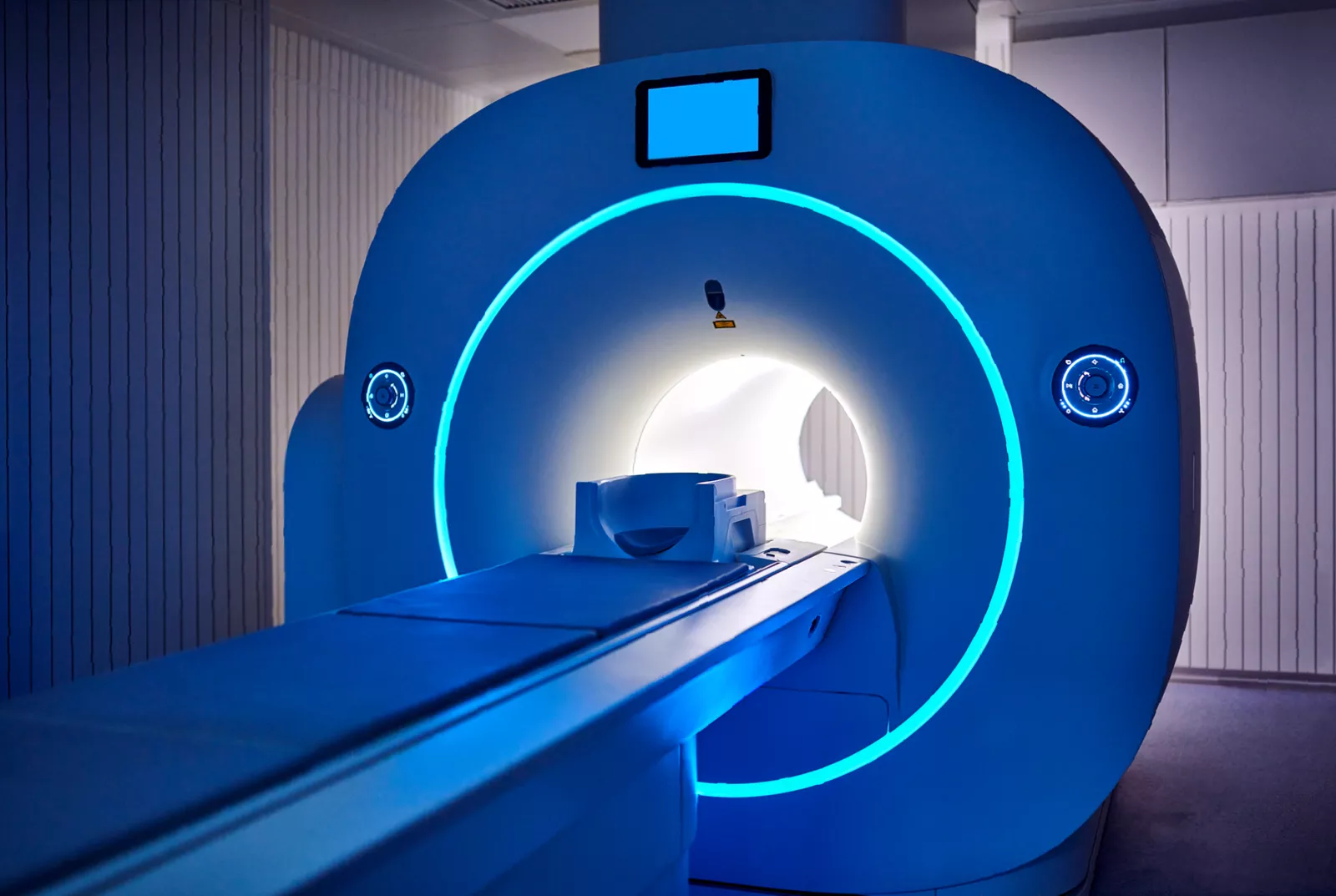
Alongside liquid biopsies, imaging and radiology are undergoing their own revolution. While the average MRI machine “isn’t fundamentally different from the first machines produced by Peter Mansfield and his team nearly 50 years ago, they are lighter, can fit in smaller locations and don’t need as much power,” says Lizzie Tuckey, managing director at imaging platform Scan.com. Advances in AI are transforming the software that runs them. AI has made the process of combining large numbers of images more efficient, allowing radiologists to use fewer images without sacrificing quality. This cuts the time each patient spends in the scanner, meaning more patients can be scanned and costs come down. For CT scans, shorter scan times also reduce radiation exposure. AI is also adept at spotting small changes over time.
One company using AI to cut both cost and duration is Ezra, part of Function Health. Ezra already offers comprehensive scans of most organs and tissues that take only 22 minutes — “typically the time most other providers would take to scan a single major organ,” says founder and CEO Emi Gal. The firm hopes to reduce this to 15 minutes next year and has a medium-term target of five minutes for repeat visits. Ezra’s multi-organ scan currently costs £1,299 in the UK, but Gal expects to cut the US price to around $500 soon. Once that happens, he suggests, annual full-body MRI scans “could become something that everyone does, in the same way that we give smokers low-dose CT to screen for lung cancer, or give women who are over a specific age regular mammograms.” (Ezra’s full UK offering, including a “Full Body Plus” package with a low-dose chest CT, ranges up to £2,695.)
The pace of change is reflected in patent filings. At the time of writing, the US Food and Drug Administration has approved 1,451 AI-enabled medical devices, “of which around 80% are in the field of radiology,” say Robert Wiseman, Rob Sackin and Alexander Frank of Reddie & Grose patent and trade mark attorneys. They also note that AI could help speed up blockages in the patient journey — ensuring correct referrals, appropriate tests, and efficient analysis — though legal uncertainty around software patents makes this work less visible.
Companies like xCures are already tackling that challenge. CEO Mika Newton explains that xCures “basically aggregates, organises and structures medical records,” automatically extracting key information from thousands of pages so doctors can see it quickly. The technology can convert unstructured records such as scans and medical notes into a structured form. In the longer run, speeding up the flow of information could help researchers find new connections between symptoms and cancers that humans might miss. Currently, only 5% of cancer patients are involved in clinical trials; opening up medical records with appropriate consent could accelerate progress in both diagnosis and treatment.
AI can also help hospitals choose between the growing number of cancer tests. Flann Horgan and Mitchell Goldberg of NTT Data note that NTT Data has developed a platform, in conjunction with the Royal Marsden Hospital and the Institute of Cancer Research, that allows researchers to “evaluate lots of different algorithms without having to fly all over the world, and then integrate them into their workflow.”
From diagnosis to treatment
Detecting disease is “only part of the equation,” says Servaas Michielssens. Liquid biopsies also have a role in guiding treatment — so-called companion diagnostics — and in detecting minimal residual disease (MRD), the small number of cancer cells that may remain after otherwise successful therapy. They can also help determine whether treatment is working: ctDNA is released when tumour cells die, so a sudden increase in ctDNA levels immediately after treatment can indicate efficacy. Other complex genetic tests, such as those from PacBio, “can give an indication as to whether a patient’s cancer is becoming resistant to a particular treatment,” says vice-president Neil Ward.
Another company operating at the intersection of diagnostics and personalised medicine is CanCertain, which has developed a test that allows clinicians to “pre-screen cancer treatments on the patient’s own cells,” says business development director Dharmesh Mehta. Circulating tumour cells are extracted from the patient’s blood and exposed to potential treatments so the oncologist knows in advance what is likely to work. CanCertain is working with The Christie NHS Foundation Trust in Manchester and the University of Leeds.
If initial therapies succeed, patients typically undergo adjuvant treatments such as chemotherapy and radiotherapy to eliminate lingering cancer cells. They are then monitored for recurrence, says Gareth Powell, head of healthcare at Polar Capital. Liquid biopsies may reduce the need for adjuvant therapy and enable quicker follow-up if cancer returns. With nearly 20 million cancer survivors in the US alone, the demand for accurate MRD tests is huge, notes Michielssens.
Broader advances in treatment are also under way. The NHS is rolling out an injectable form of immunotherapy (nivolumab) that takes just five minutes — compared to up to an hour for an IV infusion — approved for 15 cancer types and expected to benefit around 1,200 patients per month in England. Personalised cancer vaccines using mRNA technology are entering trials for NHS patients in England, aiming to reduce recurrence risk with fewer side effects than chemotherapy. Meanwhile, the drug anastrozole, which blocks oestrogen production, is being tested by the NHS to potentially halve the risk of breast cancer in high-risk women.
Investment opportunities
The rapidly evolving diagnostics landscape has attracted significant investment interest. Until recently, one of the leading players in liquid biopsies was Exact Sciences, which had several tests approved and had developed Cancerguard, a blood-based MCED test. This year, the firm was acquired by Abbott Laboratories (NYSE: ABT) for approximately $21 billion. While liquid biopsy is only part of Abbott — which also sells medicines and cardiovascular devices — the deal gives it a strong foothold in the area. Grégoire Biollaz of Pictet Asset Management points out that Exact Sciences, with its high-teens revenue growth, adds a faster-growing segment to Abbott’s Diagnostics division. Abbott trades at 17 times expected 2027 earnings and pays a yield of 2.5%.
A purer play is Guardant Health (Nasdaq: GH). It has already received approval for a blood test for colorectal cancer — a more convenient alternative to the current stool-based test. Paul Major describes the colorectal test as “just a proof of concept” for Guardant’s more ambitious MCED plans. Guardant is also developing tests to guide treatment and to detect residual cancer. It is not yet profitable, but its revenues more than tripled between 2020 and 2025.
Major is also a fan of Adaptive Biotechnologies (Nasdaq: ADPT). Its test, clonoSEQ, is approved by the US regulator to detect residual tumour cells in lymphoid cancers. It can inform decisions around treatment, sparing many patients unnecessary chemotherapy, and is used by drug companies in clinical trials. Like many biotech companies, it is currently loss-making, but sales are rocketing. Major believes it is a prime takeover target for a large company seeking its core technology.
In imaging, RadNet (Nasdaq: RDNT) is the leading US player. As Polar Capital’s Gareth Powell explains, RadNet has found a way to undercut hospitals, leading many US insurers to steer patients to its services. It has invested heavily in AI that can read scans, validated in clinical studies, and is rolling it out. The stock trades at a pricey 57 times estimated 2027 earnings, but revenues doubled between 2020 and 2025 and strong growth is expected to continue.
Siemens Healthineers (Frankfurt: SHL) is “in a very good position” when it comes to MRI and CT scanners, say Moritz Dullinger and Grégoire Biollaz. Siemens also makes a wide range of medical devices, and its laboratory division will benefit from any increase in blood testing volumes. Sales grew by two-thirds between 2020 and 2025, and the stock trades at only 15 times 2027 earnings with a yield of 2.9%.
Finally, Dan Buckley of Daytrading.com likes Illumina (Nasdaq: ILMN). It provides much of the infrastructure needed for genomics in cancer diagnosis and treatment. Illumina has been a primary vendor for variant interpretation software for the UK’s 100,000 Genomes Project, working with Genomics England. The stock trades at 23 times 2027 earnings.