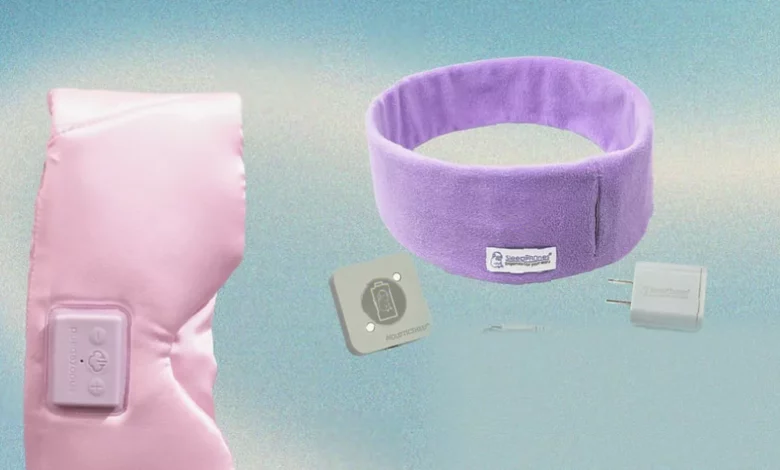
For anyone who likes to drift off to the sound of a podcast, the patter of rain or the familiar hum of a courtroom drama, the quest for the perfect bedtime audio setup often ends in compromise. Earbuds can feel intrusive, especially for side sleepers, while leaving the phone speaker running risks disturbing a partner. One solution that is gaining traction for its dual role is the Bluetooth sleep mask – a gadget that combines total darkness with wireless audio, without the need to jam anything into your ears.
A dual approach to better sleep
The science is clear: any exposure to light during the night can suppress melatonin production, the hormone that regulates sleep. A sleep mask that blocks light effectively can therefore improve both the duration and quality of rest. The audio component adds another layer. While research does not suggest that white noise alone improves sleep, it can help “dampen” sharp, sudden sounds – a dog barking, a car alarm or a partner snoring. Many people simply find that listening to something soothing helps them wind down. A 2022 survey found that 46% of adults listen to music, podcasts or the radio when going to sleep.
Bluetooth sleep masks cater precisely to this habit. Unlike standard earbuds, which tend to block out all ambient sound, the thin speakers inside the mask sit over the ears without sealing the ear canal. This means you can still hear a baby crying or an alarm clock while enjoying your chosen audio. For side sleepers, who often find traditional earbuds pushed uncomfortably into the ear by the pillow, the ultra-thin design – some models use speakers as slim as 4 or 5 millimetres – is a particular advantage. Many masks also feature contoured eye cups and adjustable straps to prevent light leakage and pressure points, making them viable for stomach sleepers too.
How they work and what to look for
At its simplest, a Bluetooth sleep mask contains three components: a fabric eye mask designed to block light; thin, flat speakers positioned over the ears; and a rechargeable Bluetooth receiver that pairs with your phone or tablet. Once paired, you can stream podcasts, music, guided meditations or white noise directly from your device. Most manufacturers recommend putting your phone in airplane mode after downloading your content – this prevents notifications from disturbing you while still allowing your phone alarm to sound.
Battery life varies widely. Some premium models, such as the Manta SOUND New Gen, claim up to 24 hours of playback, while budget options like the Morelax and Enjoying Sleep Mask offer around eight hours on a single charge. Charging times typically range from one to two and a half hours. Many masks include built-in timers – 30 minutes, one hour, two or three hours – that automatically switch off the audio, conserving battery and preventing prolonged listening. Others rely on the timer function within apps such as Spotify or Calm.
Audio quality is generally adequate for speech and ambient sounds, though it does not match high-fidelity headphones. Newer models often use Bluetooth 5.0 or later for stable, low-power connections. Some users prefer masks that do not emit voice prompts or beeps for low battery or power-off, as these can be disruptive when trying to sleep.
Addressing common questions
Do I really need a Bluetooth mask, or will a plain sleep mask do? If your only goal is total darkness, a standard mask is sufficient. However, if you also want to listen to something at bedtime and dislike the feel of earbuds – particularly if you sleep on your side – a Bluetooth mask offers an effective and comfortable alternative. You could also combine a regular sleep mask with sleep earbuds, but some people find the pressure of a pillow pushing an earbud into the ear uncomfortable.
Will the sound disturb my partner? According to tests conducted by the journalist who reviewed multiple Bluetooth masks, even at the highest volume none of the masks were loud enough to be heard by a partner sleeping on a pillow a couple of feet away. No reports were found online of a Bluetooth mask bothering a partner; in fact, several users credited the masks with saving their relationships by covering up the sound of snoring.
Can I wash a Bluetooth sleep mask? Yes, but the electronic components – the speakers and Bluetooth receiver – must be removed first. Most care instructions recommend hand-washing the fabric mask in cold water and hanging it to dry completely. Given that sleep masks should ideally be washed after every two or three uses, or at least as often as your pillowcases, owning more than one mask is practical if you plan to wear one every night.
Are there any health concerns with Bluetooth? Bluetooth technology uses low-power, non-ionising microwave radiation. The scientific consensus is that the levels emitted by these devices are well below safety limits and do not pose a known health risk. Factors such as comfort, fit and listening volume are far more likely to affect sleep quality than the Bluetooth signal itself.
What the market offers
Prices range from around £15 for basic models to more than £140 for premium designs. Brands such as Manta SOUND are frequently praised for side-sleeper comfort, with ultra-thin speakers, C-shaped eye cups and a 24-hour battery life. The SnoozeBand Pro offers a 3D eye mask with up to 15 hours of battery life and an optional companion app with sleep sounds, though some users note that its buttons can be loud and its white noise tracks loop abruptly. More budget-friendly options from MUSICOZY, TOPOINT and LC-dolida are widely available online, though some users report issues with wire fraying or Bluetooth connectivity over time. Many brands offer free UK delivery.
Ultimately, whether a Bluetooth sleep mask is right for you depends on your personal bedtime habits. If you already listen to audio to fall asleep and want to do so in complete darkness without the discomfort of earbuds, the technology is mature enough to deliver both reliably. The journalist who tested 42 pairs of wireless earbuds and 32 sleep masks over several weeks found that the best masks combined effective light blocking with a comfortable fit for side sleepers, adequate battery life and simple controls – and that none of them disturbed a sleeping partner.