The net zero economy already employs more than 300,000 full-time workers directly, with supply chains and related activity supporting a total of 1.1 million jobs, according to figures compiled by the Confederation of British Industry (CBI). The sector is worth over £100 billion annually to the UK and is expected to grow by hundreds of billions more. Beyond the core net zero sector, the wider green economy directly employs a further 600,000 people. Jobs in these industries are reported to be more productive and offer higher wages than the national average.
Government’s green jobs plan
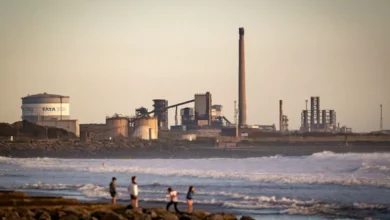
In October, the government announced plans to create another 400,000 jobs through its clean energy strategy, aiming to double the number of people working in green industries by 2030. The plan specifically targets workers leaving the fossil fuel industry, school leavers, ex-offenders, veterans and the unemployed. Training centres and colleges will be built in areas badly hit by deindustrialisation, providing skills for trades such as plumbers, electricians and welders. It represents the first realistic plan for a substantial increase in skilled manual jobs in many years.
The contrast with oil and gas
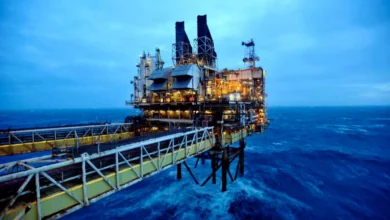
By comparison, the UK’s oil and gas industry provided just 27,500 direct jobs in 2023, supporting a total of 205,000. Depending on where the line is drawn, oil and gas generated between one-tenth and one-fifth of the employment produced by the alternatives. These figures have been tumbling rapidly: the industry shed 70,000 jobs between 2016 and 2023, despite new licensing rounds and tax breaks from the previous Conservative government. The Rosebank oilfield, a cause célèbre for Reform UK and the Conservatives, would directly generate a total of 255 jobs over its entire lifetime if extraction is approved. Equinor, the operator, estimates it could create around 1,600 jobs during its peak construction phase, but a significant portion of those are temporary and most of the oil produced is likely to be exported, offering little benefit to UK energy security or household bills.
Richard Tice, Reform UK’s deputy leader and energy spokesperson, has claimed “there is decades and decades and decades of gas in the North Sea”. In reality, even if further licences are granted for potentially viable fields, UK gas output is projected to fall by 97% from 2025 levels by 2050. New licences barely affect this trajectory because so little extractable supply remains. On average, it takes 28 years between approval and production for a new North Sea field; large-scale wind and solar projects take around four. Analysts estimate there is likely to be less than a year’s worth of extractable gas left. Reform’s promise of long-term fossil fuel employment, critics argue, is a fantasy.
Reform UK’s threat to jobs
Reform UK’s policy platform explicitly commits to scrapping net zero, ending subsidies for wind and solar power, approving new oil and gas exploration, and lifting the ban on fracking. Last year, Tice wrote to eight major energy firms threatening that a Reform government would “seek to strike down all contracts” signed under the current government, warning investors: “You do so at your own risk … the era of unquestioned liberal progressive orthodoxy across the Western hemisphere is over. Prospective investors in the UK’s Net Zero economy would be wise to take note.” Labour MPs responded that realising such a threat would mean ripping up contract law. Tice later conceded that legally binding contracts would have to be honoured.
RENEWABLE NOTICE
I have written today to bosses of:
Octopus
Centrica
RWE
SSE Renewable
Orsted
Scottish Power
Equinor
VattenfallNotifying them of the political risks of any bids for this years AR7
Net Stupid Zero is ruining our countryside & economy
Reform intend to stop it pic.twitter.com/qkRYJ6w30T
— Richard Tice MP 🇬🇧 (@TiceRichard) July 16, 2025
The economic consequences of these policies have been modelled by multiple analysts. Transition Economics estimates that within the first three years of a Reform government, 500,000 jobs would be destroyed, rising to 1.4 million by 2040. The New Economics Foundation (NEF) calculates that scrapping net zero targets and imposing taxes on renewable energy could lead to over 60,000 job losses in the wind and solar sectors alone by 2030, and potentially cost the economy up to £92 billion. Those who would suffer most, experts say, are oil and gas workers currently being supported by the government to transition into renewables and advanced manufacturing. Nigel Farage told Durham council workers with climate-related roles last year: “You all better really be seeking alternative careers very, very quickly.”
Some Reform candidates deny climate science outright. Tice has peddled conspiracy theories, claiming: “There are loads of scientists who are terrified to speak, because they won’t get any research funding if they tell it as it is.” Kemi Badenoch, the Conservative leader, has made claims that reaching net zero by 2050 is “impossible” and would bankrupt the country. The Climate Change Committee (CCC) has rebutted this, stating the target is “feasible and deliverable” and that delaying action could double costs. The Office for Budget Responsibility (OBR) has indicated that net operating savings are projected to outweigh investment costs from 2040 onwards. Former Conservative Prime Minister Theresa May has also criticised Badenoch’s abandonment of net zero.
Funding and voter contradictions
Despite their rhetoric about defending working people, Reform UK’s closest financial ties are with the fossil fuel industry. According to analysis by DeSmog, more than two-thirds of the party’s income – over £24 million – comes from individuals and companies with financial interests in oil and gas. Friends of the Earth Scotland records that between December 2019 and June 2024, 92% of Reform’s donations (£2.3 million) came from oil and gas interests, polluting industries and climate science deniers. Major donors include Christopher Harborne, whose firm sells jet fuel, and hedge fund boss Jeremy Hosking, whose firm has substantial investments in oil, gas and coal. Richard Tice himself has also been a significant donor.
The party’s stance on green policy sits uneasily with its own voters. Polling shows that 71% of Reform-leaning voters favour higher taxes on big polluters to fund climate action, and 69% agree that legislation should be passed to increase protected woodland. At the same time, 60% oppose the UK’s Net Zero by 2050 target. Tice’s constituency, Boston and Skegness, is the most flood-prone in England, and some local residents are incensed by his position. The perception that Reform works for billionaires and fossil fuel companies, not for ordinary people, is widely regarded as the party’s Achilles heel.