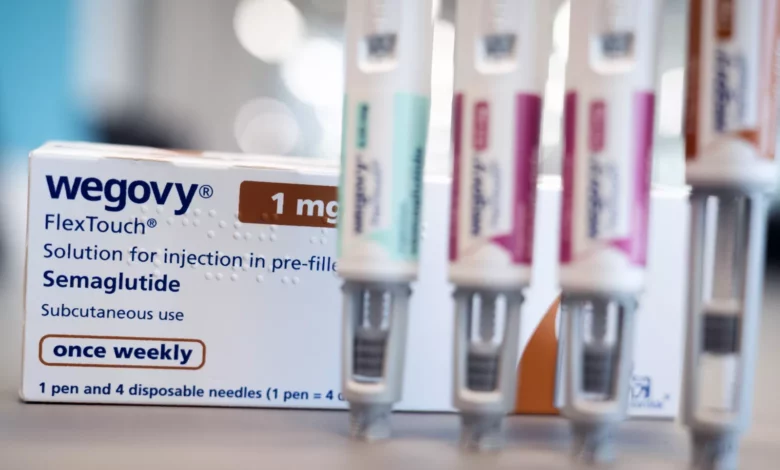
Urgent calls are being made for a formal investigation into deaths linked to black market obesity jabs, as harrowing accounts of families who lost loved ones to sepsis after using unregulated injections were laid before MPs. Committee chairwoman Layla Moran told health officials that she had met with bereaved families who believe the injections themselves caused the deaths. “The coroner report is still ongoing,” she said. “But the concern is it was the injection itself and its administration that caused the death.” She issued a stark warning: “People have already died as a result of this, and there is a chance that this could get worse.”
The deadly toll of unregulated weight loss drugs
The dangers of the black market trade in so-called “skinny jabs” have been thrown into sharp relief by a series of seizures and a suspected manslaughter case. In 2025, the Medicines and Healthcare products Regulatory Agency (MHRA) seized over 5,000 illegally traded GLP-1 products – the class of drugs that includes semaglutide and tirzepatide – and dismantled an illicit manufacturing facility in Northampton. In February 2026, the MHRA raided further illegal operations, seizing nearly 2,000 doses along with packaging equipment. The agency’s Criminal Enforcement Unit has disrupted more than 1,500 websites and social media accounts selling unlicensed medicines in 2025 alone.
The death of Karen McGonigal, 53, from Salford, has become a prominent case. Her daughters say she died days after being administered a dose of semaglutide at a beauty salon. Greater Manchester Police have made arrests on suspicion of manslaughter and supplying a controlled substance. The case has been described as a “wake-up call” for regulators. Andy Morling, the MHRA’s Deputy Director of Enforcement, noted a “blurring of the edges between a medicine and a cosmetic” that he said was unhelpful and increased the risk of black market sales.
Professor Aidan Fowler, national director of patient safety for NHS England, confirmed to MPs that discussions with the MHRA frequently cover medicine safety risks, including the black market, and drew parallels with cosmetic surgery. However, concerns persist that the regulator is not fully on top of the problem. Layla Moran said the families she met “don’t feel that the MHRA are on top of it”.
The MHRA warns that many seized products, even if genuine, may not have been manufactured to UK standards, raising serious questions about sterility and correct dosage. Unlicensed medicines have not been assessed for safety, effectiveness or quality, and can contain harmful ingredients or incorrect doses. The drug retatrutide, which is not licensed in the UK, has been found in counterfeit products. Profit margins from black market medicine sales reportedly rival those of cocaine and heroin, making the trade highly attractive to criminal networks.
MPs question NHS access as a driver
Conservative MP Gregory Stafford directly challenged health officials on whether current restrictions on NHS access to weight loss drugs were creating a patient safety risk. He cited evidence that barriers were pushing patients towards “unregulated and potentially unsafe sources”. The issue was put to public health minister Sharon Hodgson, who conceded: “I recognise that it will be a driver to people seeking those drugs elsewhere, and obviously the strong advice would be that they use registered pharmacies – whether community pharmacy or online. But obviously the wider point you’re making is not lost on us, and again it comes down to the cost pressures.”
The limited rollout of NHS-funded weight loss medications has been criticised as too slow and subject to a “postcode lottery”. While the National Institute for Health and Care Excellence (NICE) has recommended drugs such as tirzepatide (Mounjaro), implementation has been patchy. The Association for the Study of Obesity has submitted evidence to the parliamentary inquiry, calling for a national framework and investment in weight management services. The broader context is stark: 64% of adults in England are overweight or living with obesity, a crisis that costs the NHS an estimated £6.5 billion a year in England alone.
Minister’s response: ‘We’ve got to do it at pace’
Sharon Hodgson acknowledged that current treatment numbers “doesn’t sound very good” and stressed that the nation needs to go “further and faster” in rolling out obesity drugs. She told MPs: “We’ve got to do it at pace.” She also revealed that a new single patient record is being developed to help identify eligible individuals. But she offered no immediate prospect of easing cost constraints, which she identified as a key barrier to wider NHS access.
The Health and Social Care Committee has been conducting an inquiry into food and weight management, including treatments for obesity. During the session, Professor Aidan Fowler said NHS England is in regular contact with the MHRA about medicine safety risks. Despite these reassurances, committee chairwoman Layla Moran expressed doubt that officials were fully aware of the urgency. “I really hope, minister, that when you go away and look at this that you bear in mind the fact people have already died,” she said.
Personal stigma: A GP’s ‘shock tactic’
In a separate revelation, Ms Hodgson shared a personal experience that highlighted the stigma faced by people who are overweight or obese. She recalled how, during a blood pressure consultation, a GP called her “fat” as a “shock tactic”. She described leaving the appointment “crestfallen”. The minister’s account illustrated the kind of desperation and societal pressure that can drive individuals towards dangerous black market alternatives when legitimate routes feel inaccessible or judgmental.