The U.S. Patent and Trademark Office has granted Cohesity a patent for the foundational technology behind its generative AI platform, Cohesity Gaia, the company announced today. Patent No. 12,619,501, titled “Data Retrieval Using Embeddings for Data in Backup Systems” and issued on May 5, 2026, covers Cohesity’s proprietary method of linking secondary data systems with a retrieval-augmented generation (RAG) semantic layer to power enterprise GenAI applications. Cohesity said it is the first data protection vendor to secure a patent for this approach, which it describes as enabling organisations to apply large language models to backup data without creating new data silos, weakening governance controls or increasing the exposure of sensitive information.
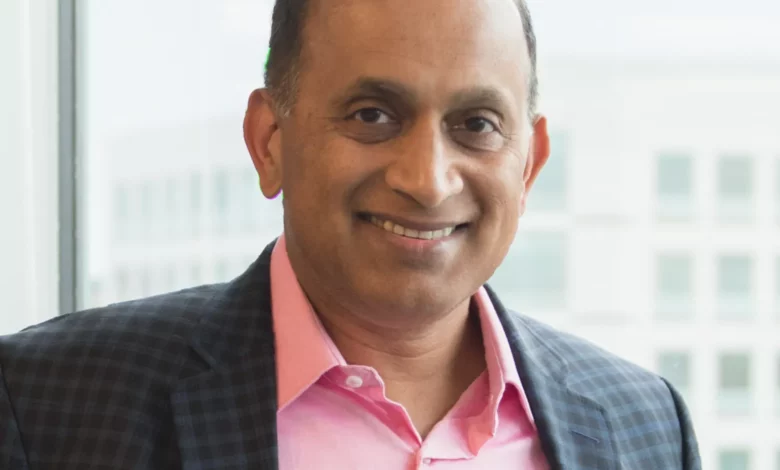
The patent was invented by Gregory Statton, Cohesity’s chief technology officer for the Asia Pacific and Japan region and global lead for Gaia; Sanjay Poonen, the company’s chief executive officer and president; Mohit Aron, Cohesity’s founder emeritus and a co-founder of Nutanix recognised as a pioneer of hyperconvergence; and Apurv Gupta, Cohesity’s chief technology officer and a former Google engineer who helped develop the company’s distributed file system. According to Cohesity, the inventors span both its engineering and executive leadership, reflecting the strategic importance of the underlying innovation to the company’s long-term platform vision.
How the RAG semantic layer works with backup data
The core of the patent is a method that allows an organisation’s secondary data — the files, emails, databases and virtual machine images that have long been kept primarily for disaster recovery and compliance retention — to be treated as a governed, searchable knowledge source for GenAI workloads. Rather than force enterprises to replicate sensitive information into a separate AI infrastructure, Cohesity’s approach uses a retrieval-augmented generation (RAG) semantic layer that sits on top of existing backup systems.
RAG is an AI framework that improves the output of large language models by retrieving relevant documents from external data sources and feeding that context directly into the model. This reduces the risk of hallucinations — the generation of plausible but incorrect information — and ensures responses remain grounded in up-to-date, organisation-specific content without requiring the underlying model to be retrained. In Cohesity’s architecture, the RAG layer makes secondary data semantically searchable by large language models while the data itself stays in place, still protected by the same security, governance, compliance and access controls that already govern the backup environment.
The effect, Cohesity said, is that enterprises can run AI workloads against their recovery data without moving or copying it. This minimises the expansion of the attack surface, avoids the creation of new data silos and allows organisations to apply GenAI to years of historical information that was previously inaccessible for AI use cases. Cohesity described the approach as a “security-first framework” designed to keep data protected, governed and in place. The patented method is one of the innovations behind Cohesity Gaia, a GenAI platform that runs on the company’s broader Cohesity Data Cloud — a unified data management platform that provides data protection, backup, recovery, disaster recovery, file and object services, and security for on-premises, edge and cloud environments. Cohesity Gaia is powered by Cohesity Turing, a suite of AI capabilities integrated across the platform.
Sanjay Poonen, Cohesity’s chief executive officer and president, said the patent reflects years of foundational engineering work aimed at unlocking value from what he called a “goldmine” of secondary data. “Protected recovery data is an organisation’s most important, complete and trusted repository of enterprise information and institutional knowledge,” Poonen said. “Yet it remains among the most underutilised. This patent reflects years of foundational engineering work to change that with a security-first architecture for enterprise AI. Cohesity Gaia applies AI directly to that data, without forcing organisations to move or duplicate sensitive information, unlocking insights while maintaining the governance, access controls and cyber resilience they depend on. No other platform delivers these advantages today.”
Customer validation
Patrick Ringelberg, Domain Data Center Architect & AI at the Dutch Ministry of Infrastructure and Watermanagement (Rijkswaterstaat), said his organisation evaluated several enterprise AI approaches before selecting Cohesity’s. “Preserving our security posture and ensuring sovereign, on-premise control as a Dutch government institution were critical objectives,” Ringelberg said. “Cohesity’s approach was the only one that made AI viable using our existing backup data as the foundation. The fact that this approach is now patented reinforces how differentiated it is.”
Rijkswaterstaat, which oversees the Netherlands’ national infrastructure, water management and traffic systems, has pursued AI initiatives that emphasise responsible use, human oversight and compliance with legal frameworks. Ringelberg’s comment underscores the importance of data residency and internal controls for regulated public-sector organisations seeking to adopt GenAI.
Cohesity Gaia is available today as part of the Cohesity Data Cloud platform. The company said the platform enables enterprise teams to unlock insights from years of historical data, accelerate decision-making and build AI-driven workflows on a foundation that inherits the security and access controls already governing their recovery data environment.