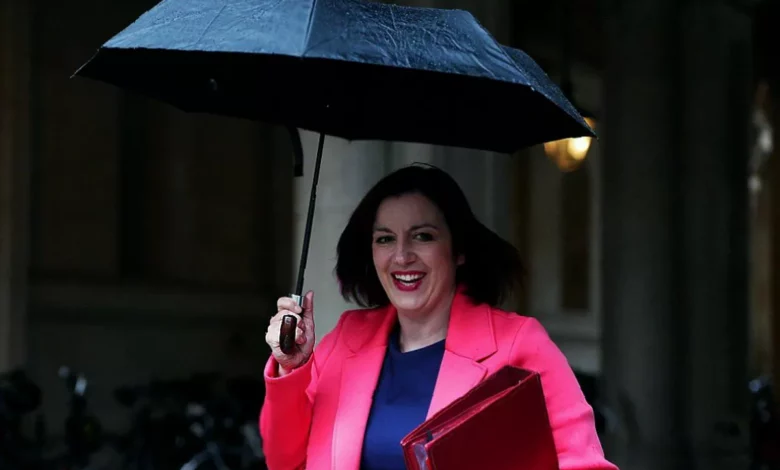
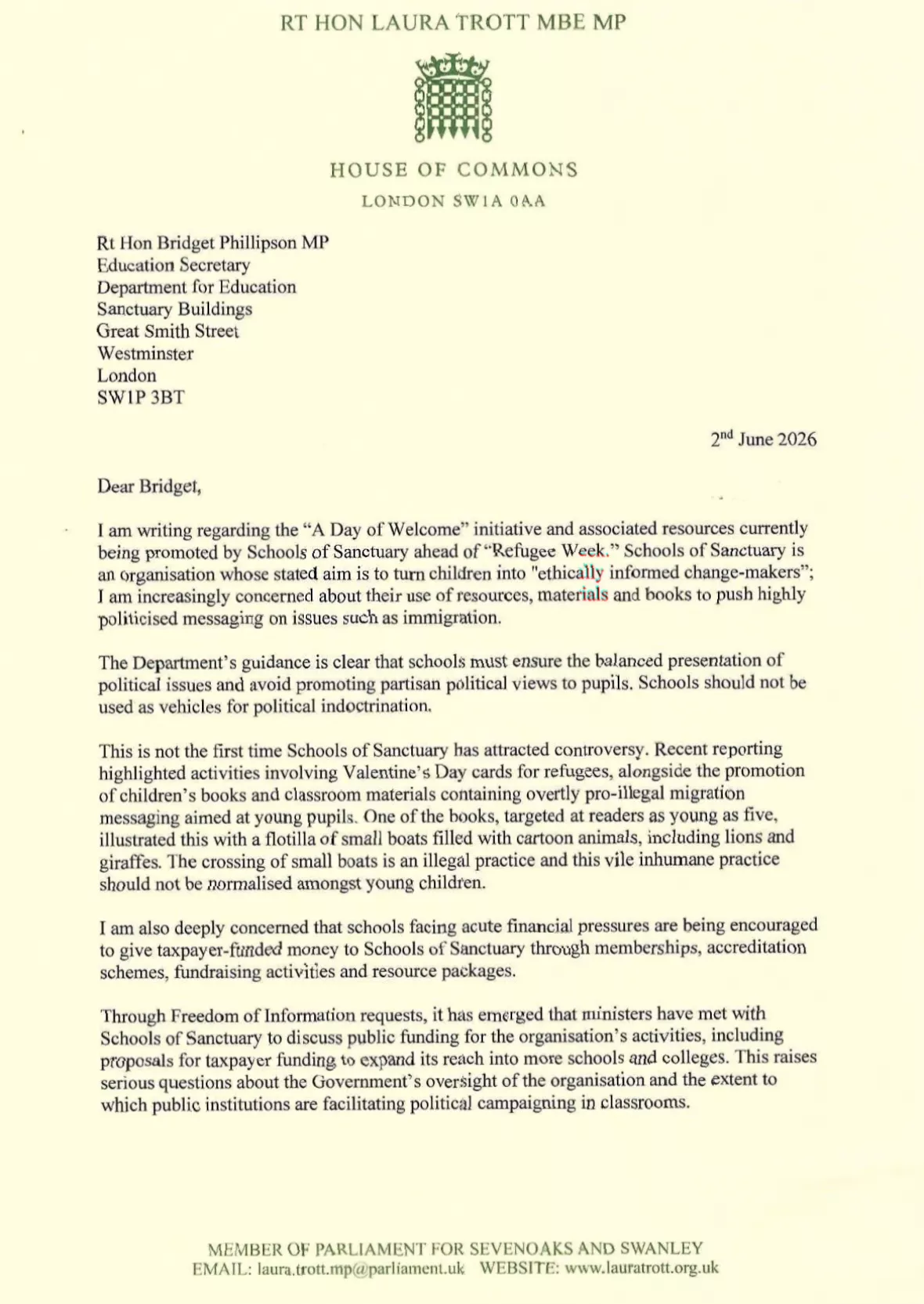
The Conservatives have accused Education Secretary Bridget Phillipson of allowing “highly politicised messaging” to be pushed in classrooms, after a network of schools promoted a “day of welcome” initiative ahead of Refugee Week. In a strongly worded letter, Shadow Education Secretary Laura Trott said she was “increasingly concerned” about the use of resources, materials and books that she alleges are being used to advance a partisan agenda on immigration, insisting schools should not be used as “vehicles for political indoctrination”.
Documents released under Freedom of Information requests to the Department for Education have revealed that ministers met with the organisation Schools of Sanctuary to discuss taxpayer funding for its activities, including proposals to expand its reach into more colleges. Ms Trott told Ms Phillipson that this “raises serious questions about the Government’s oversight of the organisation and the extent to which public institutions are facilitating political campaigning in classrooms”. She demanded to know what assessments the department had made of Schools of Sanctuary’s materials, what steps were being taken to prevent partisan campaigning, and whether the government would review and remove any inappropriate resources currently being promoted in schools.
The Shadow Education Secretary also expressed concern that schools, already facing acute financial pressures, were being “encouraged to give taxpayer-funded money to Schools of Sanctuary” through membership schemes, accreditation fees and fundraising activities. The organisation, which describes its core aim as turning children into “ethically informed change-makers”, is part of the wider City of Sanctuary UK movement and runs an annual event called the “day of welcome”.

This year’s day of welcome is scheduled for Friday, 12 June 2026, the Friday before Refugee Week, which runs from 15 to 21 June with the theme “Courage”. In 2025, more than 820 schools and 220,000 young people took part. Schools of Sanctuary says the event is “a day of solidarity and learning” intended to educate pupils about the experiences of refugees and asylum seekers and to support refugee pupils and their families. The organisation provides schools with lesson plans, assemblies and other classroom resources.
Materials and methods under scrutiny
The resources promoted by Schools of Sanctuary have become a central focus of the Conservative criticism. Among the materials highlighted is a children’s book aimed at readers as young as five, which features an illustration of a flotilla of small boats filled with cartoon animals including lions and giraffes. The organisation itself states that its programme “supports schools to talk factually about the different reasons people may have been forced to flee” and that it “does not promote a political perspective”. Schools can apply to become a “School of Sanctuary” by meeting eight minimum criteria across three processes: Learn, Embed and Share. The award lasts three years and requires renewal; schools are asked to make a donation upon receiving it – £75 for primary schools and £105 for secondary schools – though the organisation says all its support, resources and events are free.
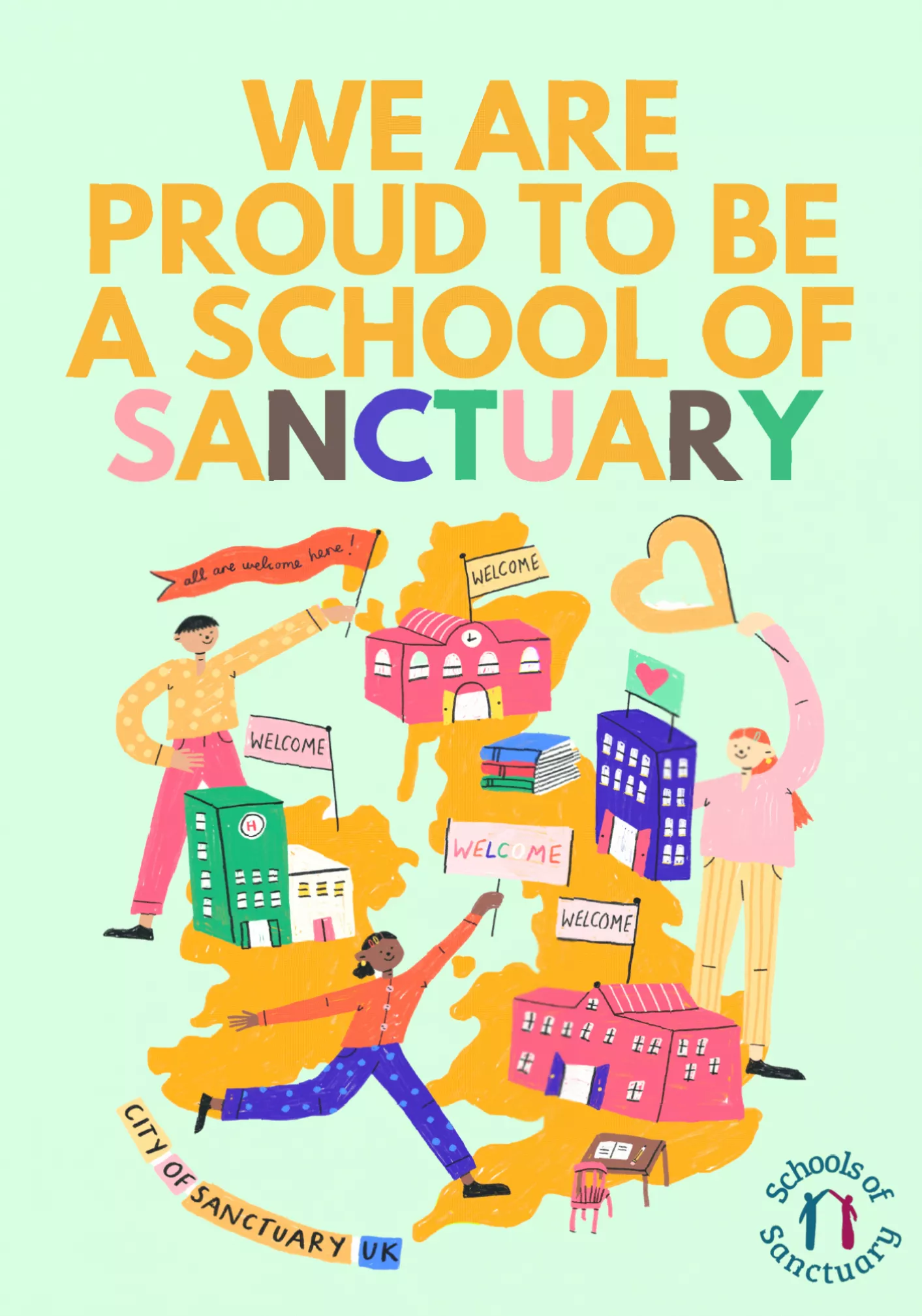
Financially, Schools of Sanctuary relies on grants and non-governmental organisations. Its most recent accounts show it received £50,000 from the Paul Hamlyn Foundation, a charitable grant-maker that itself has received £1.36 million in taxpayers’ money since 2020. The organisation says it depends on donations to continue its work and that the award process itself is free to schools.
In her letter, Ms Trott concluded: “There is a growing public concern that activist organisations increasingly view schools as a captive audience through which to advance ideological causes. It is essential that classrooms remain places of education rather than ideological campaigning.”
Government response
A spokesperson for the Department for Education said: “It is absolutely right that pupils receive a balanced presentation of opposing views on political topics. That’s why we have published clear guidance to help schools navigate this responsibility and it’s why we require schools to actively promote fundamental British values like democracy, the rule of law, and mutual respect and tolerance. This isn’t optional, it’s the law.”