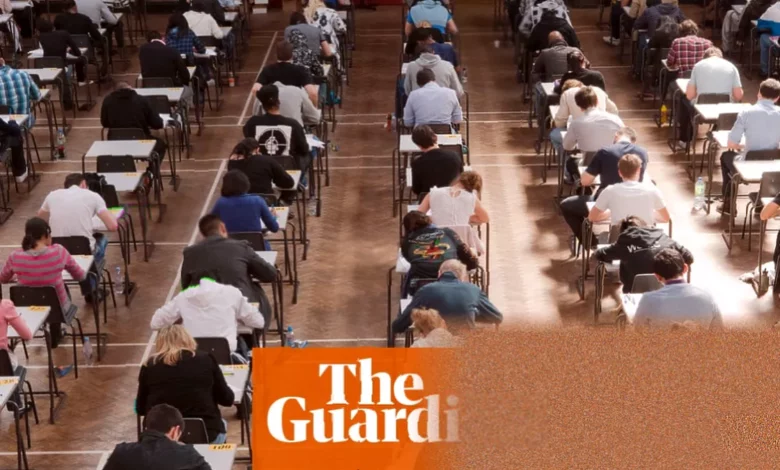
One in seven young Britons with degrees are unemployed, a shocking statistic that exposes a widening gap between what schools and universities deliver and what the world of work demands. The figure, drawn from former Labour health secretary Alan Milburn’s review of youth unemployment, means that among the more than one million 16- to 24-year-olds currently not in education, employment or training (NEET), a significant and growing proportion hold higher qualifications. Milburn’s report, commissioned by the government, warns of a potential “lost generation” and describes the crisis as a “whole-system failure” rather than a failure of young people themselves.
The scale of the problem is stark. In January to March 2026, the number of NEET young people reached 1,012,000 — an increase of 89,000 compared with the previous year. The rise is driven by both higher unemployment and rising economic inactivity, with ill health, particularly mental health conditions, a major factor. The UK’s NEET rate in 2025 was worse than the EU average; only Romania had a higher rate. Ireland’s rate is half that of the UK, and the Netherlands’ is a third. Milburn’s review notes that prisoners receive more help finding jobs than school leavers do, and he calls for a “whole-system reset” involving schools, welfare and employers. The long-term costs are enormous: the cumulative cost to the UK economy is estimated at £125 billion, and the lifetime cost to the exchequer from a single NEET young person is put at £29,000 per year on average.
Sunak’s numeracy plan and the limits of maths
Against this backdrop, former prime minister Rishi Sunak has complained that pupils are never taught “financial literacy” and are left unprepared for life outside the school gates. His proposed numeracy project aims to teach children how to handle money, a skill in which he believes Britons lag behind Germany and other countries. However, Sunak’s single-minded focus is on requiring mathematics to be taught until the age of 18. Critics argue that for the vast majority of people, numeracy begins and ends with arithmetic — the foundation for percentages, proportions and interest rates — while algebra, calculus and quadratic equations are irrelevant to daily financial decisions. An army education officer once told the columnist Simon Jenkins that school maths was so useless he had to teach soldiers addition and subtraction through darts and carpentry.
Sunak is clearly right about the urgency of financial literacy. Research shows that millions of people in the UK lack basic understanding: only 28% of adults can correctly explain core concepts such as compound interest, inflation and risk diversification, and four in ten adults fall into the “poor or very poor” category for financial literacy. The UK lags behind Germany, Switzerland, the Netherlands, Australia and Canada. A significant gender gap exists, with men generally outperforming women, a disparity that widens in midlife and affects decisions on retirement, mortgages and childcare. Moreover, there is a dangerous gap between perceived and actual knowledge: 70% of consumers feel positive about their financial knowledge, but only 19% can confidently explain common financial terms. This overconfidence increases vulnerability to scams, debt and poor investment choices. The cost of financial illiteracy to the UK is estimated at up to £640 per person annually.
The problem begins early: approximately 45% of school pupils aged 9 to 18 have poor or very poor financial literacy. Financial education was first introduced into the National Curriculum as part of citizenship education for 11- to 16-year-olds in 2014, but a 2025 Santander UK report found that a decade later only one in four young adults (18–21) reported receiving any financial education at school, leaving around four million without a fundamental understanding of money management. Currently, 38% of secondary school students say they have never been taught about personal finances, and 64% say what they have been taught will not set them up for life. The government has now committed to making financial education compulsory in primary schools and extending it to secondary levels from 2028, integrated into the Citizenship curriculum. A curriculum review emphasises that maths is not the primary home for financial education; Citizenship is seen as the more relevant context. The Social Market Foundation has highlighted the need for adequate teacher training, support and resources to deliver effective financial education.
Beyond the balance sheet: the three pillars of life skills
Where Sunak should be firm, Jenkins argues, is in demanding that handling money — and by extension handling the world of work — be made compulsory rather than “extracurricular”. But the former prime minister’s exclusive focus on maths obscures a broader failure of the education system to equip young people with the core life skills they need to survive and prosper in a modern society. Jenkins proposes three fundamental pillars that should tower above traditional academic subjects.
The first pillar is how to look after body and mind: how to handle physical and mental health, how to react to social media, and how to manage the pressures of modern life. The second is how to behave as members of the community: working in groups, respecting the environment, voting, obeying the law, and understanding civic duty. The third — and the one Sunak has championed — is how to handle money and work: incomes, taxes, insurance, pensions, and the “glue that binds individuals to the economy”. Financial ignorance, Jenkins writes, is the fastest route to poverty. These three pillars, he argues, should be core and compulsory, not optional extras, and they need constant updating. Reforms have been made — there is now a GCSE in health and social care — but the primacy of an essentially academic education remains entrenched. The time spent drilling maths into children to whom it is of no conceivable use is, in his view, “mindless and cruel”.
This critique extends to the broader structure of schooling. Jenkins points out that GCSEs, A-levels, degrees and doctorates are treated as sacred texts, handed down from generation to generation, measured by examinations that often test little more than memory. The school year is still divided into three terms covering little more than half a year, and the custodians of the system are obsessed with exams that question utility at their peril. Former prime minister Tony Blair has also criticised current Labour leadership, including Keir Starmer, for abandoning the centre ground and lacking a coherent plan, while Prime Minister Keir Starmer defends his policies as appropriate for the current era, differing from Blair’s in 1997. Both Milburn and Sunak, from different political perspectives, agree that schools and universities are turning out leavers hopelessly unready for the world of work.
The Starmer government’s fiscal and regulatory barriers to startup and temporary jobs have not helped, although recent moves to expand apprenticeships offer some relief. But the overall lack of transitional assistance is long-standing: prisoners get more help finding a job than school leavers do. Beyond the school gates, Jenkins writes, “Here be dragons.” The education system, still modelled on elite academies that took pride in their detachment from the outside world, must now reckon with utility as the essence of education. The three pillars of health, community and financial literacy should tower above sciences and humanities — not to diminish them, but to ensure that every young person, whether or not they go on to university, is equipped to navigate the world beyond the school gates. The question is whether today’s education politicians will act before another generation is lost.