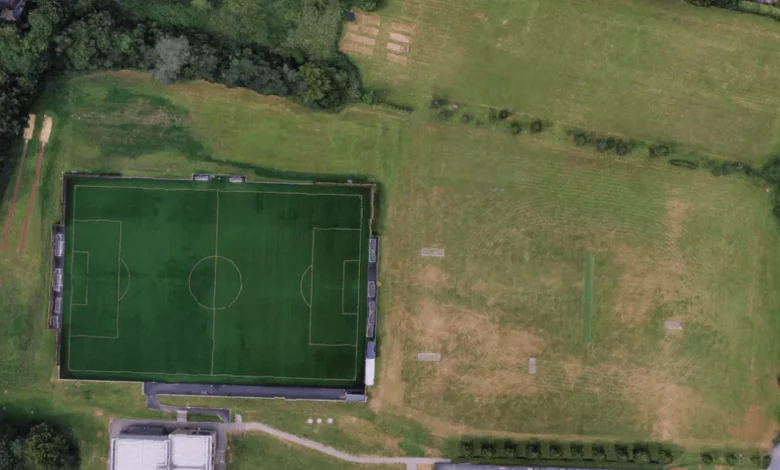
A school near Maidstone, Kent, is now being sued by a neighbour over noise complaints arising from its £700,000 artificial grass sports pitch, marking the latest twist in a long-running dispute that has already seen a ban on whistles imposed and later lifted.
The Lawsuit
The legal action has been brought by an unnamed resident who lives approximately 300 feet from the 3G pitch at Cornwallis Academy. The neighbour has accused the school’s operator, Future Schools Trust, of committing a statutory noise nuisance in breach of the Environmental Protection Act 1990. Specifically, the resident claims the school has violated the section of the act that outlaws noise “prejudicial to health or a nuisance.”
The act defines a statutory nuisance as something that unreasonably and substantially interferes with the use or enjoyment of a home or other premises, or that injures – or is likely to injure – health. Under Section 82 of the legislation, individuals who are aggrieved by such a nuisance may bring proceedings directly to a magistrates’ court. This provides a route for private action without requiring the local authority to step in, and it can be a cost-effective option for complainants, who may represent themselves and recover costs if successful.
At a first hearing at Maidstone Magistrates’ Court on May 19, Future Schools Trust pleaded not guilty to the charges. The case is now scheduled to be heard at Sevenoaks Magistrates’ Court on October 23, 2026. When determining whether noise constitutes a statutory nuisance, courts typically consider factors such as the time, duration, frequency, type and volume of the noise, as well as whether it is reasonable for the noise to occur in that location at that time and its societal acceptance. Decibel levels alone are not always determinative.
History of the Noise Complaints
The pitch at the centre of the dispute was unveiled in June 2023. It is a state-of-the-art, FIFA-certified, fenced and floodlit 3G artificial grass surface, installed by Velocity with civil works and project management by Surfacing Standards Ltd. Planning permission had been granted by Maidstone Borough Council on the condition that no whistles would be used for matches held after school hours – a condition originally suggested by the school’s agent, SSL, in 2022 in an effort to limit disturbance to neighbours.
Soon after the pitch opened, residents began complaining about noise, including whistles and shouting. One neighbour claimed to have recorded noise levels in excess of 60 decibels using his own sound monitoring equipment. Some residents described the noise as “relentless” and said they could no longer enjoy their gardens or homes in peace, with sound audible even with windows closed. Complaints also included reports of adults “effing and blinding” during matches.
The council subsequently told the academy to stop using the pitch, determining that it had breached its planning permission. The school was reportedly unable to use the pitch even during school hours for a period due to the ongoing dispute, which also affected its ability to generate income by hiring out the facility. The pitch is available for hire to local community youth teams but not to adults aged 18 and over.
In 2025, the whistle ban was lifted on appeal. Maidstone Borough Council’s Planning Committee ruled that the condition was “not reasonable, necessary and enforceable,” noting in part that whistles were allowed on the surrounding turf pitches. The decision was met with significant local opposition: around six neighbours formally opposed the lifting of the ban at that time. One resident, David Sanderson, who has lived adjacent to the pitch his whole life, expressed disappointment with the council’s decision.
Headteacher Joseph Sutton revealed that the school had received 137 noise complaints about the pitch, but noted that 101 of those had come from just three individuals.
The School’s Defence
Mason Dadson, a spokesman for Cornwallis Academy, said: “A local resident has commenced legal proceedings against the school in relation to an alleged noise nuisance. While it would not be appropriate for the school to comment on the specifics of ongoing court proceedings, it is a matter of public record that the complaint concerns the use of the school’s artificial grass football pitch outside school hours. The school denies the existence of a noise nuisance and is fully engaging with the court process.”
Dadson added that the artificial grass pitch was installed in 2023 on the school’s playing fields, in an area previously occupied by two grass pitches. “It was installed following a detailed planning process, which included input from Sport England, and was approved by Maidstone Borough Council. The school’s intention has always been to provide an all-weather, state-of-the-art pitch for both its students and local community youth teams. The school remains committed to providing a safe, affordable and inclusive environment in which organised youth teams and community clubs can play, develop and thrive.”
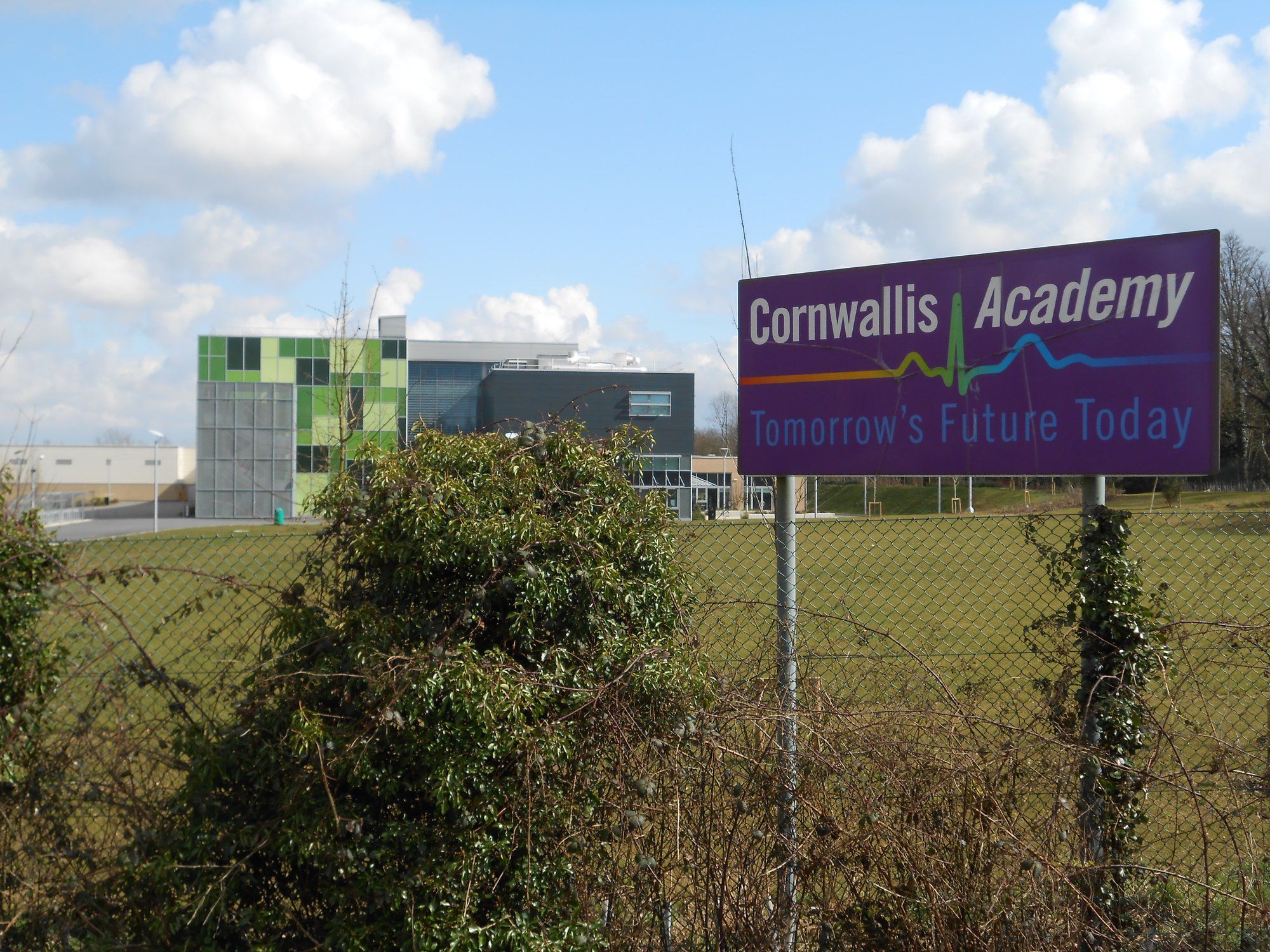
Cornwallis Academy, which dates back to 1959 when it was originally named Cornwallis School, became an academy in 2011 as part of the Future Schools Trust. The trust also operates New Line Learning Academy and Tiger Primary School. The school was rated “Good” in its last Ofsted report, published on November 28, 2017.