Jaiden Picot, paralysed from the chest down after a cargo truck struck him in August 2024, has pledged to dedicate his professional career to improving accessibility for wheelchair users, following a viral video of him walking across a university graduation stage in a robotic exoskeleton.
Viral graduation moment
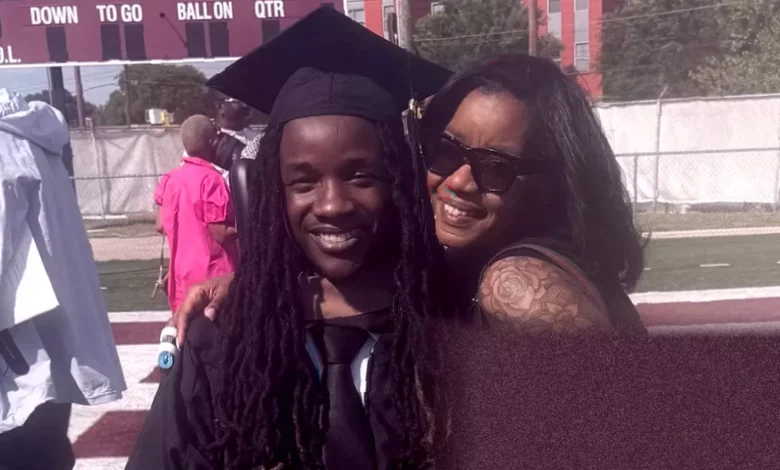
Picot, 23, from Portsmouth, Virginia, became an internet sensation in May when he strode across the stage at Virginia Union University (VUU) to receive his Executive Master of Business Administration. The moment was made possible by a robotic exoskeleton supplied by the Sheltering Arms Institute, where he had been training with the device. He described it as a “big Transformers suit”, explaining that it responded to the swaying of his body to facilitate movement.
The video of his walk drew wild applause from graduates and administrators, and was later shared widely on social media. Civil rights attorney Ben Crump posted on X: “POWERFUL resilience in the face of adversity!” VUU, a historically Black university, issued a statement hailing Picot as “a testament to what is possible when purpose meets preparation”. The graduation also marked a personal milestone: Picot had missed his high school graduation because of the Covid-19 pandemic.
His mother, his girlfriend and two of his rehabilitation therapists were among the supporters present. On stage, he told the cheering audience: “Oh, wow – I did it. My life – it took a really, really big turn. I could have easily put myself in a closet, gave up on life, but I decided not to let my situation control and stop me from achieving my goals.”
Injury and recovery
Picot’s life changed dramatically in August 2024 while he was riding an electric scooter. A cargo truck struck him, causing a spinal cord injury at his fourth cervical vertebra that left him paralysed from the chest down. He described the aftermath bluntly: “My life has been so hard ever since that day. I was an independent person before my accident.”
He entered rehabilitation at the Sheltering Arms Institute in Richmond, Virginia – a top-ranked physical rehabilitation provider that is a collaboration between VCU Health and Sheltering Arms Hospital. There, he undertook daily physical and occupational therapy, practicing self-care tasks and learning to walk using robotic exoskeletons manufactured by EksoBionics. He also mastered voice-controlled devices to operate his television, set alarms and reminders, and play music, games or sleep sounds from his hospital room. Despite the injury, he completed his bachelor’s degree at VUU on time in spring 2025 and immediately began graduate studies, earning his EMBA on 9 May.
Daily accessibility challenges
Picot now belongs to an estimated 300,000 people in the United States living with traumatic spinal cord injuries, the vast majority of whom have paraplegia or quadriplegia. Although the Americans with Disabilities Act (ADA) has required reasonable accessibility accommodations in businesses serving the public since 1990, Picot’s experience reveals a persistent gap between law and reality.
After suffering a devastating spinal injury that left him paralyzed from the chest down, Jaiden Picot walked across the Virginia Union University stage using a robotic exoskeleton to earn his Executive MBA. POWERFUL resilience in the face of adversity! Now he’s determined to help… pic.twitter.com/25ehieqgi5
— Ben Crump (@AttorneyCrump) May 12, 2026
He described how calling ahead to restaurants and event venues to check for ramps and sufficient wheelchair space has become a routine necessity. “I know I missed a lot of going out with my friends after being paralysed,” he said. “I was unable to get into certain restaurants, certain events, just because they don’t have a ramp for me to get in. And I feel like changing that’s very important because it’s a big community out there of us who want to get in places everyone else does.” He noted that “it’s plenty” of places where no accommodation exists.
Under Title III of the ADA, places of public accommodation – including stores, restaurants and event venues – must remove architectural barriers when “readily achievable” and ensure new construction meets accessibility standards. Businesses are also required to modify policies to effectively serve customers with disabilities. Yet Picot’s everyday experience shows that many venues still fail to meet those requirements.
To address his own mobility needs, Picot and his family have launched an online fundraising campaign to buy an accessible van, with a goal of $63,000. They say the vehicle would make it easier and safer for him to get to and from his daily activities and commitments.
Advocacy and professional goals
Picot intends to channel his personal struggle into a professional mission. He plans to seek meetings with state civic leaders in Virginia to push for improved accessibility standards. At the same time, he is pursuing a career in real estate with a focus on helping people with disabilities find suitable housing. He has expressed interest in working with real estate franchises like Keller Williams, with the aim of helping others locate “affordable and accommodative homes that they will feel comfortable and happy to live in”.
“I’m trying to reach for the stars and help us get to a point where every place has some type of accommodation for wheelchair-using people,” Picot said. “Just because we may have gone through something tragic, it doesn’t mean … our life has to be so hard after that. I’m mentally ready to reach my goals and also advocate for people like myself.”