Two Reading schools named after pupil’s meningitis death
The two schools attended by pupils being treated for meningitis in Reading have been confirmed as Reading Blue Coat School and Highdown Secondary School and Sixth Form Centre, the UK Health Security Agency (UKHSA) has said. The announcement comes after the death of a student from Henley College in Oxfordshire, whose infection has been identified as Meningitis B (MenB). The UKHSA confirmed three cases of meningococcal infection in young people in the Reading area, with close contacts offered antibiotics as a precaution.
Henley College said its “thoughts and sincere condolences are with the student’s family and friends at this extremely difficult time”, adding that it is “following the advice and guidance given by the UK Health Security Agency”. Reading Blue Coat School headmaster Pete Thomas said the school is “deeply saddened by the news of the death of a student at another local school” and has been “working closely with the UKHSA throughout”. He stressed that officials have advised the risk to the school community and the wider area “remains very low”. Highdown Secondary School and Sixth Form Centre, where headteacher Laura Mathews is leading the response, has also been in regular communication with parents, staff and students.
Dr Rachel Mearkle, consultant in health protection at UKHSA, said: “We understand that many people will be affected by this sad news and would like to offer our condolences to the friends and family of this student. Students and staff will naturally be feeling worried about the likelihood of further cases, however meningococcal meningitis requires very close contact to spread and large outbreaks, as we saw in Kent recently, are thankfully rare.” She emphasised that the risk to the wider public remains low because the disease does not spread easily. Professor Andrew Preston, a professor of microbial pathogenicity at the University of Bath, noted that all current cases “appear contained to a well-defined social contact group”, enabling rapid contact tracing and the administration of antibiotics and vaccination if deemed necessary. He added: “At the moment, there is no indication of transmission to the wider community, although understandably this will have caused wide concern in the area.”

Know the signs: symptoms and when to seek medical help
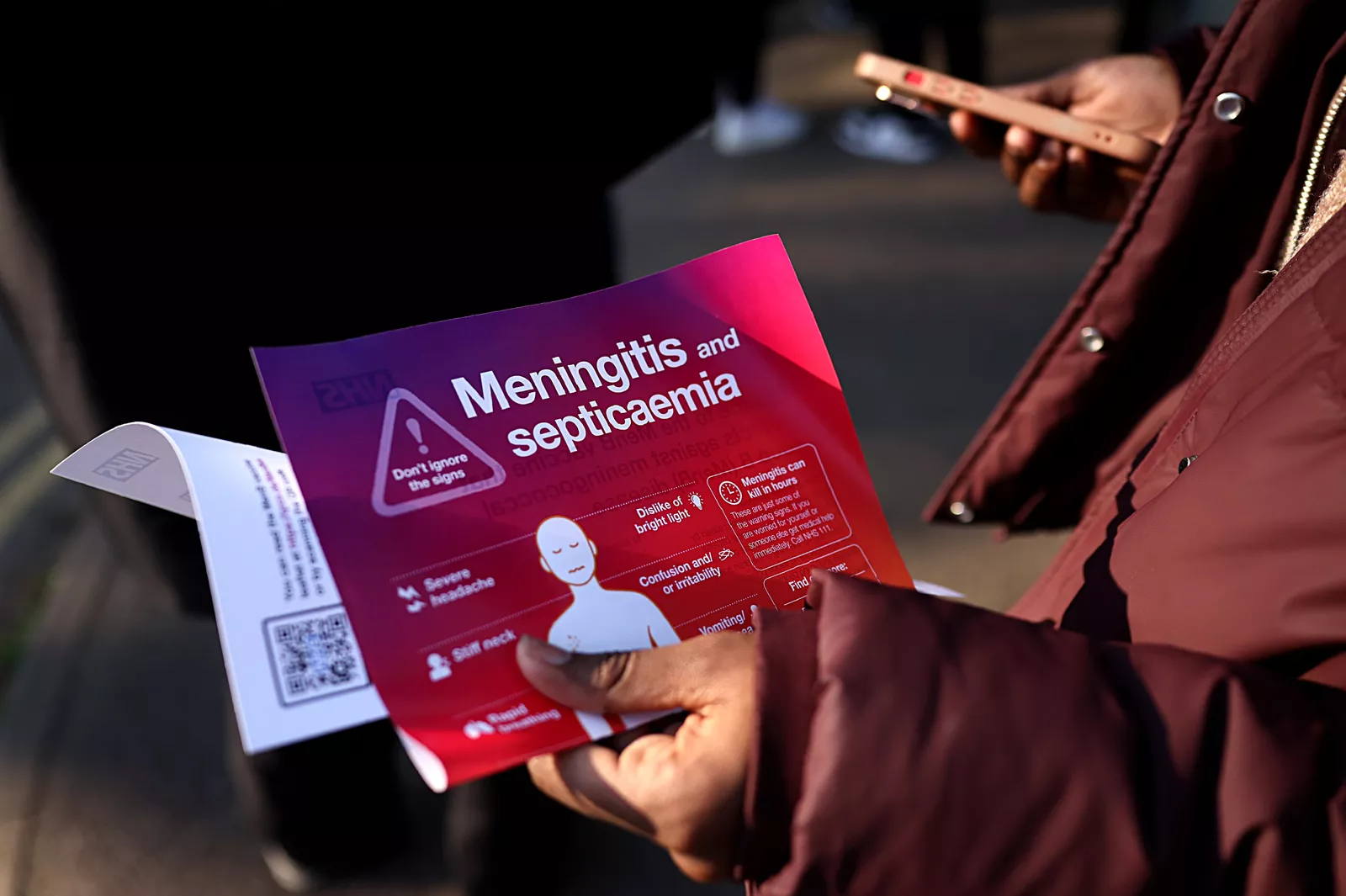
The UKHSA has shared information with parents and students at all affected schools about the signs and symptoms of meningitis. Dr Mearkle stressed that “anyone can get meningitis”, with around 300 to 400 cases of meningococcal disease diagnosed in England every year. “It’s most common in babies, young children, teenagers and young adults. It needs to be treated quickly, so it is important to know the signs and symptoms. They can appear in any order and may not all be present, so seek rapid medical attention if there is ever any concern.”
Symptoms of meningococcal meningitis can include: a high temperature, severe headache, vomiting, stiff neck, sensitivity to light, confusion, drowsiness, cold hands and feet, severe muscle pain, and a rash that does not fade under pressure. The UKHSA warns that symptoms can appear suddenly and in any order, and that not all may be present. Because the early signs can easily be mistaken for a cold, flu or hangover, students and young people are particularly vulnerable to missing the warning signals. Meningococcal disease requires very close contact to spread — through kissing, sharing drinks or prolonged close contact such as living in the same household — and is not passed on by casual contact or touching surfaces.
The infection has been confirmed as MenB, but tests show it is not the same strain as the one linked to the fatal outbreak in Kent in March, which led to two deaths and prompted widespread vaccination and antibiotic distribution. Another separate cluster involving MenB occurred in Dorset in April, though that was a different substrain. In the 2024/25 epidemiological year, 378 cases of invasive meningococcal disease (IMD) were confirmed in England, with MenB accounting for 82.6 per cent of those cases. The case fatality ratio for IMD in England was 8.2 per cent (31 of 378). Pre-COVID, an estimated 8,000 cases of meningitis occurred annually in the UK; cases dropped significantly during social distancing but have been increasing since.

Vaccine availability and eligibility
The MenB vaccine (Bexsero) has been offered routinely to babies born on or after 1 May 2015 as part of the NHS childhood immunisation programme. Catch-up vaccinations are available on the NHS for children up to age two who have missed doses. Individuals with specific high-risk medical conditions are also eligible for a free NHS MenB vaccination. Crucially, teenagers and young adults born before May 2015 are not routinely vaccinated against MenB on the NHS, meaning many university students and those in the affected age groups may not be protected. The Joint Committee on Vaccination and Immunisation (JCVI) has previously assessed a widespread catch-up programme for MenB as not cost-effective, though this is under review following recent outbreaks.
In response to the Reading cases, public health teams have offered the MenB vaccine and preventative antibiotics to close contacts. However, Henley College stated that due to the low number of confirmed cases, there are currently no plans for a local vaccination programme. Separately, the MenACWY vaccine, which protects against other strains (A, C, W, Y), is offered to teenagers around age 14 and is available as a catch-up for individuals up to age 25 who have not previously received it, particularly new university entrants.
Alex Stanley, vice president of the National Union of Students, said: “We are sadly once again seeing the fast-paced awfulness of meningitis B. We urge everyone in the surrounding areas to follow the advice of Government health officials and to be acutely aware of the signs of illness. There should never be a cost barrier to lifesaving vaccines, and we need to see the Government offer the meningitis B vaccine to all young people on the NHS.”
The UKHSA confirmed that the MenB outbreak in Kent earlier this year resulted in two deaths and led to thousands of people receiving the MenB vaccine or antibiotics to curb the spread. Dr Mearkle reiterated that the agency is “working closely with partners and have provided public health advice and precautionary antibiotic treatment to close contacts of the cases”. The three Reading cases — at Reading Blue Coat School, Highdown Secondary School and Sixth Form Centre, and Henley College — remain under investigation, with no evidence of wider transmission beyond the immediate social contact group.