Demonstrators block prison van outside London court as factory raiders from Palestine Action jailed

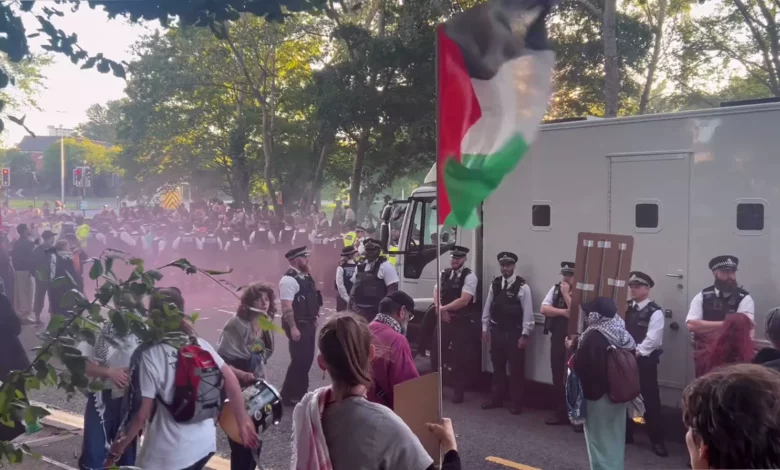
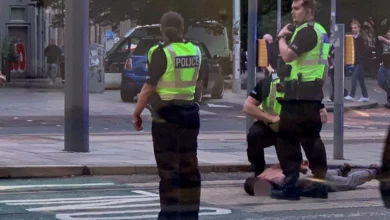
Four activists were jailed for a £1 million raid on an arms factory yesterday, triggering a massive demonstration outside Woolwich Crown Court in which more than 100 people were arrested and protesters lay down in the road to block a prison van.
Around 500 supporters of Palestine Action gathered outside the court to hear the sentences handed down to Charlotte Head, 23, Samuel Corner, 30, Leona Kamio, 30, and Fatema Rajwani, 21, who used a repurposed prison van to crash into the Elbit Systems UK site near Bristol in August 2024. Wearing red boilersuits, the group destroyed computers, drones and other equipment with sledgehammers and crowbars, causing damage estimated at £1 million.
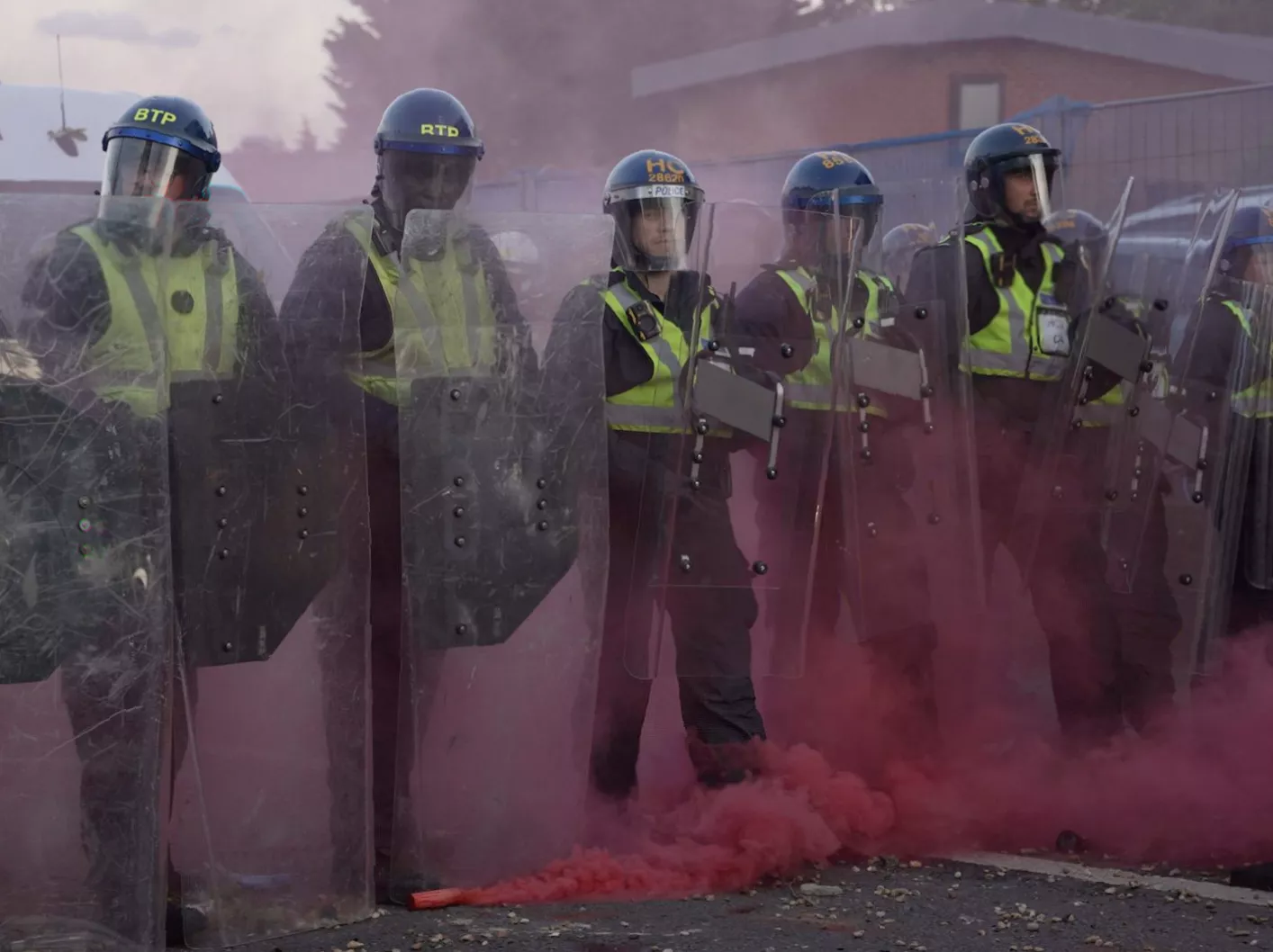
As the judge delivered his sentencing remarks through a livestream, the crowd booed and chanted “direct action is not terrorism”. By mid‑afternoon, Metropolitan Police officers had begun arresting demonstrators, with the total reaching 107 by 6pm. The force said in a statement: “All are currently in police custody.”
Some protesters had been holding signs that read “Saving lives is not terrorism I support Palestine Action”, according to the Defend our Juries campaign. Chants of “you’re complicit in genocide” and “Met Police, shame, shame, all the crimes in your name” were heard, alongside “Met police, K K K, you’re all the same” and “death to the IDF”. Shortly after the judge finished his remarks, police issued a dispersal order and began clearing the area.
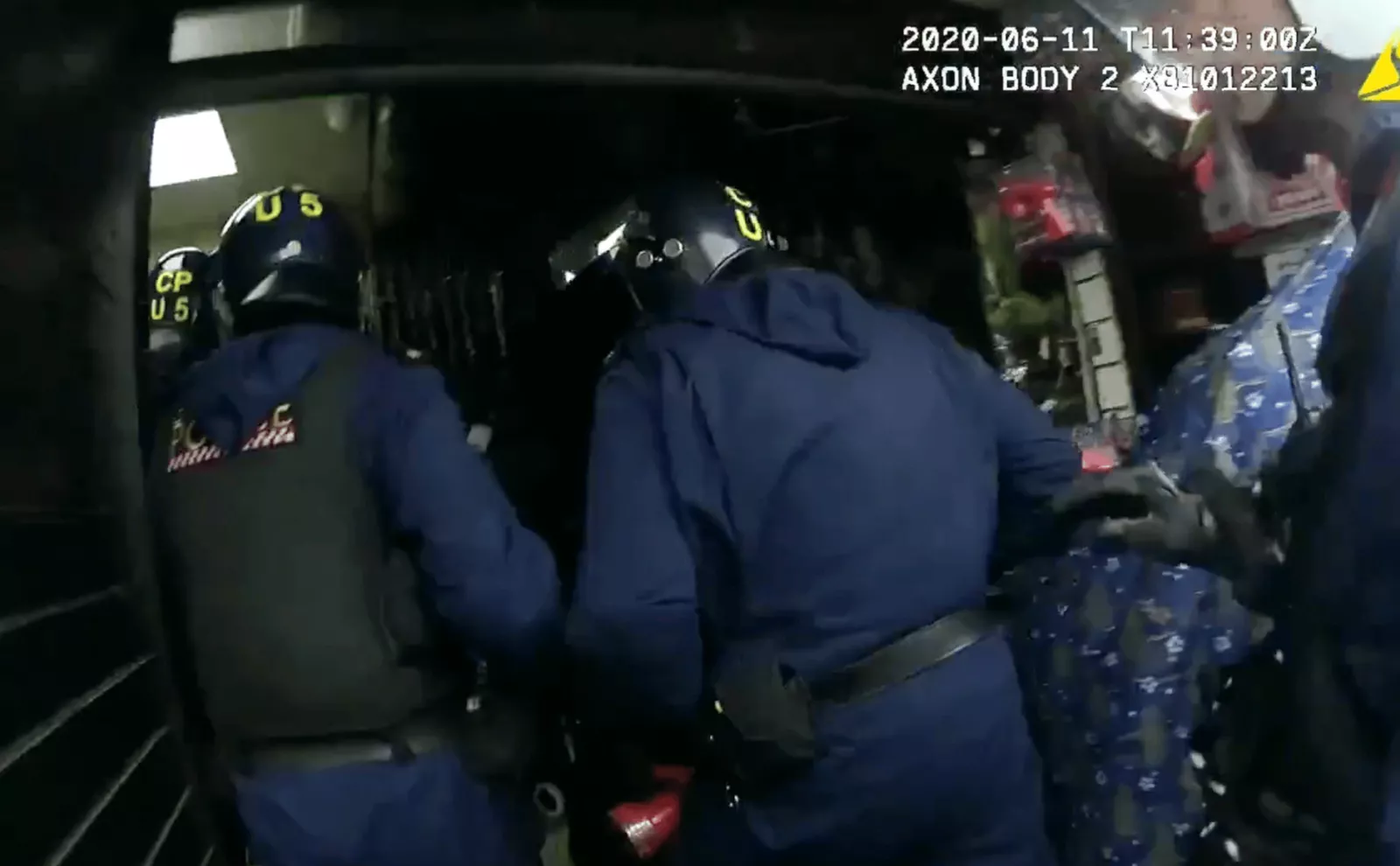
A few hundred demonstrators remained and blocked the Serco prison van believed to be carrying the four defendants by lying on the road. Dozens of officers surrounded the vehicle, with some protesters banging on its side. One officer shoved a protester who tried to open the van door, and Metropolitan Police Territorial Support Group officers were called in to remove those lying in front of it. The van eventually reversed and left at around 8.53pm.
Sentences handed down
Corner, who struck Police Sergeant Kate Evans twice on the back with a seven‑pound sledgehammer, fracturing her spine, was jailed for seven years and eight months for criminal damage and grievous bodily harm. The judge, Mr Justice Jeremy Johnson, described Corner’s actions as “extreme and gratuitous force against a vulnerable police officer”. PC Evans later said she had suffered disturbed sleep and distressing dreams and had been forced to give up her rank of sergeant; she is still undergoing medical treatment nearly two years later.
Head and Kamio each received five years for criminal damage, with Head driving the prison van used in the raid. Rajwani was sentenced to four years and eight months for criminal damage.
The ‘terrorist connection’ ruling and its implications
A central element of the sentencing was Mr Justice Johnson’s ruling that the raid had a “terrorist connection”. This decision, which was not put to the jury during the trial, means the activists will serve at least two‑thirds of their sentences before becoming eligible for parole and will be subject to terrorism notification requirements for 15 years.
The judge based his ruling on the scale of the damage, the aim of influencing UK government policy towards Israel, and the intent to intimidate. He stated that the activists had “decided to take matters into your own hands” because they were disillusioned with legal efforts to oppose Israel’s actions in Gaza.
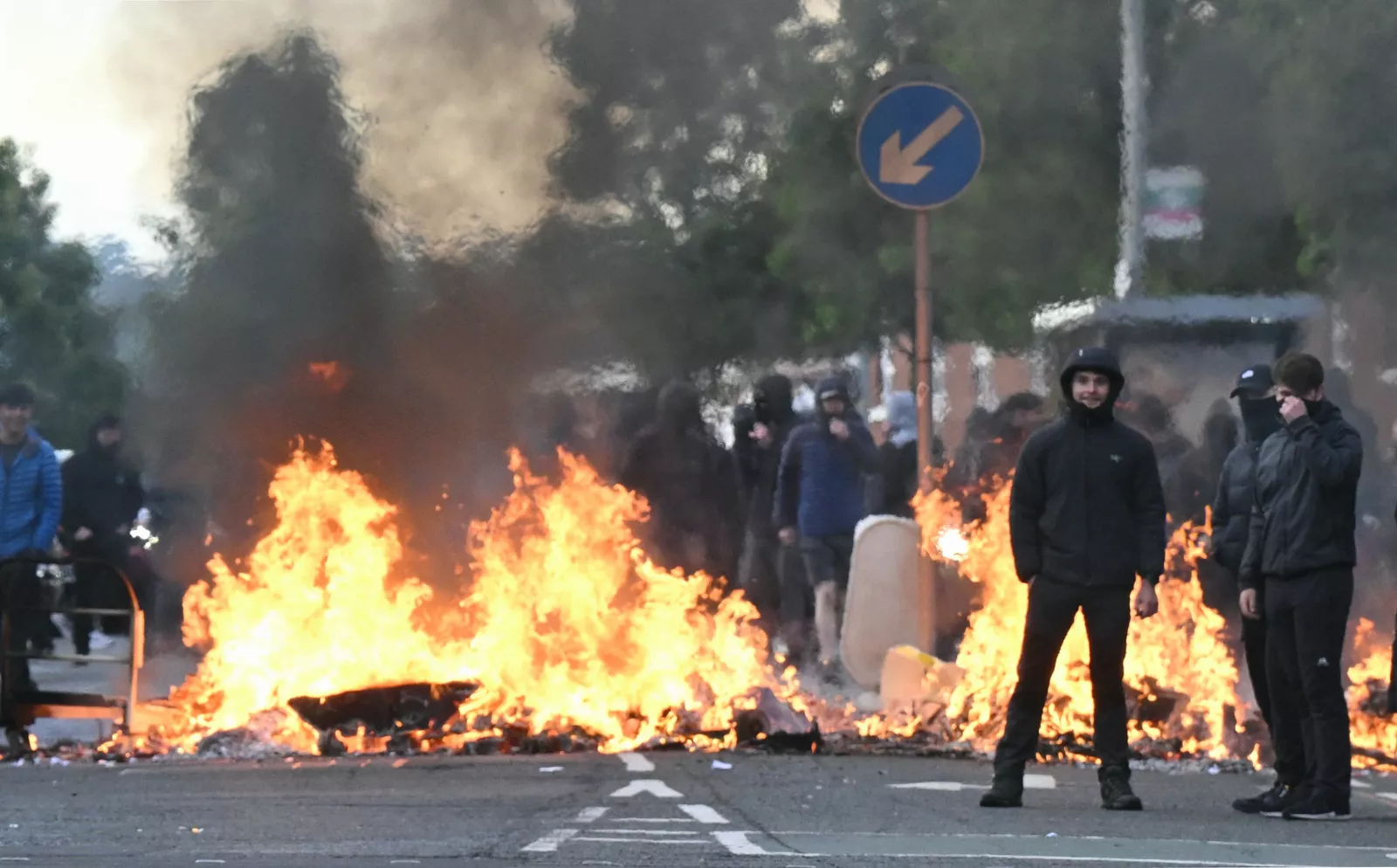
Lawyers for the activists and several commentators have argued that there is no legal basis for treating the convictions as terrorism, as the four were not charged with a specific terrorist offence. It has been reported that the jury was not informed of the potential “terrorist connection” during the trial, and the media was initially barred from reporting on the ruling due to a court injunction.
Labour MP John McDonnell, who attended the protest until midday, said: “The scale of the sentences on these young people is truly shocking. It is unprecedented for people to receive such heavy sentences for undertaking direct action as a form of protest. To sentence them on terrorist grounds which was never put before a jury is unjust. This is an appalling judgment and must be challenged.”
Moazzam Begg, 57, a senior director of Cage International who spent nearly three years detained at Guantanamo Bay without charge, was among the protesters. He said: “It’s pretty nonsensical. Had [the jury] known [they’d be given a ‘terrorist connection’], it’s likely that they wouldn’t have convicted. I’ve been imprisoned here before in the past and one thing I’ve seen for the past 20‑odd years is that the terrorism laws have gone from bad to worse. Nowhere in the trial was it said that this is terrorism. And that’s the problem, because it’s almost lying to and deceiving the jury.”
Amnesty International expressed concern that the sentencing and the use of terrorism legislation set a dangerous precedent for the right to protest, stating: “Criminal damage has never been treated as terrorism within the UK justice system before and it is dangerous to treat them as the same thing.”
The case also takes place against the backdrop of the UK government’s decision in July 2025 to proscribe Palestine Action as a terrorist group under the Terrorism Act 2000, making membership or support for the group a criminal offence. The High Court later ruled this proscription unlawful, though the ban remained in place pending an appeal, and a judicial review is ongoing.
The activists’ motivations
Palestine Action, a British pro‑Palestinian direct action network founded in July 2020, says its goal is to end global participation in what it describes as Israel’s “genocidal and apartheid regime” by disrupting the UK arms industry and exposing what it calls government complicity. The group has conducted 45 documented direct actions in the UK, many targeting Elbit Systems, which produces drones, communication systems and surveillance equipment. Elbit Systems UK, which employs nearly 700 people across 15 sites, states it does not supply arms to the Israeli Defence Forces, but has obtained UK military export licenses to Israel for supporting UK and non‑Israeli customer programmes.
During the protest, Moazzam Begg framed the activists’ actions in broader terms: “The issue is not about Palestine Action – it’s about children of Gaza, it’s about the men of Gaza, it’s about the women of Gaza, and it’s about a genocidal state.”