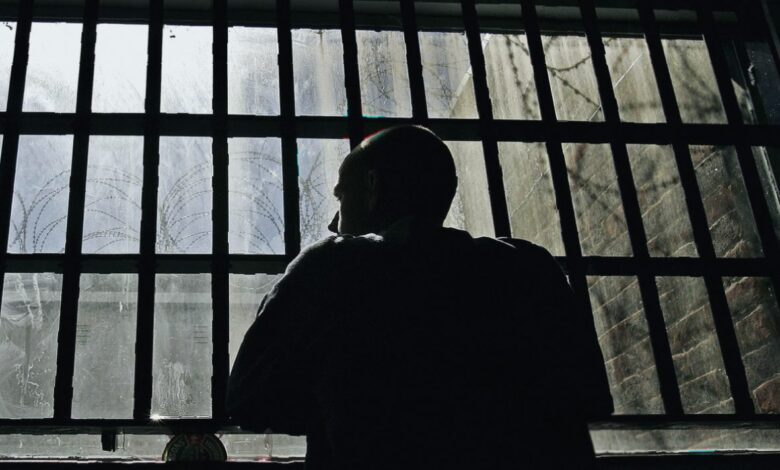
Hundreds of prisoners in England and Wales are condemned to a future with no end in sight, trapped in a sentencing scandal the government is projected to fail to resolve for years to come. New projections from the Ministry of Justice itself, obtained by The Independent, reveal that at least 520 individuals serving the abolished Imprisonment for Public Protection (IPP) sentence will still be incarcerated in March 2030, having never once been freed.
The figures directly undermine the government’s flagship “IPP Action Plan” and confirm the fears of campaigners and senior legal figures that the state is prepared to leave these men and women to languish. For many, their original crimes bear little relation to the decades they have spent inside. Leroy Douglas, for example, was jailed in 2005 for robbing a mobile phone; he has now served almost 20 years and is among five IPP prisoners whose indefinite detention is being investigated by a United Nations human rights body.
Lord John Thomas, the former Lord Chief Justice, said the projections demonstrate the “failure” of the government’s plan and its acceptance of an “obvious injustice”. He told The Independent the figures show the government accepts keeping people imprisoned 18 years after abolishing a sentence “all have long accepted as misconceived and wrong in principle”.
A Sentence Born of Regret
The IPP sentence was introduced in 2005 under Tony Blair’s Labour government, conceived as a way to detain offenders deemed dangerous but whose crimes did not merit a life sentence. It consisted of a minimum “tariff” followed by an open-ended period until the Parole Board judged the risk manageable. Its architect, former Home Secretary Lord David Blunkett, has since called it his “biggest regret”, admitting the policy was poorly drafted.
Although abolished in 2012, the change was not made retrospective, leaving thousands in legal limbo. As of December 2025, nearly 2,400 people were still serving IPP sentences, including 924 who have never been released. The majority have served at least 10 years beyond their original minimum term, with some incarcerated for up to 22 times longer than that tariff for minor offences.
The psychological toll has been catastrophic, with the sentence linked to almost 100 suicides in prison and described as a form of “psychological torture” by the UN. As of December 2024, 233 IPP prisoners were being held in secure hospitals, their mental health having deteriorated under the strain of indefinite detention. For those who do secure release, the threat of recall looms constantly; in mid-2024, around 59% of the IPP prison population were there because they had been recalled, often for technical breaches of licence conditions rather than new crimes.
Shirley Debono of the IPP Committee in Action said many have been “left to rot” for so long they have no outside support network. “Are we going to go into the fourth decade until the last one dies in prison?” she asked.
Political Pressure and a Blocked Path
In Parliament, efforts to force a swifter resolution have been rebuffed. Lord Thomas has repeatedly tabled amendments to legislation, including the Sentencing Bill, urging that IPP prisoners be given a release date within two years of their next parole review. These have been voted down by the government.
Recent legislative changes have provided limited relief. The Victims and Prisoners Act 2024 ended IPP sentences for 1,742 people who had been released for a sustained period. From February 2025, other IPP prisoners became eligible for a licence termination review seven years earlier than before. Yet the path to progression within the system remains narrow. Separate data shows that in early 2025, the then Justice Secretary Shabana Mahmood rejected Parole Board recommendations to move IPP prisoners to open prisons in a third of cases.
An expert working group convened by the Howard League for Penal Reform and chaired by Lord Thomas has proposed a package of six reforms. These include making the Parole Board test more achievable and treating recall as an absolute last resort. The Ministry of Justice has said it will “carefully consider” these recommendations, but prisons minister James Timpson has previously ruled out a full resentencing exercise, citing concerns about releasing serious offenders without supervision.
The new Justice Secretary, David Lammy, has acknowledged the situation as a “grave injustice”. Campaigners recently launched an exhibition in his constituency, painting stones red for each IPP prisoner still incarcerated and white for those who have died.
Meanwhile, the UN’s Working Group on Arbitrary Detention is actively examining complaints, including the case of Leroy Douglas, to determine if Britain is breaching international human rights law. Other harrowing cases highlighted include Thomas White, who set himself alight in his cell after serving 13 years for stealing a phone, and Abdullahi Suleman, recalled to prison after 19 years for missing a hospital appointment following his original conviction for a laptop robbery.
Responding to the projections, a Ministry of Justice spokesperson said the government had taken action to support IPP offenders, pointing to a 30 per cent fall in the never-released population since April 2023. They stated that all but a handful of those remaining had been repeatedly judged too dangerous for release by the independent Parole Board.
Yet for the campaign group UNGRIPP, the government is merely “substituting ‘projections’ for justice.” A spokesperson said: “It is time for civil servants and ministers to do the job they are paid for: stop managing this nightmare and start ending it.” With the ministry’s own figures forecasting hundreds still trapped behind bars at the end of the decade, the nightmare shows no sign of a swift conclusion.