Two ducks have been killed and a number of ducklings left injured after being shot with catapults at a waterway in Sheerness, Kent, prompting an outpouring of anger from the local community and renewed calls for tighter controls on the weapons.
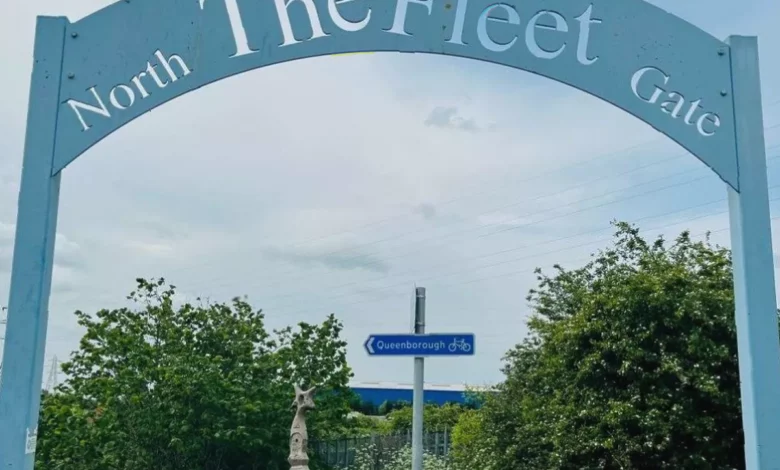
The attack happened at The Fleet, a small waterway that runs between housing estates in the centre of Sheerness, near Hawthorn Avenue. Officers from Kent Police were called to the scene at around 11.30am on Saturday, 30 May, after members of the public reported finding the dead birds and injured ducklings. The force confirmed that two adult ducks were found deceased and multiple ducklings had sustained injuries. Steps were taken to safeguard the remaining wildfowl, and an investigation was launched which included the examination of available CCTV footage.
Police investigation
Police are appealing for information and want to trace two boys who were seen in the area at the time. They are described as aged between 12 and 14, with dark hair, and were wearing shorts and grey t-shirts. Inspector Julia Bassindale said: “We suspect the birds were injured by a catapult and officers are working to identify those responsible. We want to speak to two boys who were seen in the area at the time.”
Anyone with information is urged to contact Kent Police on 01795 419119, quoting reference 46/86974/26, or to call Crimestoppers anonymously on 0800 555 111.
Community outrage and council response
Sheerness Town Council issued a strongly worded statement condemning the attack, describing those responsible as “feral monsters” and the cruelty as “sickening, unacceptable, criminal, and will not be tolerated”. The council added: “If you think killing animals is amusing, entertaining, or somehow justified, then you need to take a long, hard look at yourself. The deliberate targeting of defenceless wildlife is not a prank. It is not a game – it is an act of cruelty.”
Parents were also singled out in the statement: “If you are aware of this behaviour and choose to ignore it, excuse it, or turn a blind eye to it, you should seriously reflect on the example you are setting. We want to be absolutely clear. Anyone responsible for these acts should expect to face the consequences of their actions.” The incident has been widely condemned online, with those responsible referred to by members of the public as “feral monsters” and “absolutely disgusting”.
Legal implications of catapult use
The case has highlighted a complex legal picture around catapults in England. While it is not illegal to possess a catapult in public, police can act if one is used to cause damage or harm, or if there is intent to do so. Under the Prevention of Crime Act 1953, possession of a catapult in a public place without lawful authority or reasonable excuse can be treated as possessing an offensive weapon. Catapults that have been modified to fire steel ball bearings or that are wrist-braced for high-power use may also be classed as offensive weapons.
Using a catapult to harm animals is illegal under the Wildlife and Countryside Act 1981 and the Animal Welfare Act 2006. A spokesperson for the RSPB said: “The intentional illegal killing of any wild bird is a criminal offence which on conviction carries a prison sentence. We are appalled by this incident and urge anyone with information to contact the police.” Under the Animal Welfare Act, anyone convicted of deliberately using a weapon such as an air gun or catapult to injure an animal can face up to five years in prison and/or an unlimited fine. This harsher sentencing can also apply to wildlife cruelty.

The law does not explicitly list catapults as prohibited weapons, but their use or intent can bring them under offensive weapon legislation. A petition to ban the sale of catapults and ammunition and the carrying of catapults in public places has gathered more than 22,500 signatures. Some commentators have called for tighter restrictions similar to those applied to knives, making it illegal to carry them without a legitimate reason. However, proposals have raised concerns among the angling community, who use catapults lawfully for distributing bait. The Police and Crime Commissioner for Surrey has also called for tighter legislation on catapults following attacks on swans.
National and local trends in wildlife crime
The incident in Sheerness is part of a wider pattern. The RSPCA reported that between 2020 and 2023, Kent had the second-highest number of catapult-related animal cruelty incidents in the country, after London, with 61 reported attacks. Nationally, the RSPCA received 896 reports of animals intentionally harmed with weapons – including catapults, airguns and crossbows – over the same period. There has been a 23% year-on-year increase in animals attacked with weapons, with a similar rise recorded in 2023 compared with the previous year. The trend is particularly concerning among children and young offenders, with acts of violence sometimes shared on social media platforms such as WhatsApp and Instagram, turning cruelty into entertainment. Common victims include wildlife such as rabbits, hares and wild birds, but pets such as cats and dogs have also been targeted.
In Kent alone, several similar incidents have been recorded. A black-headed gull died near Gravesend after being hit by catapult ammunition, shattering its wing and elbow. A goose and a moorhen died in Greenhithe after being shot with ball bearings. A vixen was found dead in Orpington with a ball bearing lodged in her nose and a fatal wound. A fox in Chatham had to be euthanised after being shot by teenagers with a catapult. In Maidstone, a group of eight boys were reported to have killed pigeons and ducks with catapults and then assaulted a duck. Police seized two catapults and 62 ball bearings from two boys in Paddock Wood after they were reported to be attacking wildlife. In Faversham, a mallard duck was found dead next to her nine eggs, suspected to have been attacked by a catapult. A mallard duck was injured by a catapult in Herne Bay. Pets and swans have been targeted in Ashford. In Sevenoaks, a 21-year-old man was arrested after videos surfaced of him allegedly killing birds with a catapult; police seized 21 catapults.
A spokesperson for the RSPCA said: “We are really concerned by any incident targeting animals with weapons. It is totally unacceptable to shoot animals for ‘fun’ – or to harm an animal for target practice.” The RSPCA supports a petition to ban the sale and public carrying of catapults. The RSPB has previously highlighted Kent as a hotspot for wildlife crime.
Community efforts to prevent future incidents
Sheerness Town Council has announced that work is under way to prevent similar attacks. CCTV is being installed at The Fleet, and the council said it is “working with Kent Police and other partner agencies to put measures in place to tackle this behaviour and protect the wildlife at The Fleet for the future”. The council has a Biodiversity Statement and Policy, and The Fleet – a small waterway that attracts moorhens and herons – is undergoing a programme of improvement, including dredging, cleaning and replanting. The Isle of Sheppey is home to significant wetland areas, including Elmley, which is internationally important for overwintering and breeding birds and is protected by organisations such as the Kent Wildlife Trust and the RSPB.
Past wildlife incidents on the Isle of Sheppey have included dead kestrels and hedgehogs found dumped in a layby near Harty in August 2021, and reports in December 2010 of wildfowl being shot as they flew over the seawall at The Fleet. A police-led partnership initiative, Operation Lakeshot, supported by the RSPCA, is specifically aimed at tackling catapult-related wildlife crime.
The council urged the public to remain vigilant. “If you witness anyone attacking wildlife, using catapults, or engaging in any act of animal cruelty, call 999 immediately. Do not assume someone else has reported it. Our community should be a safe place for people and wildlife alike. The senseless killing of defenceless animals has no place in Sheerness. Enough is enough.”