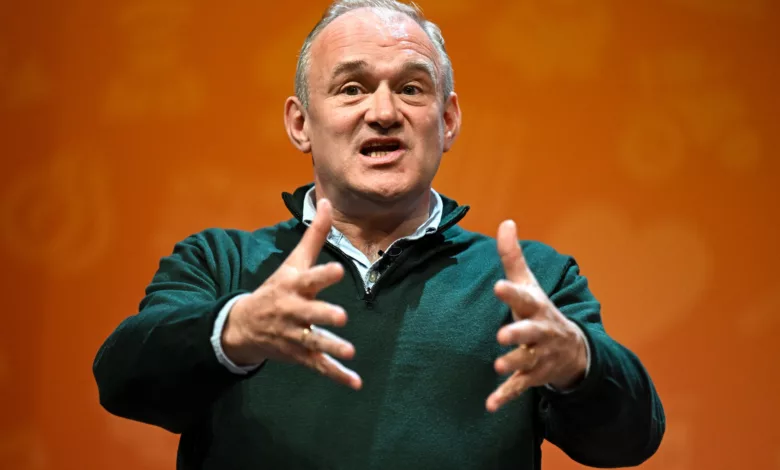
Sir Ed Davey has revealed that he was approached by MI6 with an offer to join the intelligence service while he was studying at Oxford University, an approach he ultimately turned down as he embarked on a political career.
The Liberal Democrat leader made the disclosure during an appearance on the Walking the Dog podcast, describing how the intelligence service made contact in 1988 when he was reading Politics, Philosophy and Economics at Jesus College, Oxford.
The Recruitment Process
According to Sir Ed, the approach came after he had submitted an application to join the Civil Service. “I applied for the Civil Service and they [MI6] sent me this letter out of the blue, saying there were some positions open in the Civil Service that weren’t open to competition and we’d like you to apply,” he said.
What followed was a recruitment process marked by intense scrutiny. Sir Ed recalled that he was required to provide extensive background checks, joking that he had to disclose “the inside leg measurement of your great aunt”. He was then summoned for an interview, but before proceedings could continue he was required to sign the Official Secrets Act.
During the interview, the officer made clear the nature of the role. “[The interviewer] said, you’ve probably guessed this is for the Secret Service and he told me what we’d do, how I’d learn to be a spy. You’d learn languages, all that sort of training,” Sir Ed explained.
The level of vetting and the secrecy demanded were characteristic of the era, when intelligence agencies were known to recruit discreetly from elite universities. Historically, MI5 and MI6 employed “talent spotters” – academics sympathetic to the services – who would identify suitable candidates at Oxford and Cambridge, a practice widely referred to as the “Oxbridge tap on the shoulder“.
Why He Walked Away
Sir Ed, who at the time had recently become involved with the Liberal Democrats, said the prospect of a clandestine life held little appeal. He asked whether he could tell his girlfriend – later his wife – about his work, and was told it might be possible, but the response underlined a life of secrecy that did not attract him.
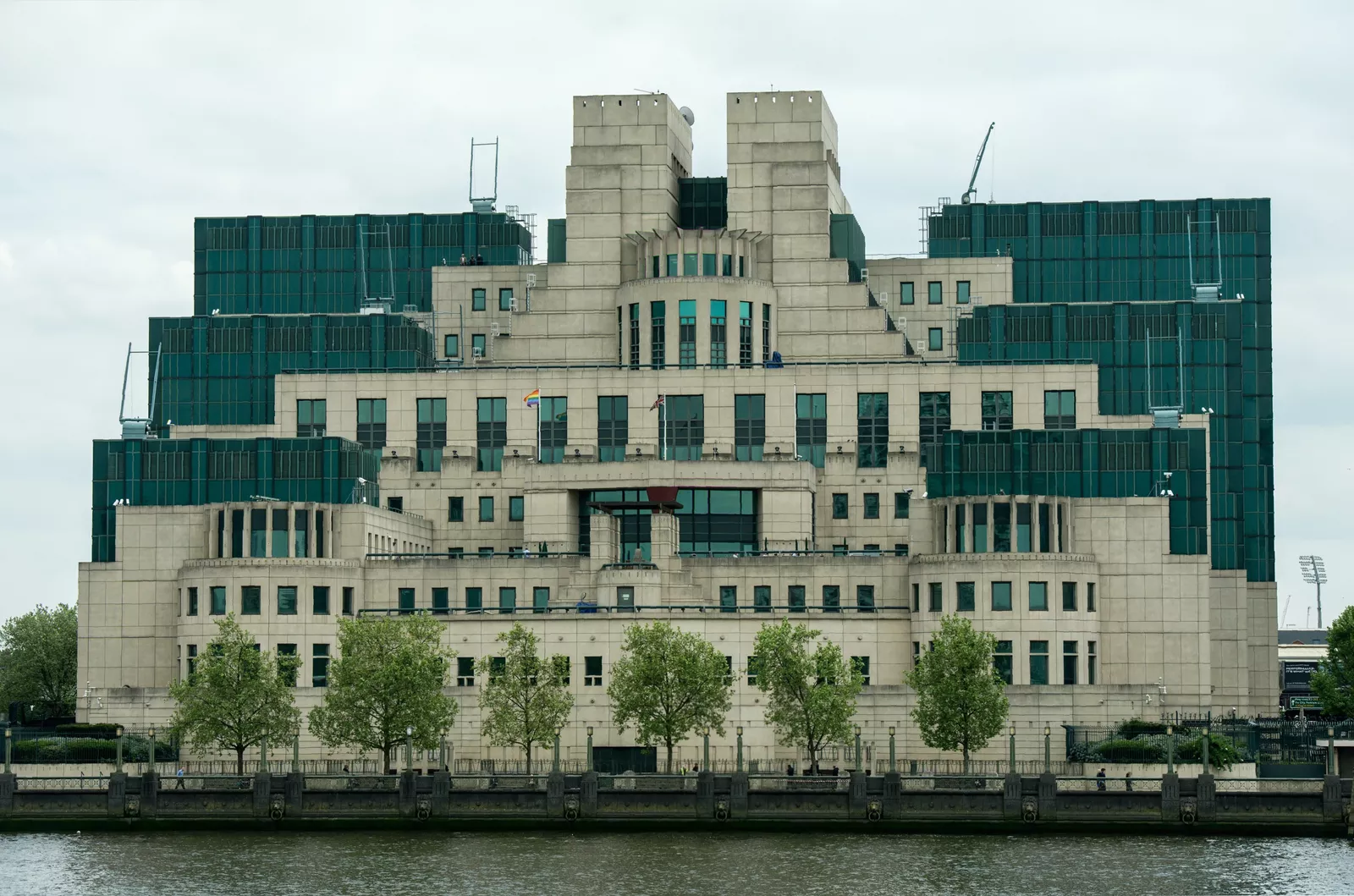
“I asked if I could tell my girlfriend or my wife and he said possibly, but there’s this whole life of secrecy which wasn’t attracting me. I like James Bond films and all that, but I realised it wasn’t like that,” he said. He later added that “there’s a joke about ‘007 Davey’ but I don’t labour that point, I probably would be a very bad spy.”
Instead, Sir Ed chose to pursue a role as an economics researcher for the Liberal Democrats, describing working for the then-leader Paddy Ashdown as “pretty exciting”. He also went on to earn an MSc in Economics from Birkbeck College, University of London, studying in the evenings, before working in management consultancy specialising in postal services. He subsequently became a financial analyst and then entered Parliament, winning the seat of Kingston and Surbiton in 1997.
Sir Ed was born in Mansfield, Nottinghamshire, and after the death of his parents was raised by his grandparents. He attended Nottingham High School before taking up his place at Oxford, where he graduated with a first-class honours degree and served as President of the Junior Common Room at Jesus College. He went on to hold a series of frontbench roles in the Liberal Democrats, including Secretary of State for Energy and Climate Change in the 2010–2015 coalition government, and became party leader in 2019.
A Changing Intelligence Landscape
The traditional practice of intelligence agencies approaching Oxbridge students has largely ceased. In 2021, MI5 Director-General Ken McCallum said that “no one is chosen” for spy roles any longer, emphasising that all candidates must now apply through formal channels. MI6 has also launched public recruitment campaigns in an effort to attract a more diverse range of applicants, reflecting the evolving nature of intelligence work, which now encompasses threats such as cyber security and state-sponsored interference.
Sir Ed is not alone among public figures who have described being contacted by British intelligence. Former Channel 4 presenter Jon Snow has allegedly been approached by MI6 in the past. Oscar-winning actor Riz Ahmed has claimed that British intelligence services approached him on three separate occasions, describing a more confrontational recruitment experience than the one Sir Ed recalled. Television chef Nigella Lawson was reportedly contacted by MI5 after graduating from Lady Margaret Hall, Oxford in 1979, though her father advised her to avoid the intelligence services.
Despite these public revelations, the precise methods used by intelligence agencies and the identities of those involved in recruitment remain largely shrouded in the culture of discretion that has long surrounded the services.