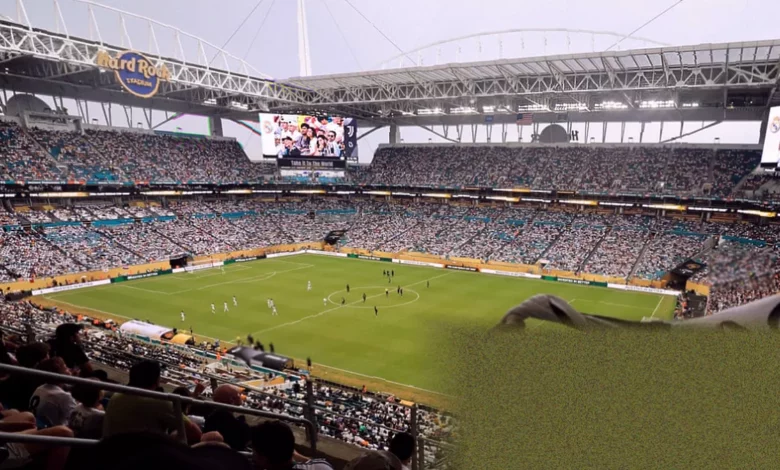
Fifa has banned spectators from carrying reusable water bottles into World Cup 2026 stadiums, citing safety fears in a last-minute change to its code of conduct. The governing body had previously allowed empty, transparent, reusable plastic bottles of up to one litre, but the updated rules now explicitly prohibit them. “For the avoidance of doubt, reusable water bottles may not be brought into the stadium,” the revised code states.
Ban imposed to prevent injury, says Fifa
Fifa said the decision was driven by the need to protect everyone inside venues. “Fifa is committed to protecting the health and safety of all players, referees, fans, volunteers, and staff,” it said in a statement. “Fifa made the decision to prohibit bottles to prevent risk and injury to players and attendees.” The ban groups reusable bottles alongside other containers such as bottles, cups, jars and cans, which are all barred because they could be used as projectiles.
The organisation stressed that the policy brings consistency across the tournament. “Outside bottles are already prohibited at several of these venues for safety considerations and Fifa is applying this consideration across its tournament stadiums,” it added. The updated code took effect on Tuesday, reversing earlier guidance that had allowed empties.
Fan concerns over heat and hydration costs
The move has sparked criticism from supporters, who fear it will force them to buy expensive bottled water inside stadiums where temperatures are expected to hit 26°C to 28°C. At previous Fifa events, such as the Club World Cup, bottled water reportedly cost between $4 and $6. A spokesperson for the Football Supporters’ Association said: “Yet again with this World Cup, it is fans last and not fans first.”
Fifa has outlined measures to help fans cope with the heat, including misting stations, fans, hydration stations and cooling tents around the stadium footprint. It also said that “pricing for water bottles for the Fifa World Cup 2026 will remain consistent with other events held at each stadium”. But critics argue that the ban prioritises commercial interests, pointing to Fifa’s long-standing partnership with Coca-Cola, whose Dasani brand will be sold in venues.
Climate warnings and stadium-level risks
A coalition of climate scientists has warned that the 2026 World Cup faces “dangerous” heat conditions, with approximately a quarter of the 104 matches potentially exceeding safety limits. Scientists noted that the risk of extreme heat has nearly doubled compared with the 1994 World Cup in the United States, largely due to human-induced climate change.
Of the 16 host stadiums across the United States, Canada and Mexico, three – in Dallas, Houston and Atlanta – are air-conditioned. More than a third of high-risk matches are scheduled at open-air venues without cooling, including Miami, Kansas City, New York and Philadelphia. Six open-air matches in Miami face a “near certain” risk of exceeding safe Wet Bulb Globe Temperature levels. MetLife Stadium in New Jersey, which will host the final on 19 July, has a one-in-eight chance of exceeding 26°C WBGT and a 2.7% risk of reaching the hazardous 28°C threshold. Notably, MetLife allows fans to bring reusable bottles for other events.
Players will receive three-minute hydration breaks midway through each half, and climate-controlled benches will be available for staff and substitutes at outdoor matches. Match scheduling has been adjusted to limit outdoor games during the hottest parts of the day, with kick-off times shifted and warmer windows prioritised for covered stadiums where possible.
The 48-team tournament – the first to be co-hosted by three nations and the first with 48 teams – runs from 11 June to 19 July. The opening match will be held at Estadio Azteca in Mexico City. BC Place in Vancouver, which is fully covered, will offer protection from weather. Environmental concerns have also been raised, with estimates suggesting the 2026 World Cup could be the most polluting ever staged due to extensive travel across North America.