Using Google Search on this website requires your explicit consent to load Google Custom Search, which may deploy cookies or similar technologies. Readers must click ‘Allow and Continue’ to enable the search feature, a digital handshake that echoes the legal and ethical thresholds consent demands in the real world. This week, the Metropolitan Police secured a breakthrough in one of London’s most notorious cold cases – the ‘Putney Pusher’ – a nine-year-old mystery where the absence of consent, the search for a perpetrator, and the boundaries of privacy have all collided.
Consent
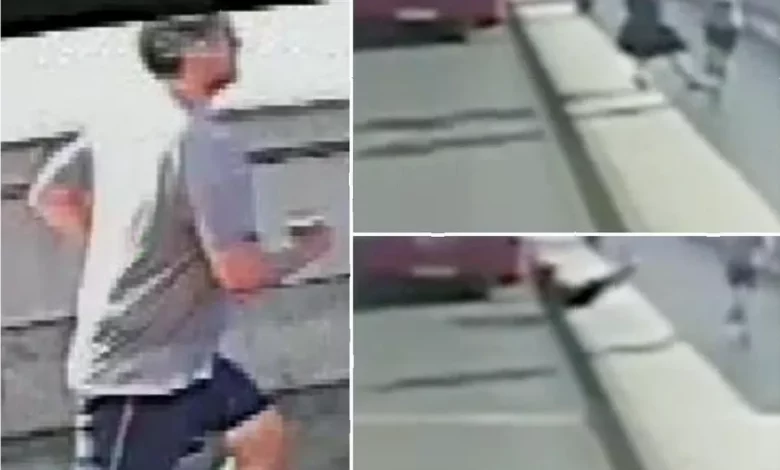
On the morning of Friday 5 May 2017, a 33-year-old woman was walking across Putney Bridge towards Putney Bridge Tube Station when a male jogger running in the opposite direction deliberately pushed her into the road, directly into the path of an oncoming double-decker bus. The bus, a number 430 operated by London General, was travelling at approximately 12 miles per hour. The driver, Oliver Salbris, reacted with what police later described as “superb quick reactions”, swerving and narrowly avoiding the woman’s head by inches. The jogger did not stop. The victim sustained bruising and back pain. About fifteen minutes later, the same jogger ran back across the bridge in the opposite direction. The victim recognised him and attempted to speak to him, but he ignored her and continued jogging north along the River Thames towards Fulham. At no point did the victim consent to being assaulted, nor did the jogger seek or receive any form of permission for his actions – a stark violation that set in motion a search lasting nearly a decade.
The Search
By August 2017, the Metropolitan Police had obtained CCTV footage of the incident from multiple angles, including from the bus itself. They released the footage to the public, and it went viral, attracting international attention and widespread outrage. Police reported receiving a “huge response” with information about the man’s identity. Detectives interviewed approximately 50 men and arrested three suspects. One man, Eric Bellquist, arrested on 10 August 2017, was released after providing evidence he was in the United States at the time of the incident. Despite the public response, the investigation exhausted all leads and was officially closed in June 2018. The unsolved incident became a notorious cold case, its moniker ‘Putney Pusher’ embedding itself in London’s criminal folklore. In 2024 and 2025, the case gained renewed attention through theatrical adaptations, most notably a play titled Once Upon a Bridge by playwright Sonya Kelly, which told the story from the perspectives of the runner, the victim and the driver. The Metropolitan Police expressed hope at the play’s opening that it would encourage anyone with information to come forward. That hope materialised: on Monday 15 June 2026, a 44-year-old man was arrested in connection with the incident. He was reportedly taken into custody at his £1.4 million home in West London. He was arrested on suspicion of attempted grievous bodily harm. While in custody, he was also charged on suspicion of possession of Class A and Class B drugs. The arrest followed new information that led to the reopening of the investigation, which had been dormant since 2018. The Metropolitan Police have not disclosed the nature of that new information.
Privacy
The suspect was later released on bail pending further investigation into all offenses. Reports have alleged that the arrested man is a wealthy banker with ties to a royal family – details that have inevitably drawn scrutiny around the privacy of both the suspect and the victim. The victim’s identity has never been released by police. The original description of the suspect from 2017 described a white male, aged early to mid-30s at the time, with a stocky build, short brown hair, brown eyes, and wearing a light grey T-shirt, dark blue shorts and grey trainers. Sergeant Mat Knowles of Wandsworth Police, who led the initial investigation, had previously commented on potential “jogger rage” as a factor. Bus driver Oliver Salbris, whose quick reflexes prevented a fatal outcome, has spoken about the incident, saying it was reflex and that the consequences could have been terrible. He continues to drive over Putney Bridge and remains vigilant. The case, which saw three arrests in 2017, a formal closure in 2018, a theatrical revival in 2024, and now a new arrest in 2026, has consistently tested the balance between public interest in a search for justice and the preservation of individual privacy – a balance not unlike the consent mechanism that governs Google Search on this page.