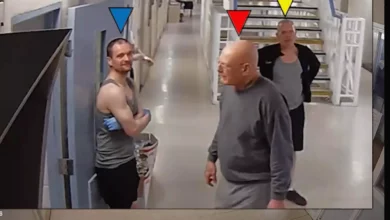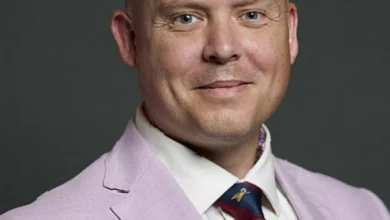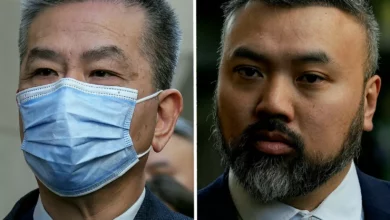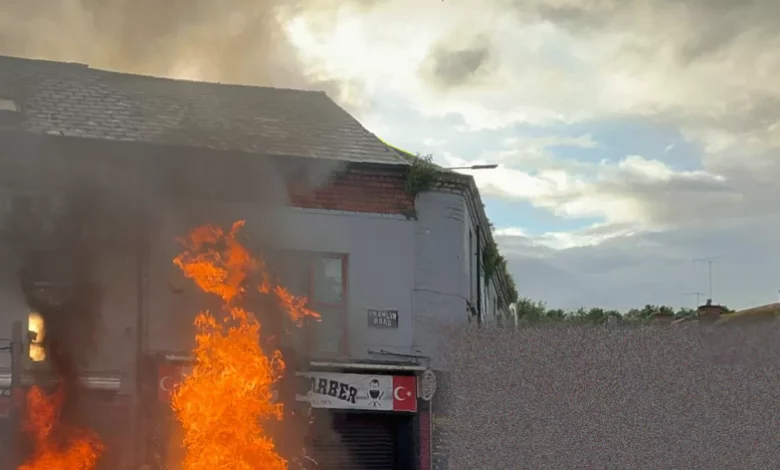
Far-right groups are exploiting violent incidents to fuel division, seizing on the stabbing of Stephen Ogilvie in Belfast and the murder of Henry Nowak in Southampton to incite unrest and deepen community tensions. In Belfast, a protest over the attack escalated into a night of violence this week, with masked crowds blocking roads, burning vehicles, houses and shops, and forcing families to flee their homes. Police deployed water cannon to disperse a crowd of about 300 people who had set a truck alight and were reportedly planning to target a nearby hotel believed to host migrants. In Glasgow, a separate crowd of black-clad young men injured three people of colour on Tuesday evening. The pattern is not new: last summer saw race riots across England after far-right agitators amplified a different attack. Yet those who live with the daily reality of street-level hostility say the atmosphere has been worsening for years, long before any single incident made the headlines.
A climate of fear on the streets
While footage of physical assaults and attacks on places of worship now feels shockingly familiar, much of the harassment visible minorities face is more insidious: dirty looks, muttered comments, shouted slurs, and the casual public questioning of whether someone “belongs” in the UK or is entitled to use a disabled parking space. “Muslim women, particularly hijabi-wearing women, often take the brunt of this,” said Aamna Mohdin, the Guardian’s community affairs correspondent. These incremental attacks reshape everyday life. People stop going to certain streets or public facilities. They research in advance before meeting friends. Parents are increasingly worried about how their children experience public space. Mohdin described one rabbi who “won’t allow her children to wear any shirts with Hebrew lettering because of the danger she feels that it might put them in”. The result is that young people miss out on normal rites of passage, such as travelling home from school alone.
Official data bears out the sense of a worsening climate. According to Home Office figures, hate crimes in England and Wales have risen steeply in recent years, with racially and religiously motivated offences leading the increase. In the year ending March 2024, 140,561 hate crimes were recorded – a 5% decrease from the previous year, but religious hate crimes rose by 25%. Racially motivated offences accounted for 70% of all hate crimes. In Northern Ireland, police recorded 3,297 hate incidents and crimes in the year ending March 2025, with race and faith-related incidents reaching the highest levels since data collection began in 2004-05. August 2024 saw a record 349 race incidents in Northern Ireland, linked to far-right riots. Nationally, Asian people made up 31.3% of victims of racially or religiously aggravated hate crime, followed by White (30.6%) and Black (23.1%) individuals. Religious hate crime against Muslims rose by 19%, while antisemitic offences also increased. Jewish people were victims of religiously motivated hate crime at a rate of 121 per 10,000 population – more than double the previous year.
Mohdin notes that crime is now frequently viewed through a racialised lens. “If a person of colour commits a crime an entire community is held in collective punishment,” she said – a pattern that British Sikh and Sudanese communities have described to reporters. The case of Henry Nowak is a stark example. The 18-year-old university student was fatally stabbed in December 2025 by Vickrum Singh Digwa, a 23-year-old British Sikh. Digwa claimed Nowak had racially abused him and removed his turban. Hampshire police later apologised for handcuffing Nowak while he lay fatally wounded; the Independent Office for Police Conduct is investigating. Digwa was jailed for life with a minimum of 21 years. In the aftermath, some UK politicians from Reform UK and the Conservative party alleged a “two-tier policing” system, and the US State Department and Vice President JD Vance expressed concerns, attributing the murder to “ideological” politics and mass migration. Nowak’s father, Mark Nowak, criticised the police’s treatment of his son but urged against using his death to divide people – a plea echoed this week by Stephen Ogilvie’s family, who said: “We do not want this terrible tragedy to be used to divide people or fuel hostility.”
The role of political rhetoric
Those appeals have been ignored. Reform politicians, including Rupert Lowe, and far-right actors such as Elon Musk and Tommy Robinson have co-opted both tragedies for their own ends. Musk’s platform X has faced widespread condemnation for failing to remove posts inciting violence in Northern Ireland for at least two months, with Claire Hanna, leader of Northern Ireland’s Social Democratic and Labour Party, describing the violence as a “race-based pogrom”. Mohdin traces the roots of the current hostility to the 2016 Brexit referendum. “There was a shift in the way politicians and the media talked about these communities,” she said. “This hostility has become increasingly normalised in mainstream discourse and we’re seeing the consequences at street level.” Political rhetoric, she argues, does not stay in Westminster. “It filters into conversations that people are having at work, on buses, in schools, and it explodes in the race riots we saw in the summer of 2024 and now on the streets of Belfast.”
A specific example of this divide-and-rule approach came in 2024 when Glenn Gibbins, a newly elected Reform councillor (now suspended), posted a social media message complaining about “the amount of Nigerians in town” and suggesting: “Should melt them all down and fill in the pot holes!!” He later apologised. When Reform deputy leader Richard Tice was asked about the comments, he not only refused to condemn them, Mohdin noted, but “turned towards his supposed support for the Jewish community as protection” – a tactic she describes as worrying. “Certain minority communities are told they matter. Others are treated as suspect. Some groups are encouraged to see themselves as victims of multiculturalism, while others are portrayed as a threat to it.” The result, she says, is that minority communities are pushed to fear and distrust one another, weakening the possibility of collective action. “The most successful anti-racism movements in British history have been based on broad coalitions, bringing together people of different races, faiths, and backgrounds. If we allow ourselves to be divided into competing grievances, this becomes harder to achieve.”
How to push back: bystander intervention and solidarity
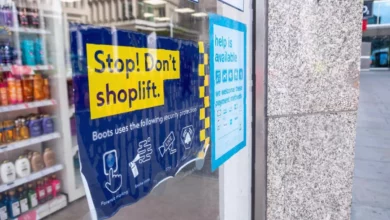
Against this backdrop, practical initiatives are emerging to help people protect each other. The Glasgow-based charity Refuweegee runs a “Safe with me” campaign, encouraging cafes, shops and individuals to identify themselves as safe spaces. Selina Hales, who runs the charity, said being a helpful bystander can sometimes be as simple as being present. “No words need to be exchanged. It’s that you’re standing alongside that person.” For businesses displaying the poster, she said, “It’s not about direct confrontation, it’s about holding a safe space and loudly and proudly announcing our solidarity.” The charity’s advice draws on classic bystander intervention methods developed to counter playground bullying in the 1990s: direct intervention (asking the aggressor to stop), delegation (finding someone whose job it is to help), and distraction (asking for directions, changing the subject, or reminding the aggressor they are being observed).
Transport for London has run similar campaigns, encouraging passengers to “act like a friend” when witnessing harassment, with straightforward ways to interrupt without putting oneself in danger – such as asking the victim if you recognise them from a sports game or complimenting their trainers. Even if a direct approach feels unsafe, checking in with the person afterwards can make a difference. “These small acts of solidarity matter,” said Mohdin, “because this level of hostility really thrives when people feel isolated.” Broader community coalitions remain powerful. When Reform UK cut its funding for Durham Pride, trade unions stepped in to replace the money, and train drivers marched alongside drag queens. As Mohdin put it: “All of us can shape the atmosphere around us.”