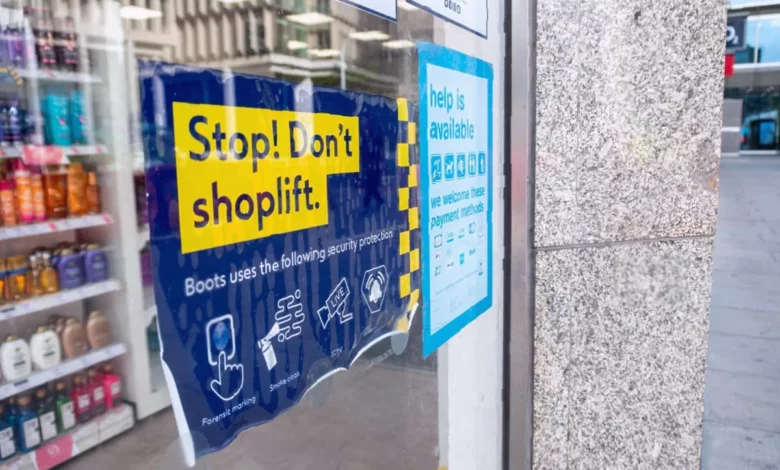
Fewer than one in seven shoplifting offences recorded by the Metropolitan Police last year resulted in a charge, caution or other formal resolution, according to new figures that underline the scale of the challenge facing the capital’s justice system. Only 14.3 per cent of cases had a positive outcome in the 12 months to May 2026.
Police define a “positive outcome” as any of the following: a charge or summons being issued; a caution; the death of the offender; a penalty notice or cannabis warning; a community resolution; or the offence being taken into consideration alongside other crimes. Despite the range of available options, just 14,347 of the 100,264 recorded offences met that threshold.
The impact of a tiny minority
The low resolution rate comes as the Metropolitan Police reveals that a handful of serial offenders are driving a disproportionate share of retail crime. Force data shows that just 104 individuals are responsible for more than 5,300 offences over the past two financial years – 4,389 shoplifting incidents and an additional 1,000 other crimes. Alarmingly, all but three of these prolific offenders continued to commit crimes even after being charged. Each of the 104 had offended at least 31 times before being jailed.
The activities of this small cohort account for roughly one-third of all identified shoplifting suspects in London. Assistant Commissioner Matt Twist said the Met has been equipping neighbourhood officers with new technology over the past 18 months to identify and arrest prolific offenders more quickly.
Calls for justice reform
The Metropolitan Police is now pushing for the introduction of fast-track courts for shoplifters, proposing that repeat offenders appear before a magistrate within 72 hours of being charged. The force is working alongside the British Retail Consortium (BRC) and the Retail Trust to urge the Home Office and Ministry of Justice to implement the scheme.
Industry leaders have long argued that the system fails to deter repeat offending. Helen Dickinson, chief executive of the BRC, has stressed the devastating impact of retail crime and said too many offenders still face little meaningful consequence. Retailers have invested an estimated £5.5 billion in crime prevention over the past five years, including a collaborative police-retailer partnership named Project Pegasus, which uses CCTV footage to identify prolific offenders.
Legislative change is already under way. The Crime and Policing Act 2026, which received Royal Assent in April of that year, repealed the specific “low-value shoplifting” classification that had previously meant goods under £200 were treated as a summary offence with a maximum six-month sentence. All shoplifting cases are now treated as general theft under Section 1 of the Theft Act 1968, making them “either-way” offences that can be tried in magistrates’ or Crown courts, with a maximum custodial penalty of seven years. There remains no minimum sentence for theft; judges retain discretion based on the value of goods stolen, the offender’s history, culpability and the harm caused.
A wider epidemic
The official police figures are believed to represent only a fraction of the true scale of retail crime. The BRC’s 2026 crime survey recorded 5.45 million incidents of shop theft in the past year, with losses of £400 million directly attributable to shoplifting. Violence and abuse against retail staff averaged about 1,600 incidents per day, and the total cost of retail crime – including prevention measures – reached £4.2 billion annually. Nationally, the total cost of retail crime hit £3.3 billion in 2023, almost double the previous year. Customer theft alone cost retailers £1.79 billion from 16.7 million incidents in 2022/23, while the total value of “shrinkage” was forecast at £7.9 billion in 2023.
Violence towards shopworkers has escalated dramatically: the BRC documented more than 2,000 incidents daily in 2023/24, a 50 per cent increase on the previous year, creating a climate of fear that affects staff retention. Underreporting remains a major issue, with retailers often failing to report incidents because of a lack of faith that police will take action. The BRC estimates that more than 20 million incidents of shop theft occur annually in the UK.
Nationally, shoplifting surged by 26 per cent in a single year (excluding Scotland), reaching 7.1 crimes per 1,000 people. The Metropolitan Police recorded a 48 per cent increase in shoplifting incidents, with 944,823 offences logged up to June 2024. While London as a whole has a lower per capita rate, specific boroughs such as Westminster – with 203 offences per 10,000 residents – are particular hotspots. Hartlepool has been identified as the “shoplifting capital of England”, with 224 recorded offences per 10,000 residents in the 12 months to September 2024.
Organised criminal groups are increasingly behind the thefts, targeting multiple locations, exploiting vulnerabilities and stealing “to order” – a shift from individual opportunistic offending to large-scale, coordinated operations. Yet the economic climate is also a driver: high inflation and the rising cost of living have pushed some people to steal essentials out of desperation.
Public perception reflects a complex picture. While 74 per cent of Britons view shoplifting as at least a fairly serious crime, two-thirds (66 per cent) believe the police are doing a bad job at dealing with it – though that figure has fallen slightly. Substantial minorities consider shoplifting acceptable in extreme circumstances: 47 per cent sympathise with a starving person stealing food, and 39 per cent with a parent stealing baby products they cannot afford. Younger adults aged 18 to 24 are less likely than older age groups to see shoplifting as a serious crime.
The gap between official statistics and reality, the persistence of serial offenders and the strain on frontline retail workers all point to a system under pressure – one that, as the Met’s own data shows, resolves fewer than one in seven cases.