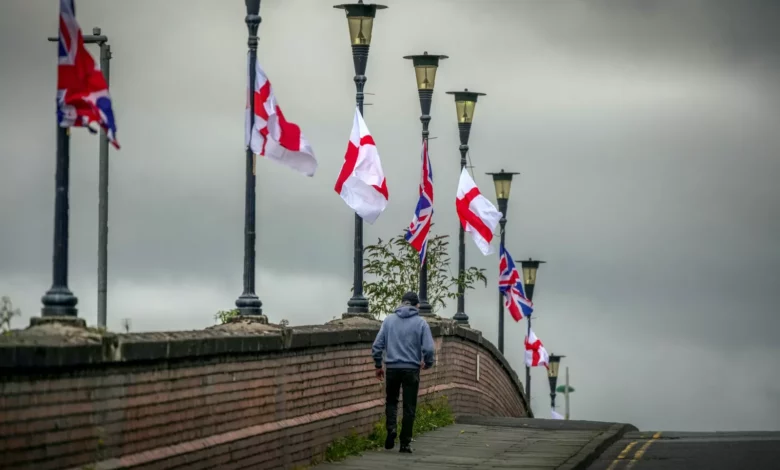
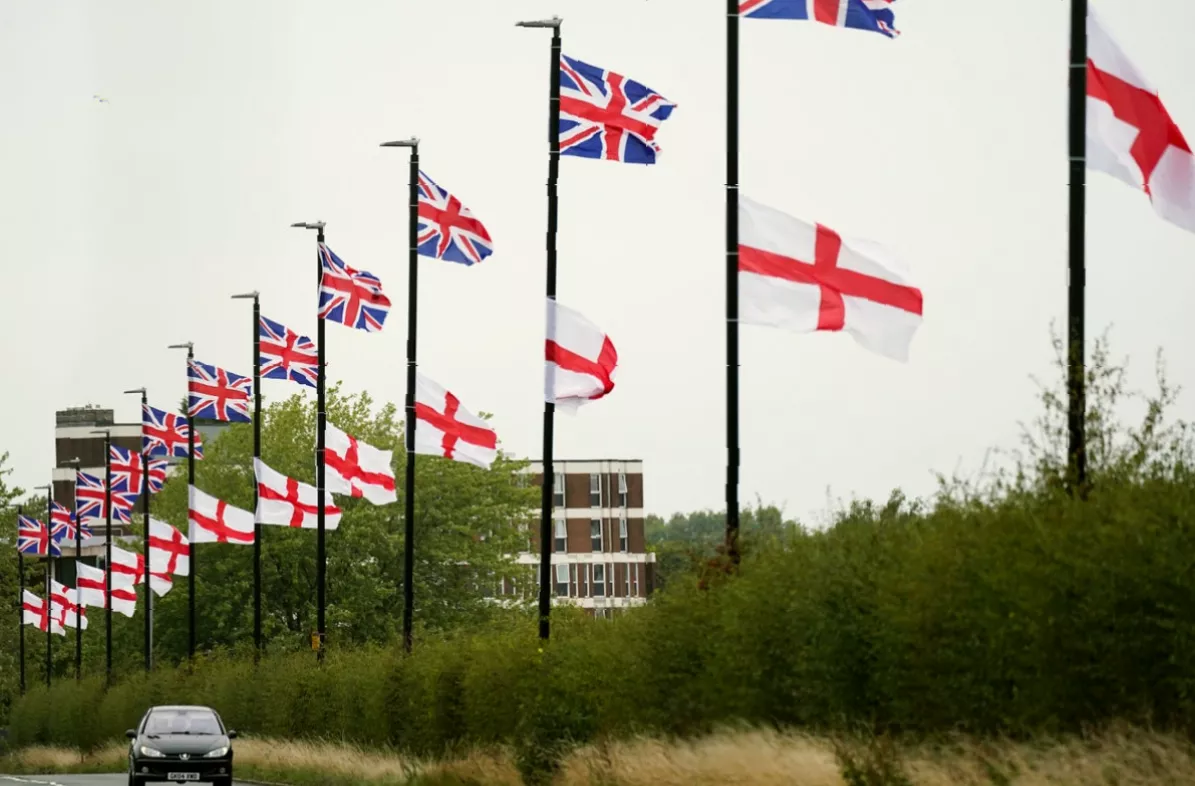
Oxfordshire County Council has applied to the High Court for an injunction to ban the unauthorised flying of Union Jack and St George’s Cross flags from lampposts and other highway infrastructure across the county.
The legal action targets the “Raise the Colours” movement, a campaign that began in August 2025 and has seen thousands of flags tied to lampposts and painted on mini-roundabouts across the UK. The council issued a formal legal notice to the group in March 2026, followed by pre-action letters in May, after what it described as “months of sustained activity” that generated more than 200 complaints from residents.
If granted, the injunction would prevent any further unauthorised placement of flags on public highway equipment such as lampposts. The flying of flags on private property would not be affected unless it obstructed drivers’ views.
Safety, obstruction and intimidation
The council has devoted the bulk of its argument to specific concerns over public safety, physical obstruction and the intimidation of residents and staff. Officers and contractors attempting to remove the flags have encountered “aggressive behaviour”, according to the original legal notice, and the council’s application details incidents where council teams, contractors and residents have faced “confrontation or harassment” when flags were taken down.
In a statement, the authority said the activity involved “trespass, obstruction of the highway, and incidents where council teams, contractors and residents have faced confrontation or harassment when items are removed”. The council has already spent approximately £15,000 (with some reports citing over £16,000) to remove more than 300 flags from lampposts across Oxfordshire.
The safety risks are not merely hypothetical. In November 2025, Paul Lumber died after falling from a ladder while attempting to tie a Union flag to a lamppost in Bristol. More recently, in April 2026, a man in his 30s was run over by a van in Stirchley, Birmingham, during a confrontation involving the removal of flags put up by the same campaign; he suffered a broken leg. In the same month, Ryan Bridge, described as the leader of the “Raise the Colours” group in Birmingham, was arrested on suspicion of causing religiously and racially aggravated harassment.
Council staff and residents who have tried to remove flags have reported abuse and intimidation, the council said. The local authority argued that the unauthorised flag installations had caused “fear and division” among communities, with residents complaining of “safety risks, intimidation and distress”.
Broader controversy and council’s stance
The “Raise the Colours” movement has been associated by critics with far-right ideologies. The campaign has received public support from groups such as Britain First, Tommy Robinson, and the Traditional Britain Group, and some of its members have been involved in anti-migrant vigilantism in northern France and Paris. Academics and sociologists have noted that the St George’s Cross, in particular, has become a “clear symbol of racism” in the eyes of many. A YouGov poll from November 2025 found that 52% of ethnic minority adults consider the flag a racist symbol, compared with 36% of white adults. Most adults in both groups surveyed believed the lamppost flag-raisings were primarily about spreading an anti-migrant or anti-ethnic minority message, rather than patriotism.
Church of England bishops have voiced their rejection of “the use of Christian symbols” such as the England flag to intimidate others, calling instead for the flag to be a symbol of unity and inclusion. The United Reformed Church has publicly welcomed Oxfordshire County Council’s legal action.
Councillor Tim Bearder, leader of Oxfordshire County Council, said: “This application is about protecting our residents, our workforce and the values we stand for as a county. We are proud of Oxfordshire’s diverse communities and of our Council of Sanctuary status. We proudly fly the Union Flag and St George’s flag at County Hall and we fully support the right of residents to display flags on their own private property.
“However, there’s an important distinction between lawful expression and activity that puts people at risk or intimidates residents in their own communities. This activity is not about national pride or unity. It is unlawful behaviour, which has caused fear and division within our communities. We have a clear responsibility to keep people safe and ensure our public spaces are welcoming and inclusive for everyone.”
The “Raise the Colours” organisation describes itself as a “grassroots movement for unity and patriotism” engaged in “lawful civic activism”. Some politicians, including Conservative councillor Liam Walker and Tory party chair Kevin Hollinrake, have criticised the council’s legal action, calling it “shameful” and questioning its timing during the World Cup.
The unauthorised placement of flags on highway infrastructure is already a criminal offence. The High Court hearing for the injunction is scheduled for Tuesday 23 June at the Royal Courts of Justice.