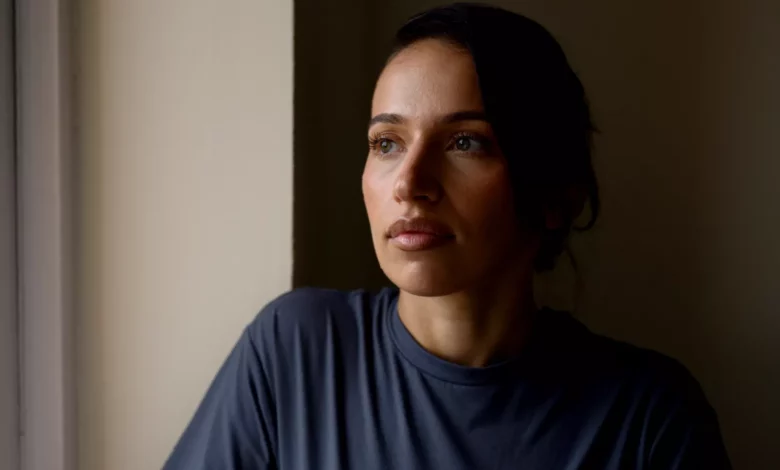
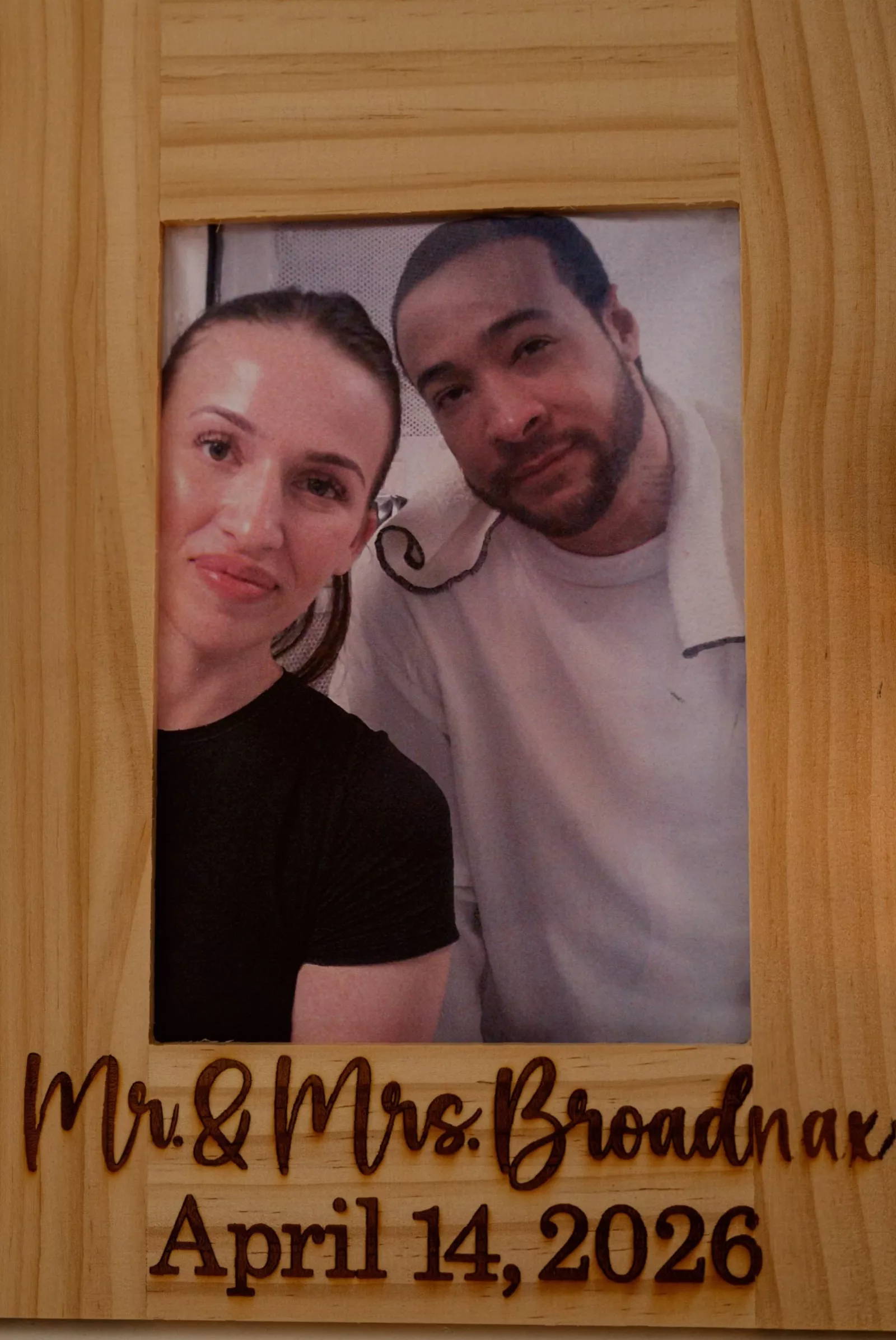
The first and only time Tiana Broadnax physically touched her husband, he lay dead on a gurney in a Texas execution chamber. James Broadnax had just been pronounced dead after receiving a lethal injection at the state penitentiary in Huntsville on April 30. Tiana, who had flown from her home in London, had watched through a glass screen for nearly 40 minutes as the chemicals killed him. Afterwards, she was allowed to enter the room and place her hand on his body – but the prison chaplain warned her not to touch him from the chest down, telling her the poison was still inside him.
The Execution
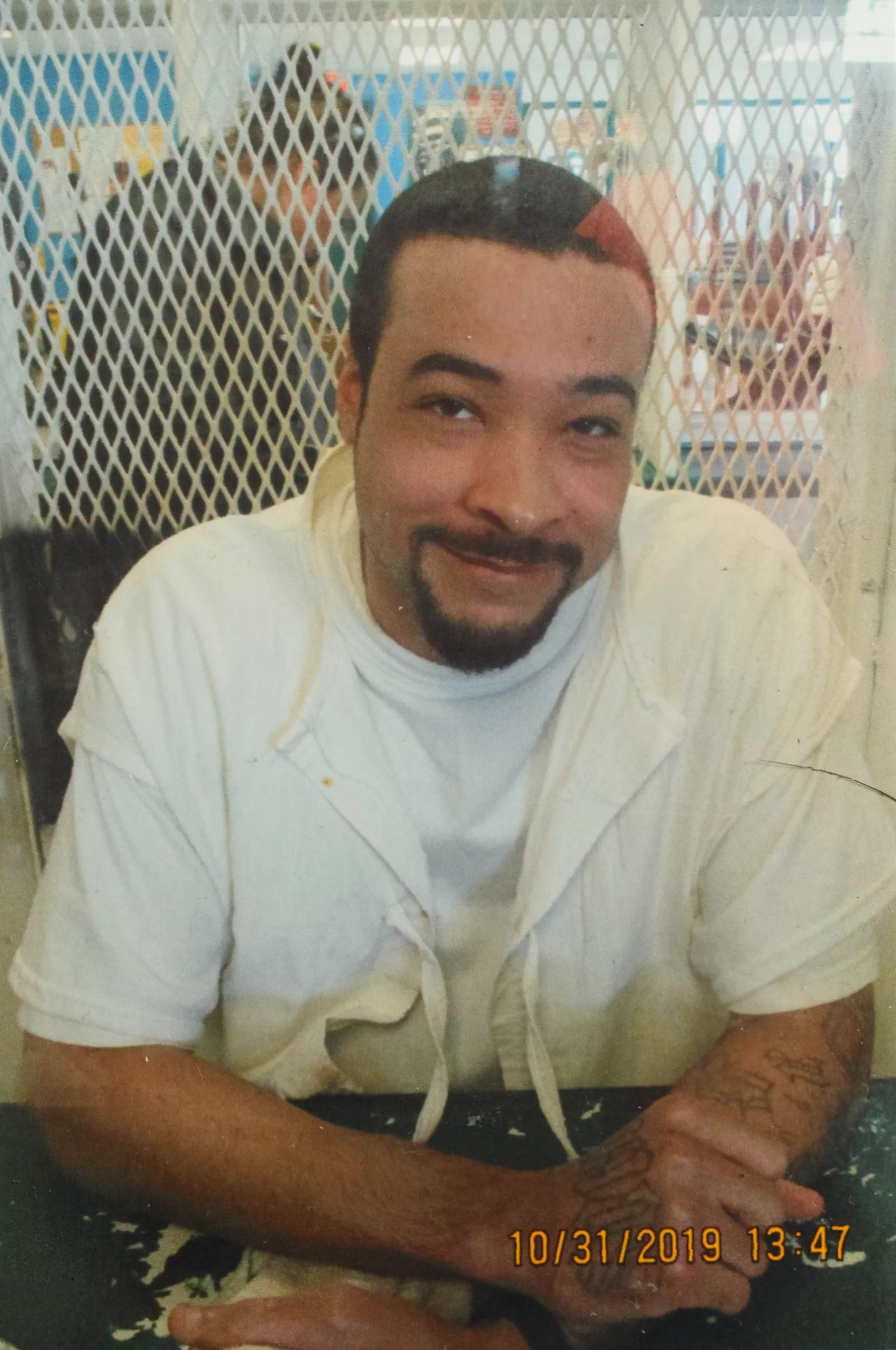
James Broadnax, 37, was executed at 6.47pm local time, the third execution in Texas in 2026 and the 599th since the state resumed capital punishment in 1982, according to the Texas Department of Criminal Justice. In his final statement, Broadnax maintained his innocence, saying: “But no matter what you think about me, Texas got it wrong.” He also sought forgiveness from the families of Stephen Swan and Matthew Butler, the two Christian music producers he was convicted of killing during a robbery in Garland, Texas, in 2008. Broadnax was 19 at the time of the crime and was sentenced to death at age 20.
Tiana described the execution as an experience that sent her “into a bit of a psychotic state.” As officers tried to walk her out of the prison, she hallucinated seeing James standing with death row protestors outside. “I ran to him shouting, but one of the officers grabbed me and I realised I had hallucinated the whole thing,” she said.
A Relationship Built on Letters
Tiana, a law student from Lewisham, began writing to James in mid-2024 as part of her master’s dissertation on death row inmates. She had sworn to herself that she would not fall in love with a prisoner, but within months she found herself “desperately waiting to hear from him.” By the end of 2024, their relationship was official – conducted across a 5,000-mile divide and a six-hour time difference. They never held hands, went out to dinner or kissed. Their connection consisted of six-hour phone calls that automatically cut out every 30 minutes, letters, and the occasional prison visit where every word had to be carefully chosen.
Tiana, a mother of one, said the prison rules seeped into her everyday life. Even passing through airport security, she instinctively lifts her arms the way she had to before entering prison. “In a way I was institutionalised too, because I had to live parts of my life around Texas prison rules,” she said. “Even now when I am on a long phone call I automatically check to see if we have nearly reached the 30 minute mark.”
In December last year, the couple received the news that James’s execution date had been set for April 30. “I was sat in my lounge and I just remember screaming,” Tiana said. “But after that, it was just ‘right, we need to fight this’.” They spent their remaining months appealing through every available channel. They also found time to get married – a brief ceremony conducted through prison glass two weeks before his death. “It was hard, but worth it for being allowed to spend 45 minutes together for the ceremony,” she said.
The couple had moved to Houston before the wedding, but Tiana was the one who coordinated James’s legal fight. “I was James’s PA, advocate and therapist full time. I was looking after him and my daughter full-time and getting about four hours of sleep a night,” she said. The Supreme Court and the Texas Board of Pardons and Paroles all refused to grant a stay of execution. Governor Greg Abbott’s office – which Tiana saw as their most likely route to clemency – declined to intervene. “We got confirmation the governor’s office wasn’t going to help the day before James’s death,” she said. “And at that point, I just wanted to spend our last few hours together.” On the day itself, she was taken to the viewing room as her husband was strapped to a gurney. Even in his final lucid moments, they were not allowed to be in the same room.
James’s conviction has been the subject of significant controversy. His cousin and co-defendant, Demarius Cummings, confessed in March 2026 that he was the actual shooter. Cummings stated he persuaded Broadnax to take the blame because Broadnax had no prior criminal history, while Cummings did. Both men were reportedly under the influence of PCP and marijuana at the time of the offence. Broadnax’s legal team filed a new appeal in March 2026, including Cummings’ sworn affidavit, arguing that the state’s case relied solely on Broadnax’s media statements made while he was under the influence of drugs and in psychological distress, and that DNA evidence on the murder weapon and one of the victims pointed to Cummings. The Texas Court of Criminal Appeals declined to consider the confession as grounds to halt the execution. The U.S. Supreme Court also denied final appeals, which included claims of racial bias in jury selection – prosecutors had dismissed all prospective Black jurors, resulting in a nearly all-white jury – and the use of rap lyrics written by Broadnax as a teenager as evidence of “future dangerousness.” The case attracted support from figures in the music industry, including rappers Young Thug and Travis Scott, who backed appeals over the use of his lyrics.
The mothers of Stephen Swan and Matthew Butler have publicly opposed the new confession, calling it a “stall tactic” and a “lie.” However, McKayla Butler, Matthew Butler’s daughter, reportedly became friends with Tiana and opposed James’s execution, believing he was innocent.
The Psychological Toll
“Watching James die was utterly traumatising,” Tiana said. “And it feels so isolating. No one in the UK can possibly relate to what I have been through.” She described the experience as leaving her “broken.” A week after the execution, she was back at home in London, unable to return to work or resume her studies full-time. She is now focusing on looking after her daughter. “I now understand what people mean when they are scared to leave the house,” she said. “If I go too far, I am back in that room, where they killed him.”
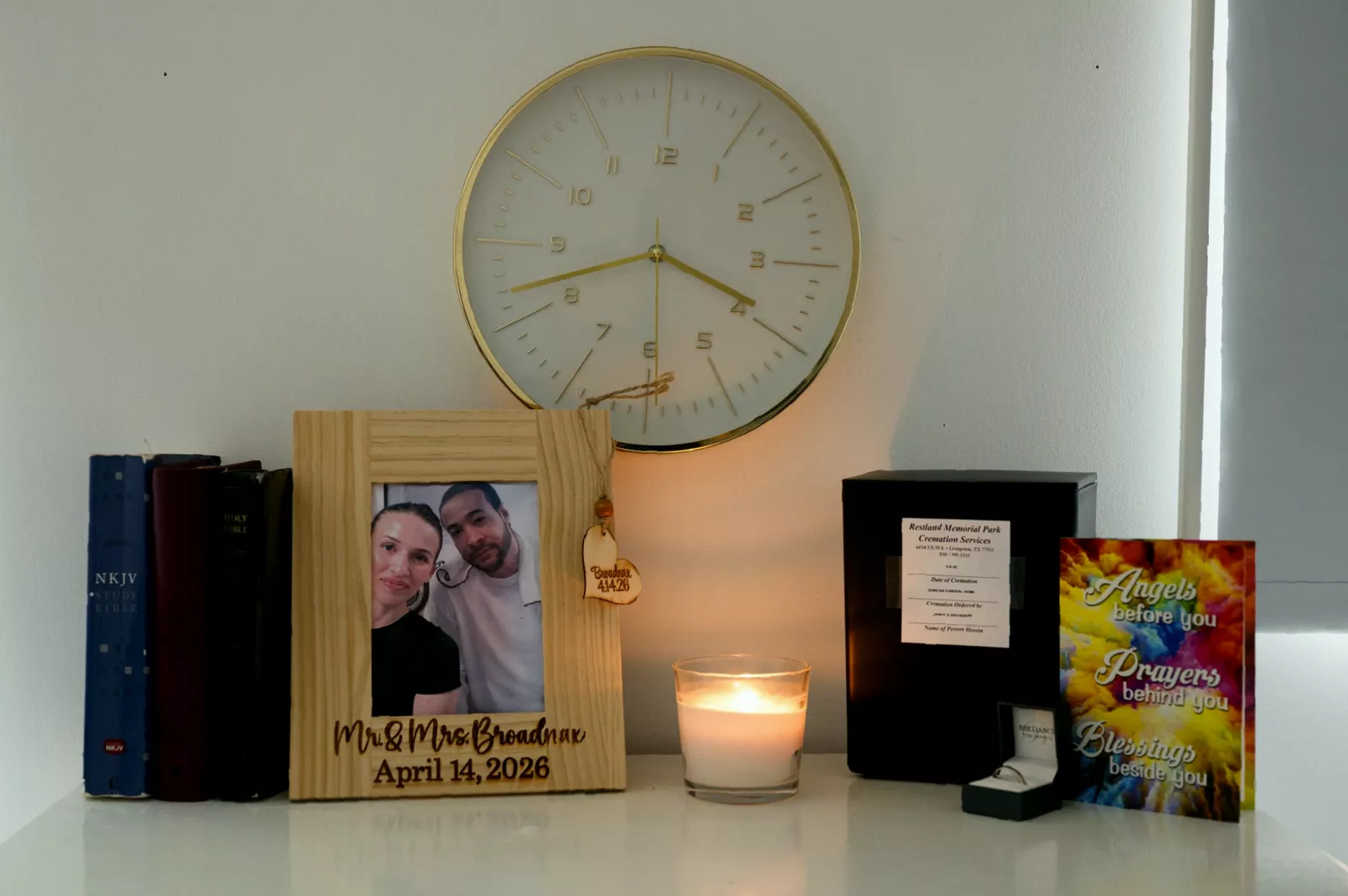
The psychological impact of witnessing a death by lethal injection is profound. Texas uses a single drug – pentobarbital – which is intended to induce unconsciousness and then stop the heart. Tiana said James’s death was not peaceful and that he suffered. Research into the effects of witnessing executions shows that family members often experience post-traumatic stress disorder, including flashbacks, hypervigilance and nightmares. Tiana’s hallucination of seeing James alive outside the prison is consistent with the dissociative experiences reported by others who have witnessed traumatic events. The prison environment itself – with its rigid rules, timed phone calls and physical barriers – created a form of institutionalisation that she says persists. “I was living my life around Texas prison rules,” she said. “Mentally, I was on death row too.”
Fighting for Justice and Against the Death Penalty
Once she has recovered emotionally, Tiana plans to complete her master’s degree and dedicate her life to advocating against the death penalty. She has already begun engaging with the political debate in the UK, where right-wing parties are pushing for the reinstatement of capital punishment. Restore Britain, a right-wing to far-right political party led by Rupert Lowe, supports bringing back the death penalty and has called for a binding referendum on the issue. Lowe has repeatedly used cases such as the murder of Henry Nowak to argue for its return. “I actually messaged Rupert Lowe, and told him of how utterly devastating it is,” Tiana said. “I emailed him and even messaged him on TikTok. Funnily enough, I haven’t heard back.”
Public opinion in the UK shows significant support for reintroducing capital punishment. A YouGov poll from November 2025 found that 50% of Britons support it, with higher backing among Reform and Conservative voters. A More in Common poll from January 2025 put support at 55%, with Millennials showing the highest favourability. A survey of university students aged 18 to 21 in June 2026 found that 47% would support bringing back the death penalty. Historically, support has fluctuated – a MORI poll in 1995 showed 76% support, which dropped to 56% by 2002. Arguments for reinstatement include the cost of prisons, perceived justice for heinous crimes and deterrence. Opponents point to the risk of executing innocent people – a risk underscored by Cummings’ confession – the irreversible nature of the punishment, and the UK’s obligations under Protocol 13 of the European Convention on Human Rights, which abolished the death penalty in all circumstances. Tiana said she wants to expose those she believes are responsible for her husband’s death, and to show the human cost of a system that, in her words, “gets it wrong.”