Two teenage boys have had their sentences doubled to four years’ youth detention after the Court of Appeal ruled that the non-custodial punishments originally handed down for raping and filming teenage girls were unduly lenient. The boys, both now 15 and identified only as X and Y for legal reasons, were given the custodial terms at a hearing on Thursday after the Attorney General, Lord Hermer, referred their cases under the Unduly Lenient Sentence scheme.
Appeal Court Ruling
A panel of judges led by Lady Chief Justice Baroness Carr quashed the previous three-year youth rehabilitation orders (YROs) with 180 days of intensive supervision and surveillance that had been imposed on X and Y at Southampton Crown Court in May 2026. Instead, Baroness Carr said: “We have decided that we do need to change your sentences and both of you do need to go into detention. What you did was so bad that we have no other choice.” The indefinite restraining orders previously in place were extended to a lifetime ban.
The sentence for a third boy, Z, now 14, was upheld. He had received an 18-month YRO for encouraging the rape of the second victim and an indecent image offence. Addressing Z, Baroness Carr said: “We have decided that because you were very young and find some things really very difficult to understand, and because you were only involved on one occasion, we do not need to change your sentence.” The three boys attended the hearing via videolink from Southampton Crown Court.
Why the Original Sentences Were Deemed Unduly Lenient
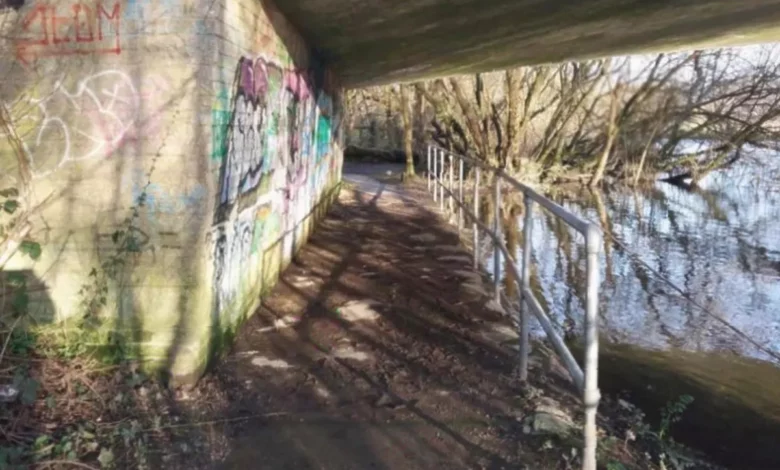
The attacks took place in Fordingbridge, Hampshire, in November 2024 and January 2025. The victims were girls aged 14 and 15 at the time. X and Y, then 14, were involved in both incidents – each victim was raped more than once by different people. Z, then 13, took part only in the second attack as an encourager.
At the original sentencing, Judge Nicholas Rowland handed down non-custodial sentences, stating his intention was to “avoid criminalising these children unnecessarily” and that detention was a “last resort”. He noted that Y had an IQ in the bottom 1 per cent, ADHD and extreme neurodevelopmental impairment, and that his mother described him as “more like an eight-year-old”. Z was also found to have “very low intellectual capacity”. Judge Rowland said he was “quite sure” that Y’s culpability “was reduced as a result of his profound impairments”.
The Court of Appeal panel, however, ruled that the sentencing judge had “failed to take sufficiently into account the ages and the vulnerabilities of the complainants and the psychological effect upon them”, which Baroness Carr described as “severe”. In the court’s 52-page full judgment, she noted that victim personal statements from the two girls “spoke of enduring distress and despair”, but that Judge Rowland “did not explain why he found that this material did not prove severe psychological harm”. She added: “It appears that he may have placed substantial weight on his own impressions formed during the trial. He was entitled to take that into account, but great care is required before allowing that impression to lead to the rejection of evidence of the kind we have described.”
Baroness Carr also highlighted that the original judge “failed to stand back and properly consider and reflect upon the true seriousness of the case”, an argument made by Tom Little KC, counsel for the Attorney General. Little contended that the assessment of harm and culpability was “fundamentally flawed” and that the judge had adopted a “significantly outdated” approach. The appeal judges found it difficult to understand how the sentence did not adequately reflect that X and Y had repeated their behaviour after the first incident, making a custodial sentence “unavoidable”.
Nevertheless, the panel declined to find either X or Y a “dangerous offender”, citing their young ages and a “real prospect of rehabilitation”. The boys are also pursuing separate appeals against their convictions, which will be decided later.
Public Outcry and CPS Press Release Error
The original sentences sparked a fierce public backlash. Conservative leader Kemi Badenoch said the offenders had received “no punishment at all”, while one victim’s family described the outcome as feeling like “a rock in my face” and “a slap on the wrist”. Lord Hermer referred the sentences after multiple requests under the Unduly Lenient Sentence scheme, which allows the Attorney General to challenge Crown Court sentences that are considered too low.
The controversy was inflamed by a critical error in a Crown Prosecution Service (CPS) press release issued after the initial sentencing. The release incorrectly claimed that one of the attacks had been carried out at knifepoint and that the victim had been forced to leave her phone and an AirTag in a shop. Judge Rowland had explicitly stated in his sentencing remarks that he was “sure this did not happen” and that the victim left her belongings “by choice”. Baroness Carr heavily criticised the CPS for the “fundamental errors”, noting that the press release was not corrected until June 10 – nearly three weeks later – and questioned how such mistakes occurred and why they took so long to rectify.
Defence barristers argued that the inaccuracies fuelled the public outrage. Edward Henry KC, representing Y, said the public was “substantially misinformed” and that the anger was “in substantial part generated” by the incorrect details. He told the court that Y had been made a “pariah” and that his family had been advised to move. Tracy Ayling KC, for Z, said the inaccurate release led to the judge being “vilified”, a petition for his resignation, and the young defendant being “terrified to leave his home”. A CPS spokesperson acknowledged the error, stating the release “did not accurately reflect the judge’s findings” and that the organisation “regret the error” and have “reviewed the circumstances… and will identify lessons for the future”.
Baroness Carr also expressed “deep concern” about “intense public debate before the legal process has concluded”, particularly involving members of parliament, and noted “misinformed and inappropriate commentary” on the case. Legal commentator Joshua Rozenberg KC described the intervention by the Attorney General and the level of public attention as “extremely unusual”.
Victim Families’ Reactions
Following the hearing, the families of the two victims, referred to as C1 and C2, issued statements expressing their relief. The first family said they were “deeply grateful and relieved” by the Court of Appeal judges’ decision to increase the sentence and were “thankful their voices were heard”. “While nothing can undo our family’s anguish, this outcome brings a greater sense of justice and accountability,” they added.
The second family said the original sentences were “devastating” and welcomed the imposition of custodial terms. “While no sentence can undo the trauma she has endured, today’s decision gives us a greater sense that justice has been served and that those responsible have been held properly accountable,” they stated. “We are immensely proud of our daughter’s courage and strength throughout this long and difficult process. We hope this outcome reassures other victims and survivors that their voices matter and that the justice system can correct decisions that do not adequately reflect the seriousness of these crimes.”
One victim had earlier stated that the trial “broke something inside me” and that the attack had left her “so severely” harmed she may never recover. The other victim described significant emotional and physical distress, negative impacts on school attendance, and ongoing anxiety.
Attorney General Lord Hermer said: “Rape is a horrifying crime, and one that our justice system should and will punish severely. I welcome the Court of Appeal’s decision to increase the sentences of the two boys, resulting in their detention. No one should have to endure what the victims went through, and I commend their bravery in coming forward and campaigning for justice.” Justice minister Jake Richards added: “I welcome today’s judgment from the Court of Appeal. These were appalling crimes, and I pay credit to the victims for their courage in coming forward. This demonstrates that the Unduly Lenient Sentence Scheme can work – that is what victims and the public rightly expect.”